Dan David Foundation · 2024 · Prize ceremony & social media

On Tripurdaman Singh, and the stormy fortnight the textbooks forgot.

A two-and-a-half-minute tribute on a historian whose work has returned to a single political fortnight in 1951, when the first amendment to the Indian constitution was written, argued over, and passed, and on the debate that has never really closed since.

Client
Dan David Foundation
Subject
Dr. Tripurdaman Singh, Geneva Graduate Institute & Institute of Commonwealth Studies, University of London
Direction
Daniella Koffler
Animation
Moofa Animation Team
Year
2024
Kind
Ceremony film
The subject

Tripurdaman Singh is a historian of modern South Asia. He is currently an Ambizione Fellow at the Geneva Graduate Institute and an Associate Fellow at the Institute of Commonwealth Studies, University of London. His work asks how the political and constitutional decisions of India's first decade have shaped, and continue to shape, the country it is today.

His book Sixteen Stormy Days (Vintage/Penguin Random House India, 2020) recovered the political drama of the first amendment to the Indian constitution of 1951, a moment that had largely fallen out of the dominant narrative of Nehruvian India. The Dan David Prize honored Singh for extraordinary historical research into the political and constitutional history of South Asia, and for work that continues the ongoing debate about the constitutional structure of India and the historical antecedents of the mounting crises of civil liberties.

The aim

Singh's argument is that the sixteen days in May 1951, when Nehru's government drove the first amendment to the constitution through a still-new parliament, are not a closed episode. The amendment reached further than speech. In the words of the film, it sought “to reduce the scope of the right to freedom of speech, the right to freedom from discrimination, and the right to property.” It was a debate about what kind of nation the new India would be, and it has never really closed.

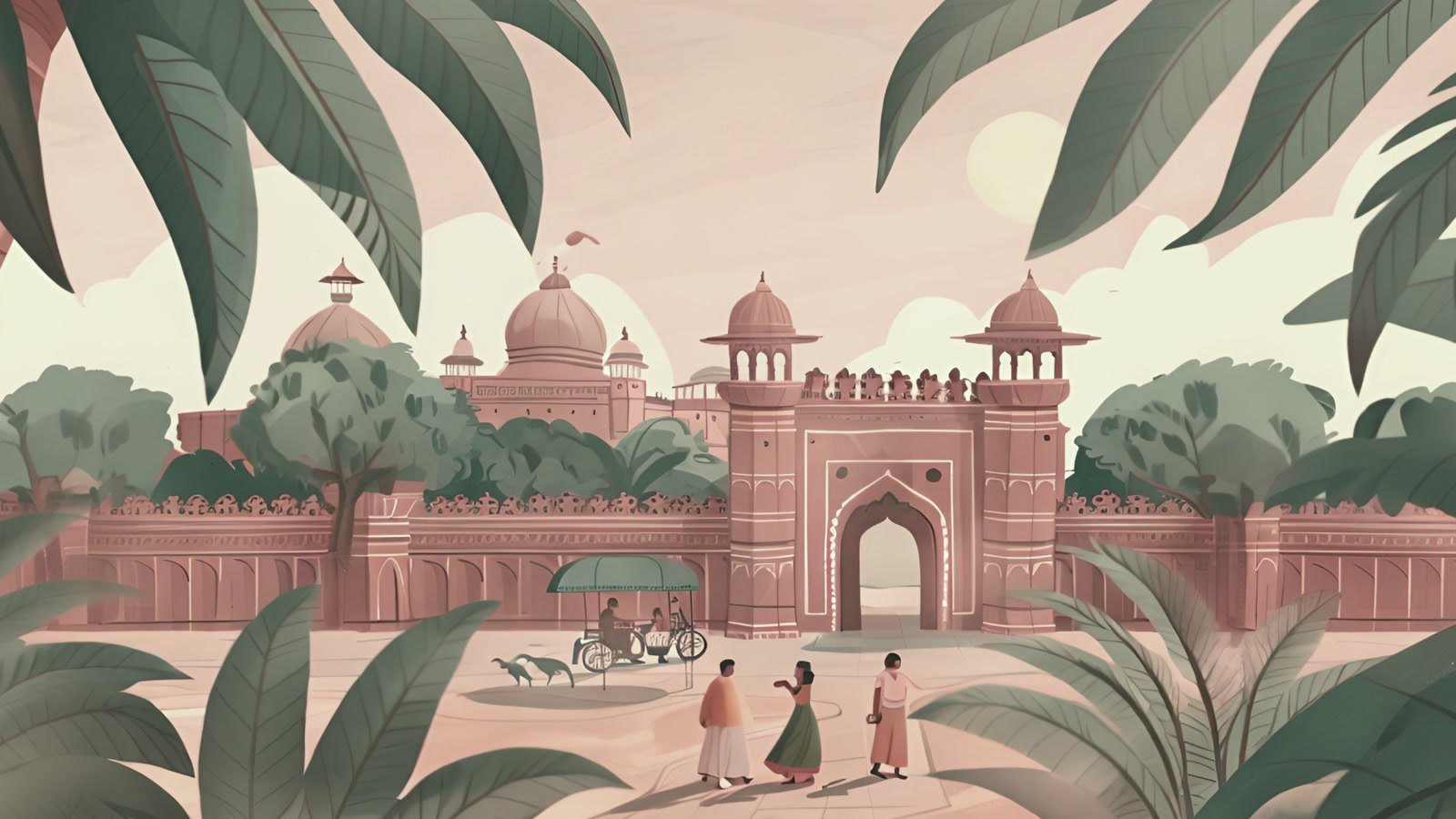
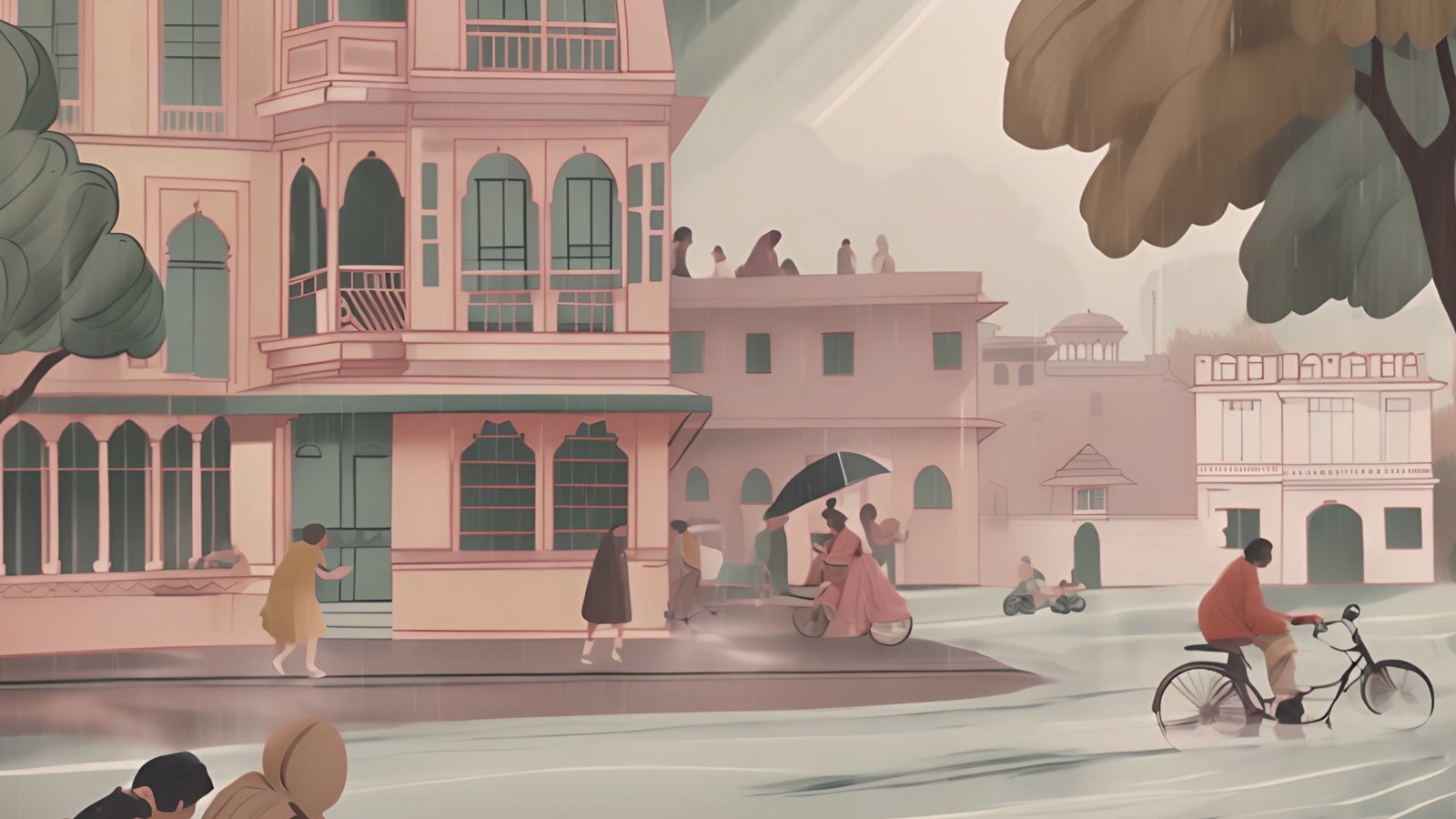
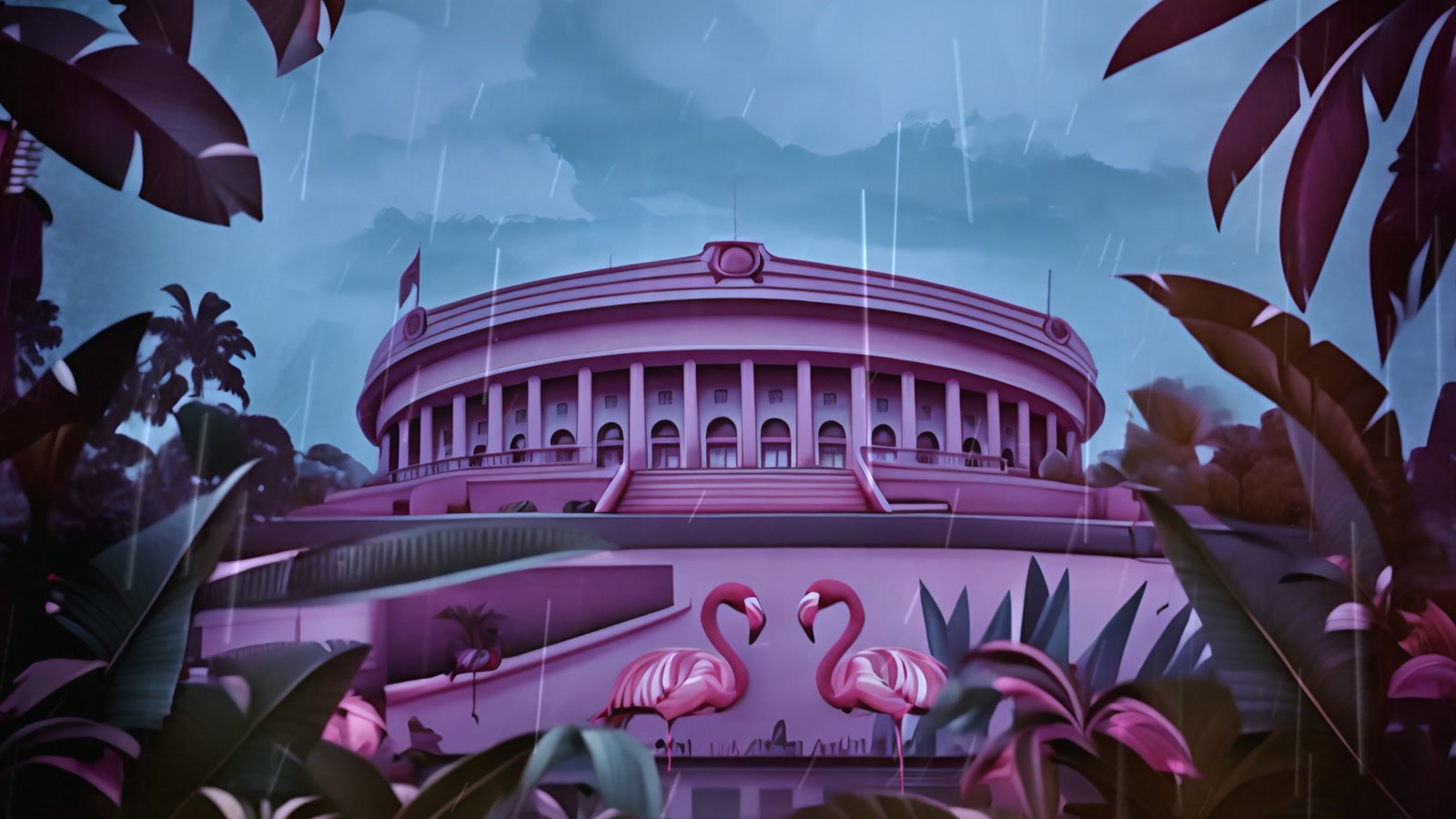
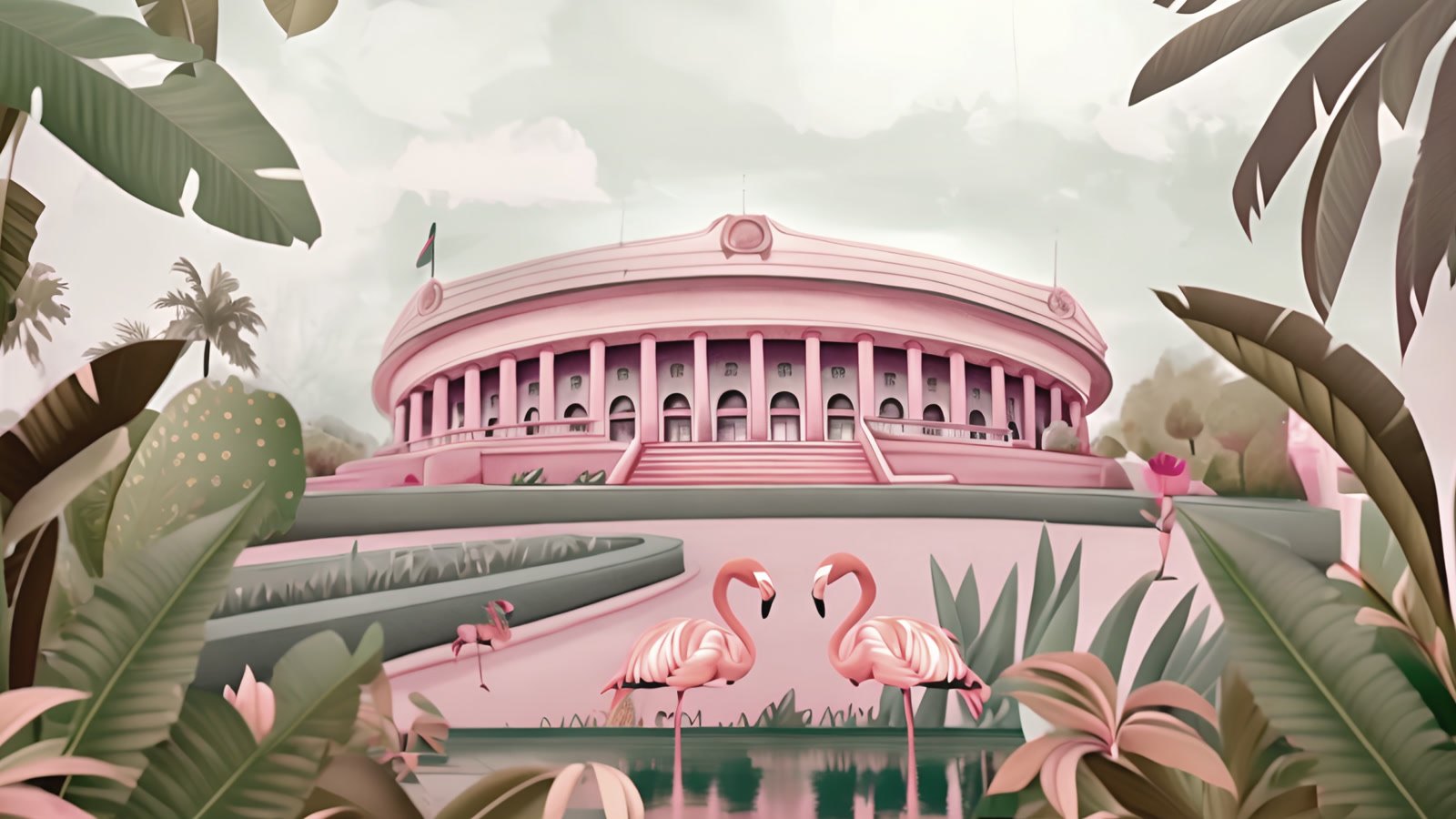
So the film begins with India itself, before it ever enters the chamber: a palace by the water, a market under the walls of a fort, a gate among the palms, and the parliament, drawn pink among lotus leaves and flamingos. The palette is India's: dusty rose, sandstone and terracotta, the deep green of its leaves. When the storm breaks over New Delhi, the same city turns violet and blue.

The design follows India, and the Indian parliament of the time, of which few visual records survive.

India, in its own colours

The film opens on the country the amendment would govern: its palaces, its markets, its streets. The colours shift with the story, from the warm pinks and greens of a day in New Delhi to the violet of the storm that broke over the debate.

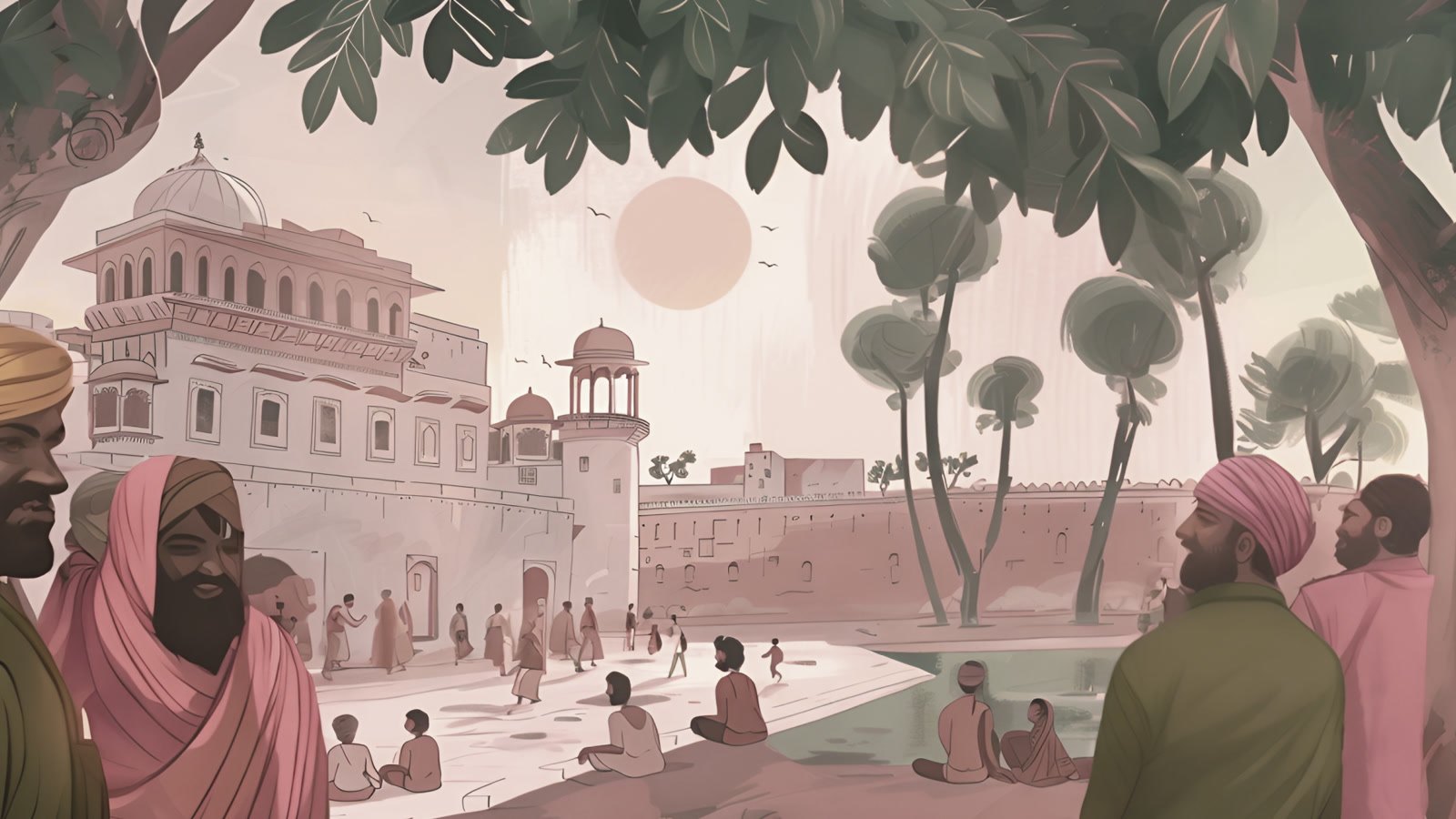
Film still: a palace by the water in dusty pink, people bathing and resting on the steps, a pale sun above the trees
A palace by the water, under a pale sun.
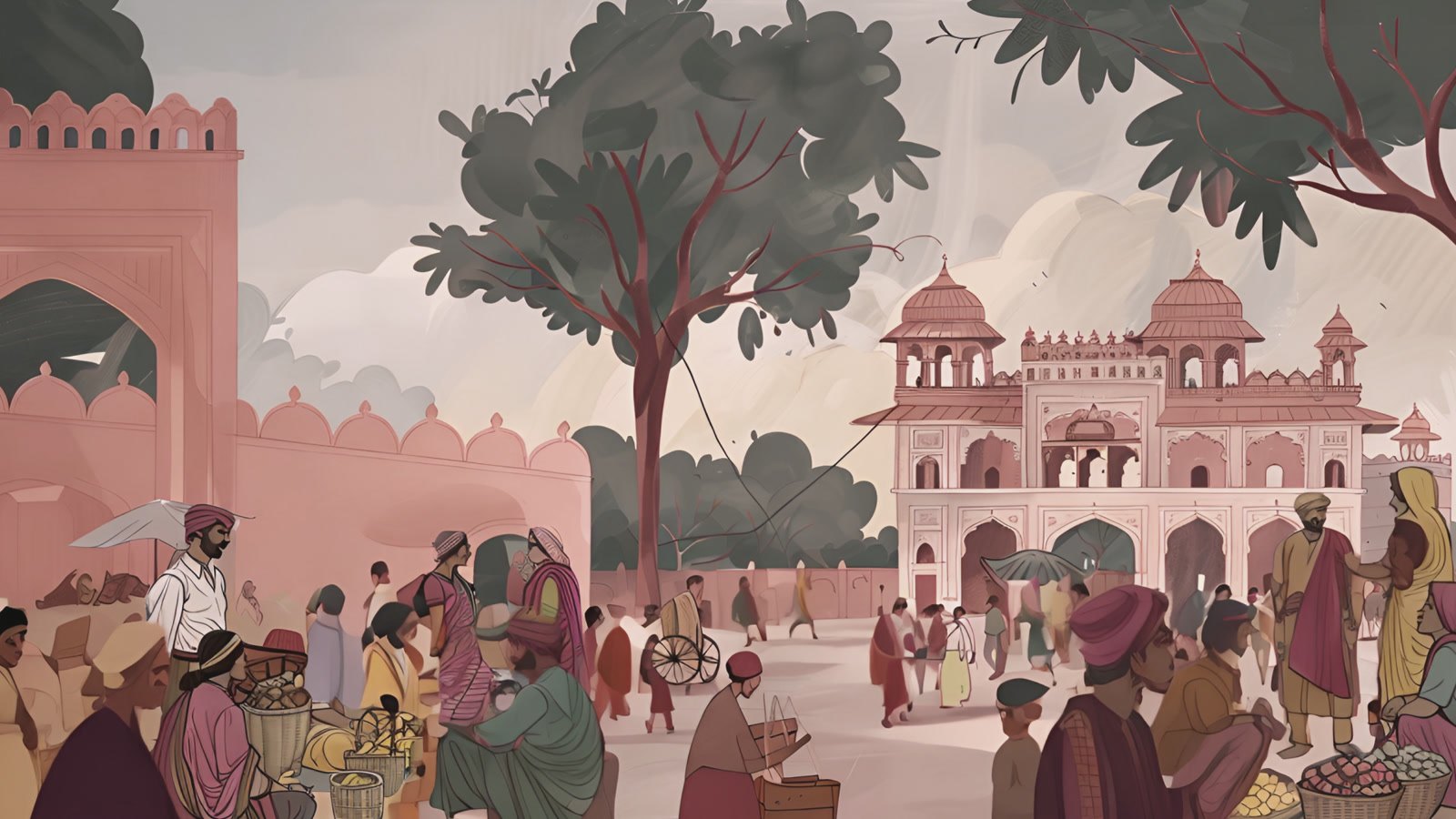
Film still: a crowded market of fruit sellers and shoppers beneath the red walls and domes of a fort
A market under the walls of the fort.
Film still: a sandstone gate and fort wall framed by green palm leaves, people and a cart on the road
A gate among the palms.
Film still: a pink street of balconied houses as the rain begins, a man on a bicycle, a woman under an umbrella
The first rain on a pink street.
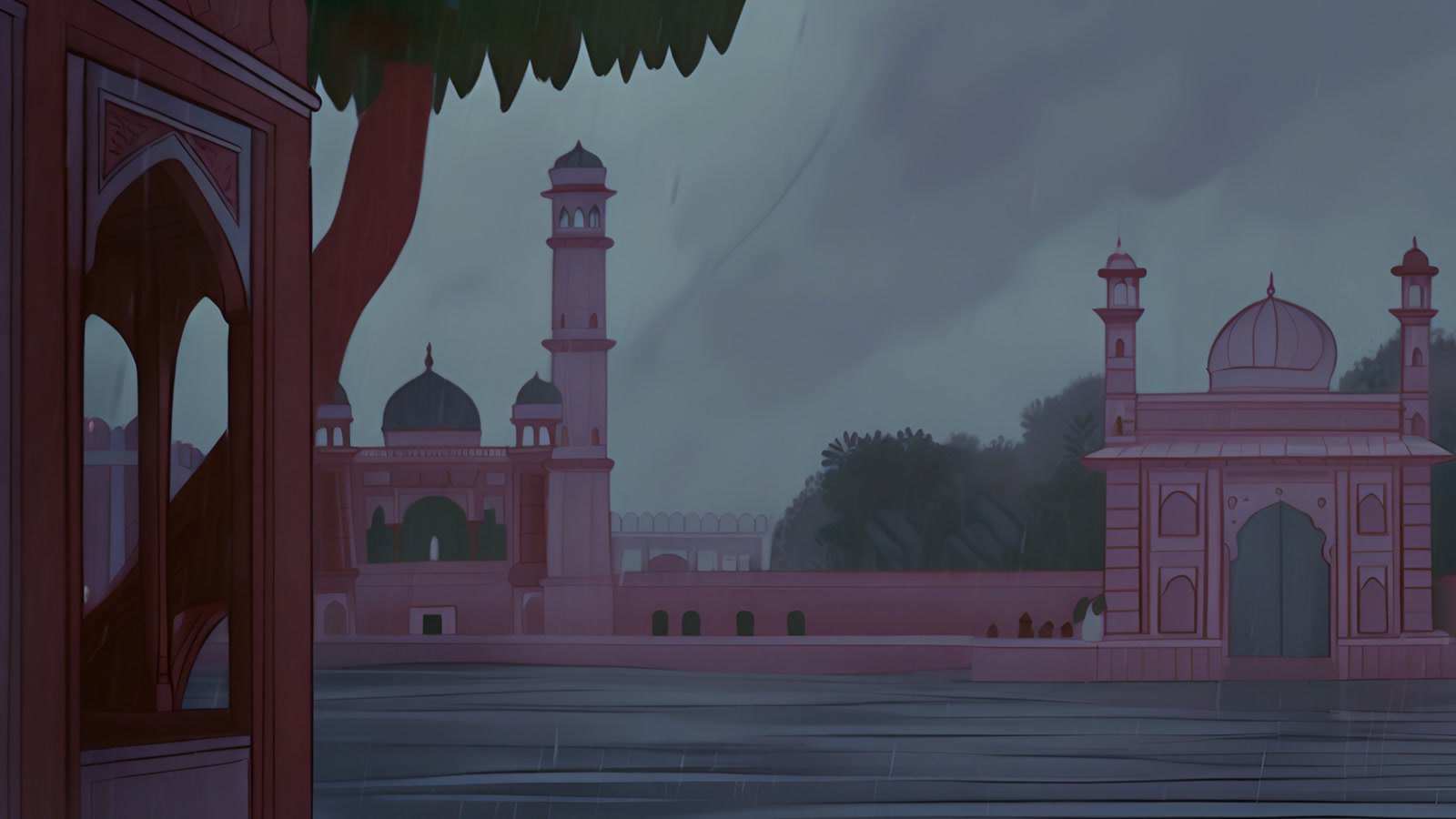
Film still: a mosque and its minaret under a grey storm sky, seen through a carved doorway
“Suddenly, New Delhi was hit by a big storm.”
Film still: the round parliament building in violet light, rain falling, flamingos among dark leaves
The parliament in the storm, in violet.
Source material
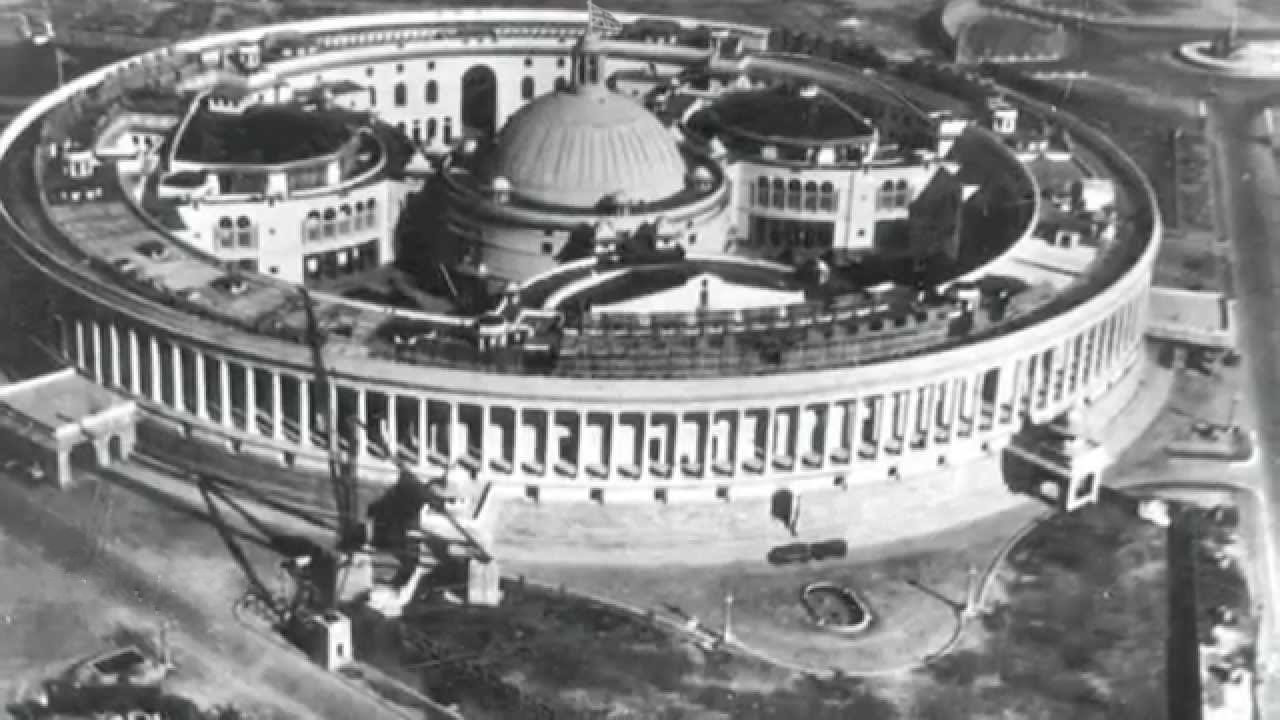
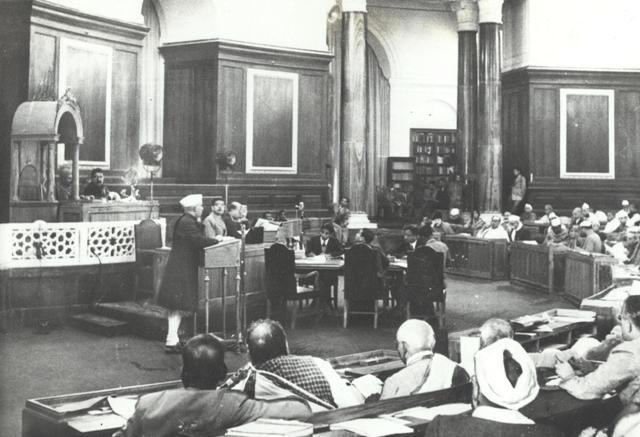
Old Parliament House, New Delhi, 1926
Parliament House, New Delhi, 1926. National Archives of India, via Wikimedia Commons (public domain). The circular Lutyens and Baker building, then under construction, that would become the Constituent Assembly Hall, then the Lok Sabha, and the stage where Singh's sixteen stormy days would unfold.
What we did with it
Film still: the round parliament building drawn in pink, among lotus leaves, palms and flamingos
The parliament, in pink. The round building stands among lotus leaves, palms and flamingos, as the narration calls the amendment “a far-reaching and contentious piece of legislation.”
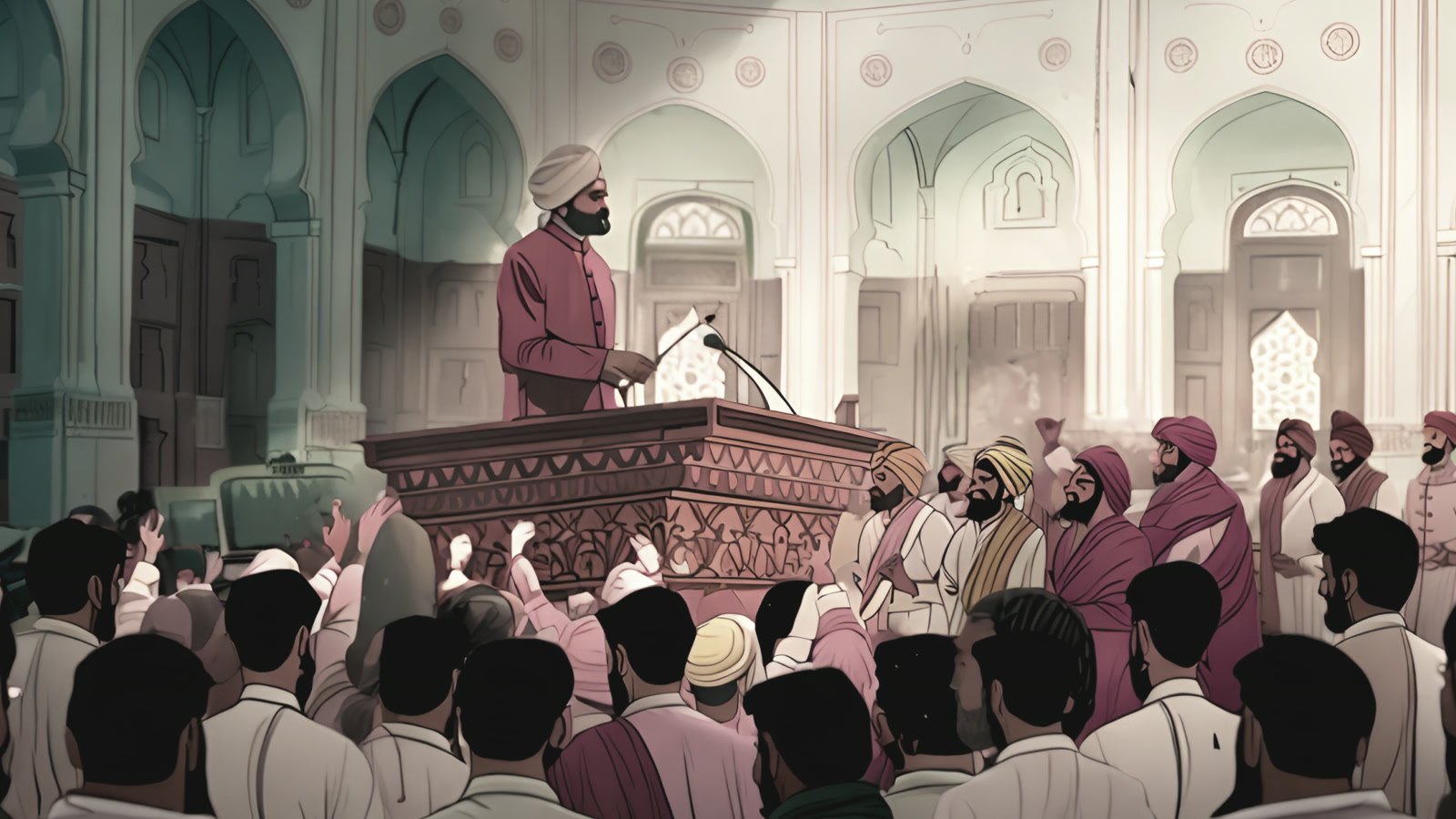
Film still: a turbaned speaker at a carved rostrum above a crowd of members, in a chamber of green and white arches
Inside the chamber

The fiercest debates.

The amendment triggered “some of the fiercest debates India’s parliament has ever witnessed.” “The Opposition was livid, and believed this was an executive power grab that sought to muzzle them for good.” The chamber is drawn full: turbans, caps and shawls in every shade of rose and sand, packed around the rostrum.

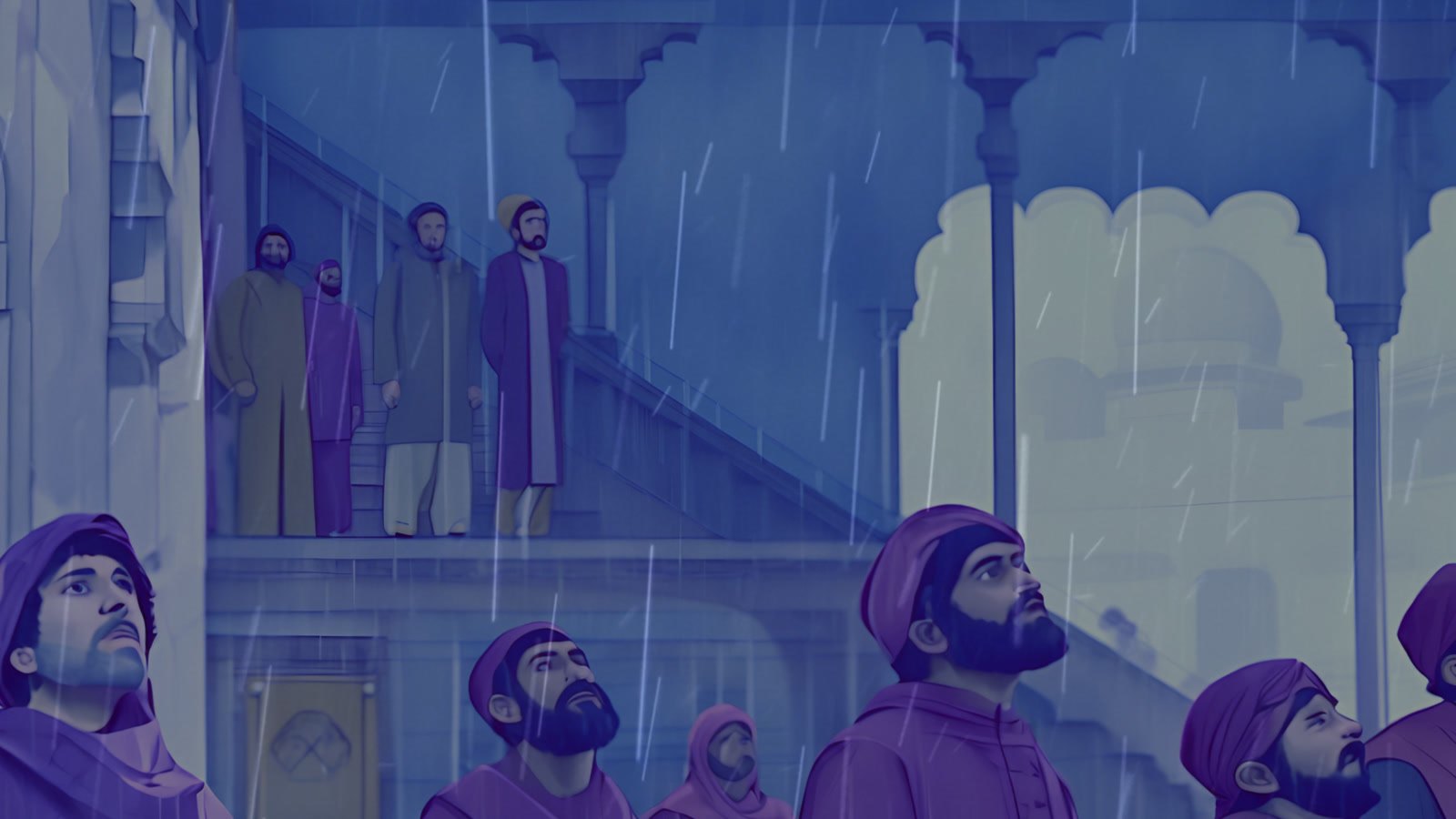
Film still: members of parliament in violet light looking up as rain falls inside the chamber
The storm

Rain inside the chamber.

“The wind and rain built up so fast that the skylights and ventilators couldn’t be closed, and many MPs got drenched. Power gave out, and the chamber was plunged in gloom.”

Source material
Jawaharlal Nehru addressing the Constituent Assembly, 1946
Jawaharlal Nehru addressing the Constituent Assembly, 13 December 1946. Nehru Memorial Museum and Library (public domain in India). Nehru at the rostrum of the same chamber, five years before the amendment, drafting the constitution his government would return to change.
What we did with it
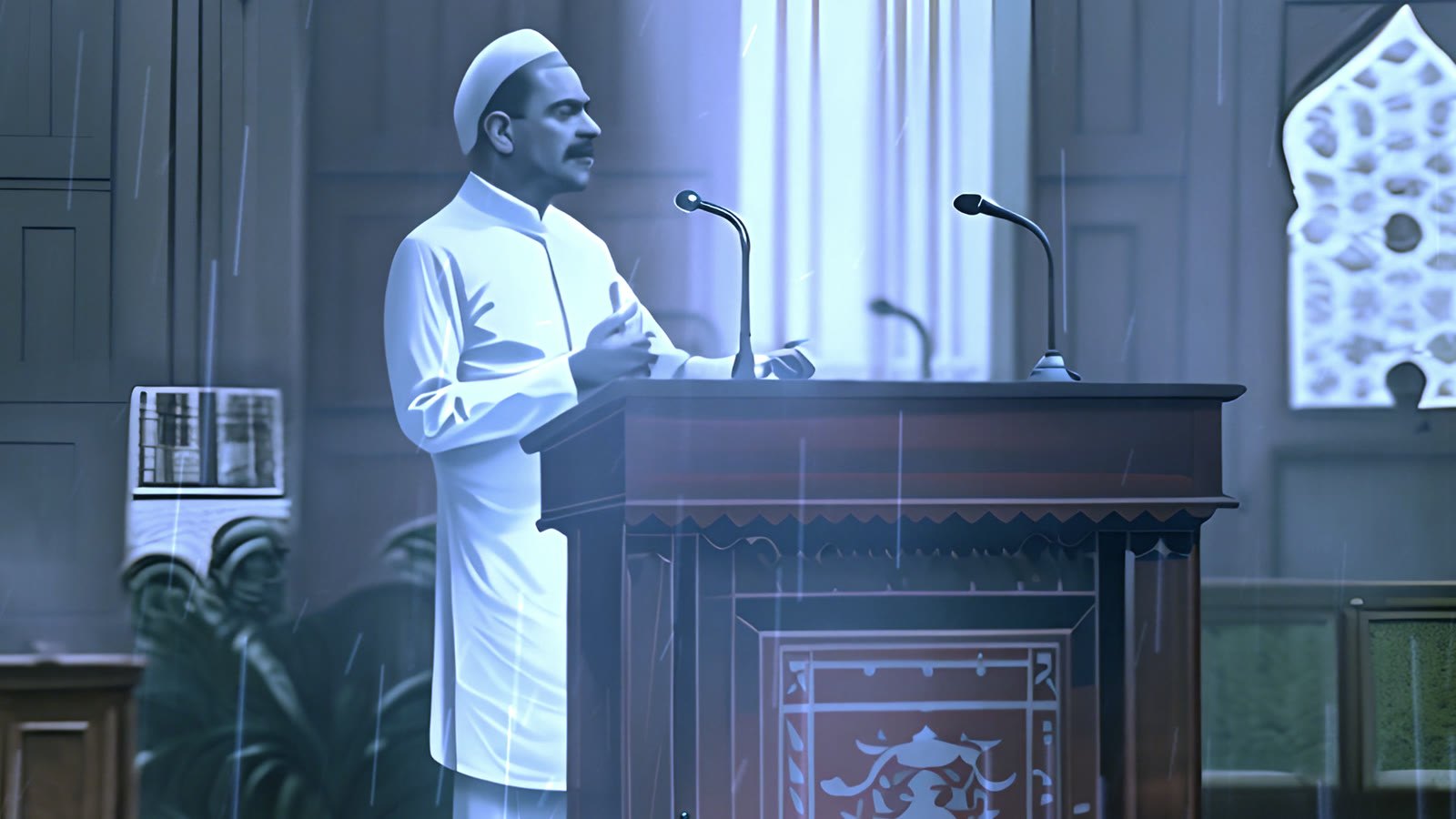
Film still: H.V. Kamath in white at a wooden rostrum, rain falling inside the chamber
H.V. Kamath at the rostrum. In white, with the rain falling inside the chamber: “To laughter, H.V. Kamath, a Congress MP opposing his own government’s policies, remarked: ‘Freedom of speech is being taken away, and there is a storm over it.’”
The Dan David films

Each year the Foundation chooses, with the laureate, the subject of the film they are honoured for, and we turn it into script, image and motion. The laureate sees it for the first time on the evening of the prize — on the big screen, in a room full of people who have come to honour them. Afterwards the films go out on social media, YouTube, Facebook, LinkedIn and more, and on the Foundation’s own site, beside the committee’s reasoning and the laureate’s interview, and some laureates carry them into their own classrooms, to show what it is they work on.
Get in touch

Have a prize that deserves this kind of care?

Tell us about it →