Dan David Foundation · 2025 · Prize ceremony & social media
On Mackenzie Cooley, and the bone the Tlaxcalans showed Cortés.
A short tribute on a historian of nature and power in the early modern world — and on an enormous bone shown to Cortés in 1519, as proof that the ancestors of Tlaxcala had conquered giants.
- Client
- Dan David Foundation
- Subject
- Prof. Mackenzie Cooley, Hamilton College
- Direction
- Daniella Koffler
- Animation
- Moofa Animation Team
- Year
- 2025
The subject
Mackenzie Cooley is Associate Professor of History at Hamilton College, where she directs the program in Medieval and Renaissance Studies. Her book The Perfection of Nature: Animals, Breeding, and Race in the Renaissance (University of Chicago Press, 2022) traces how ideas of race and theories of inheritance took shape through animal breeding in the shadow of the Spanish Empire, drawing on Italian, Latin, Spanish, and Nahuatl sources.
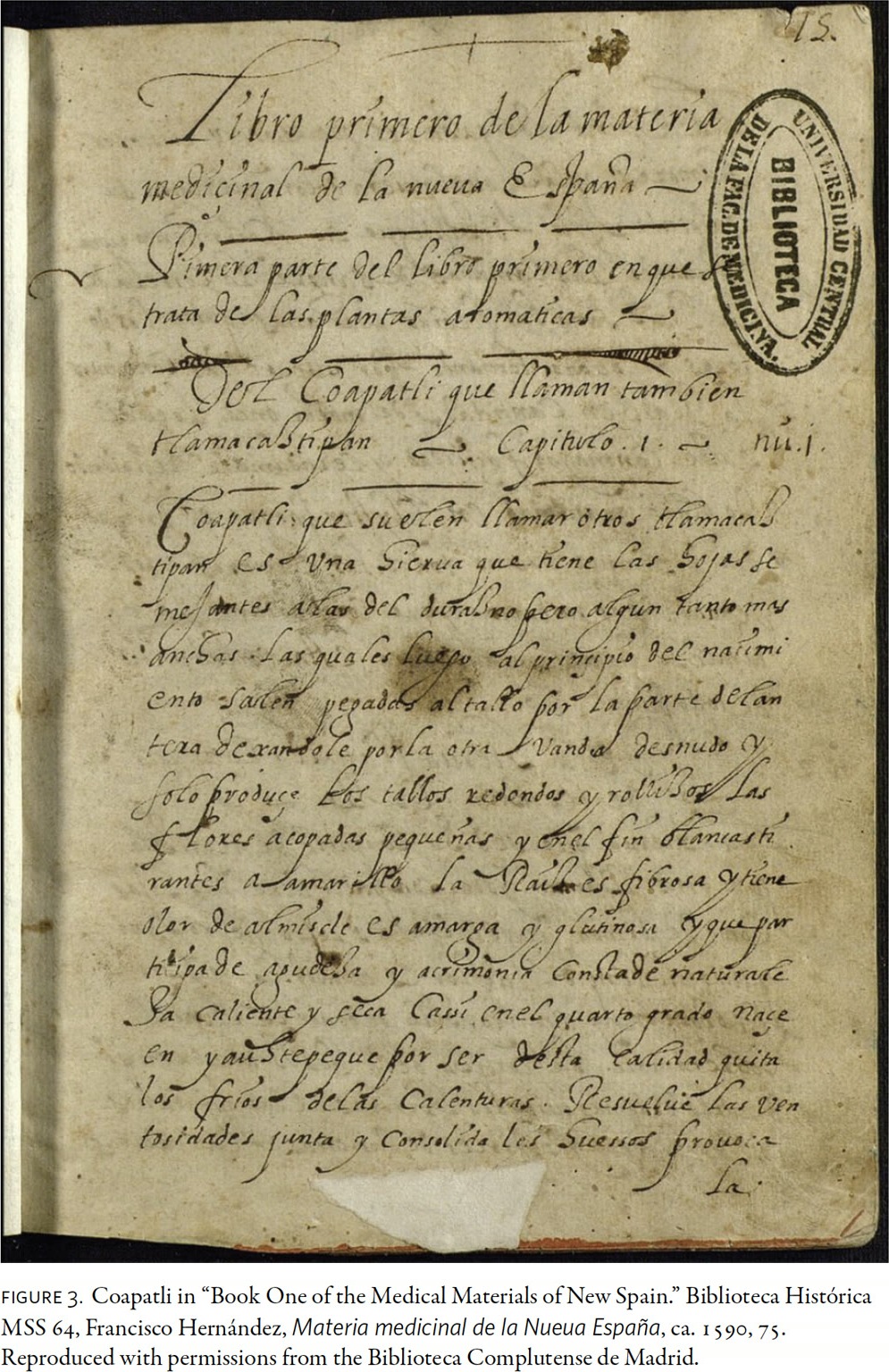
Her work reaches from the studbook to the giant's bone: her article "The Giant Remains" follows the enormous fossil bones unearthed across Mesoamerica, and the way thinkers on both sides of the conquest, Nahua and Spanish, used them to reason about the age of the earth. The Dan David Prize honored Cooley for the originality and ambition of her archival research across the former Spanish Empire, and for bringing indigenous languages and knowledge systems into the history of European science.
The aim
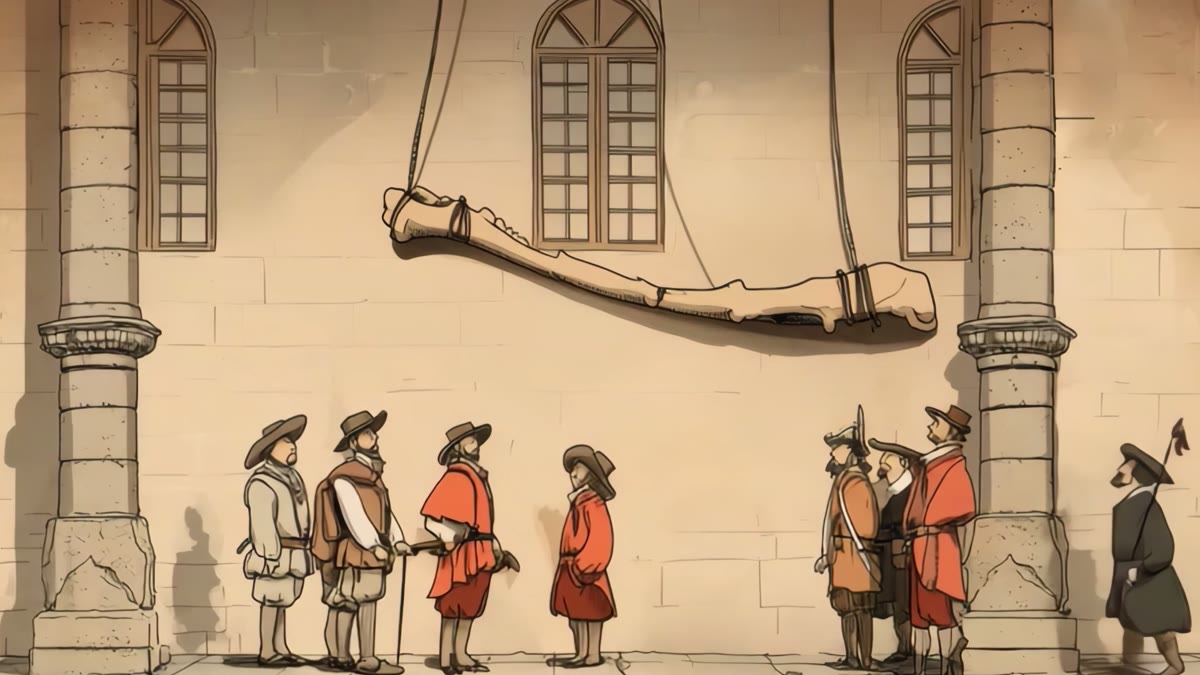
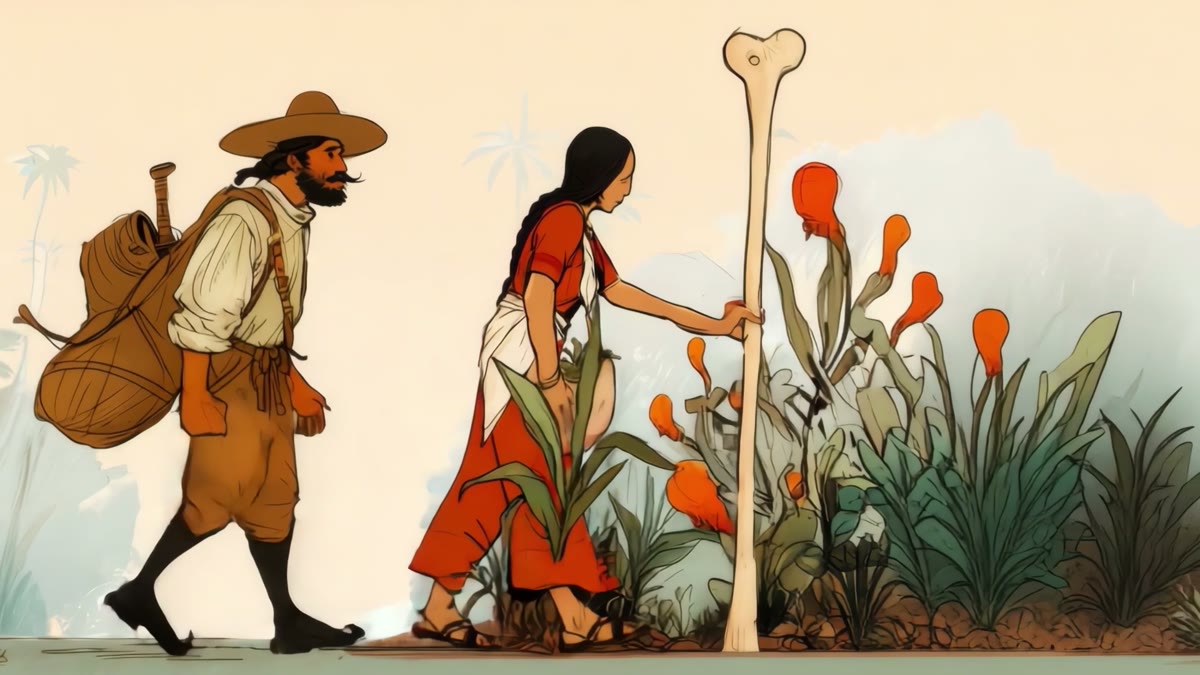
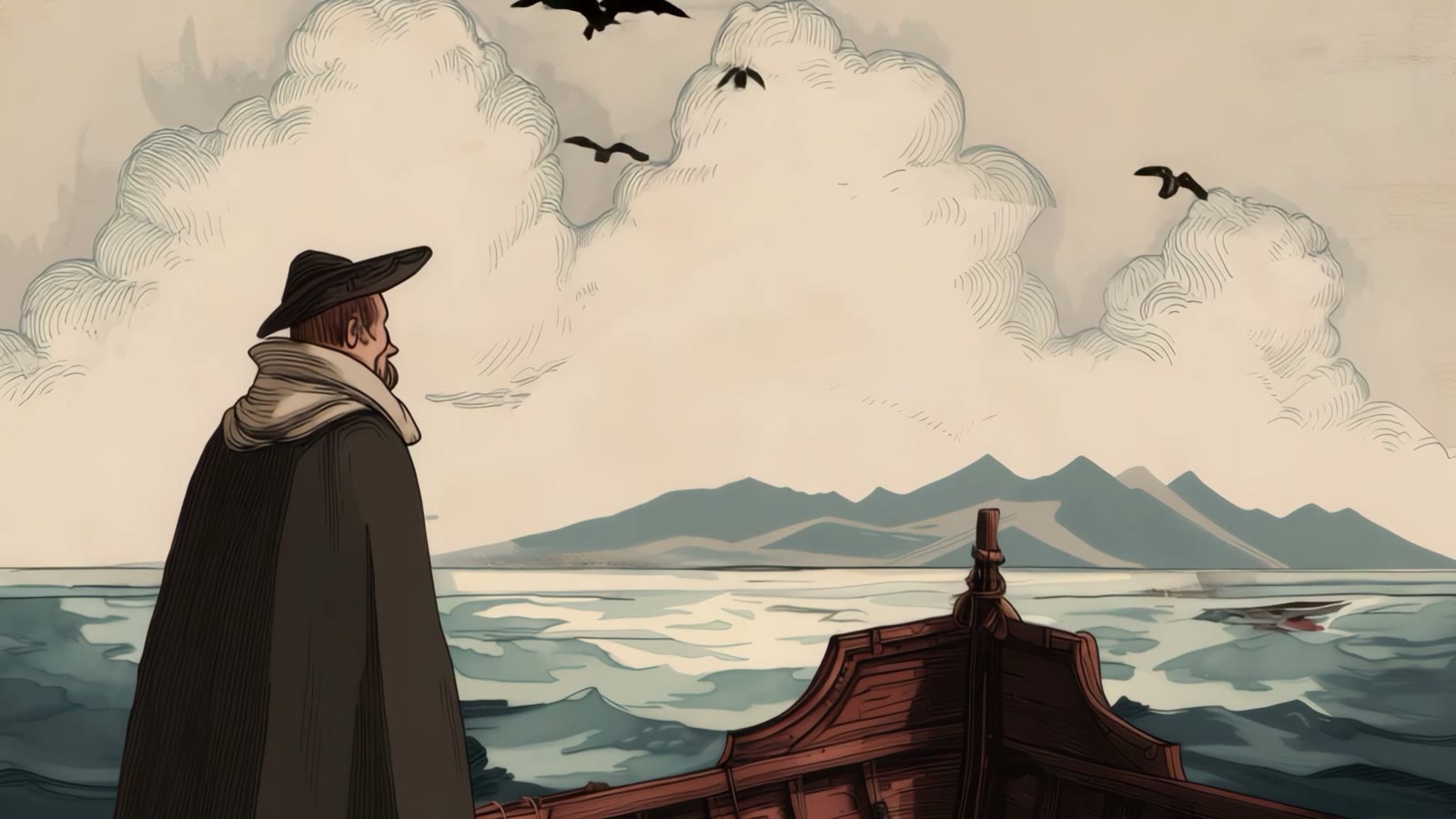
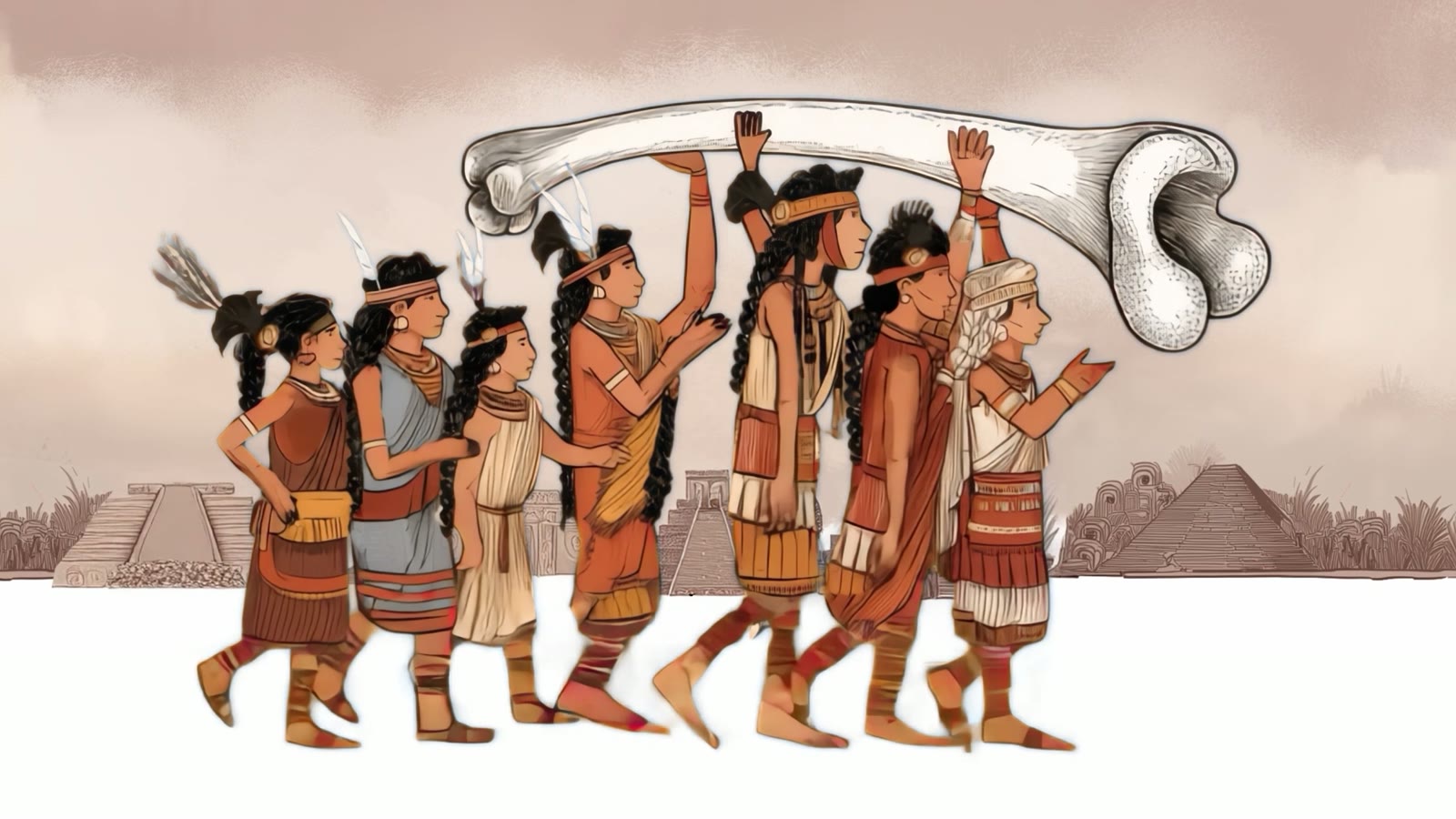
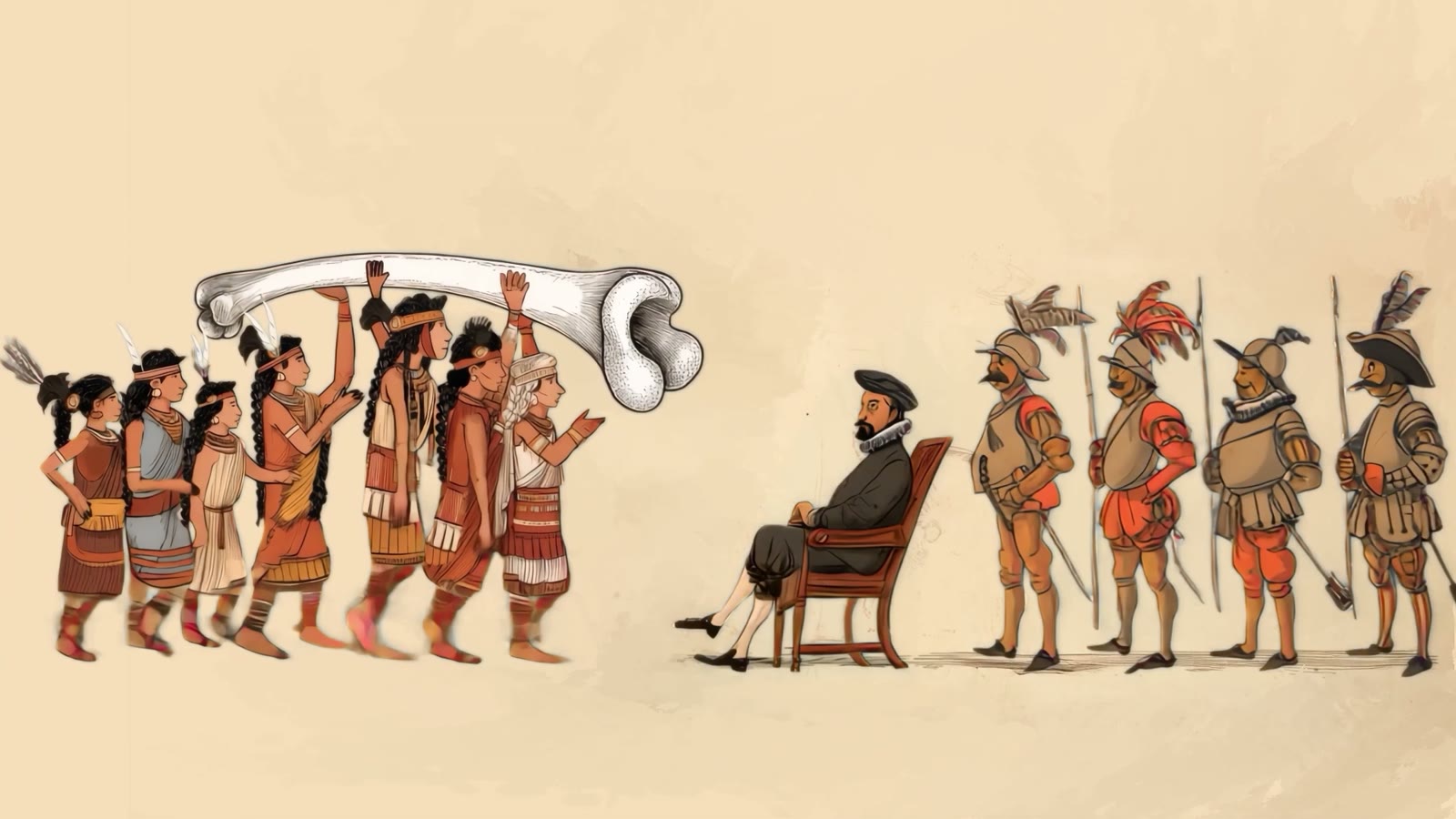
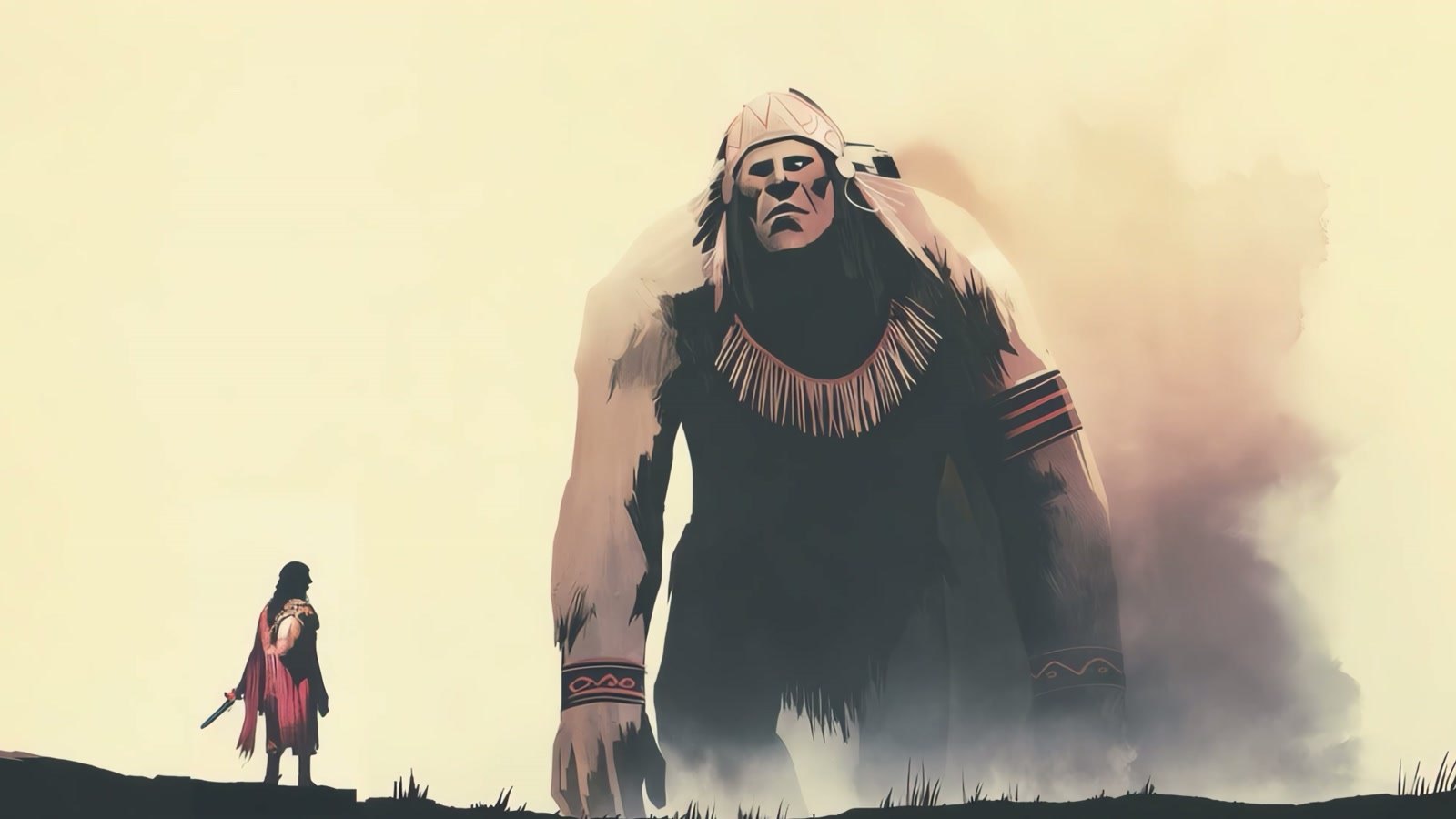
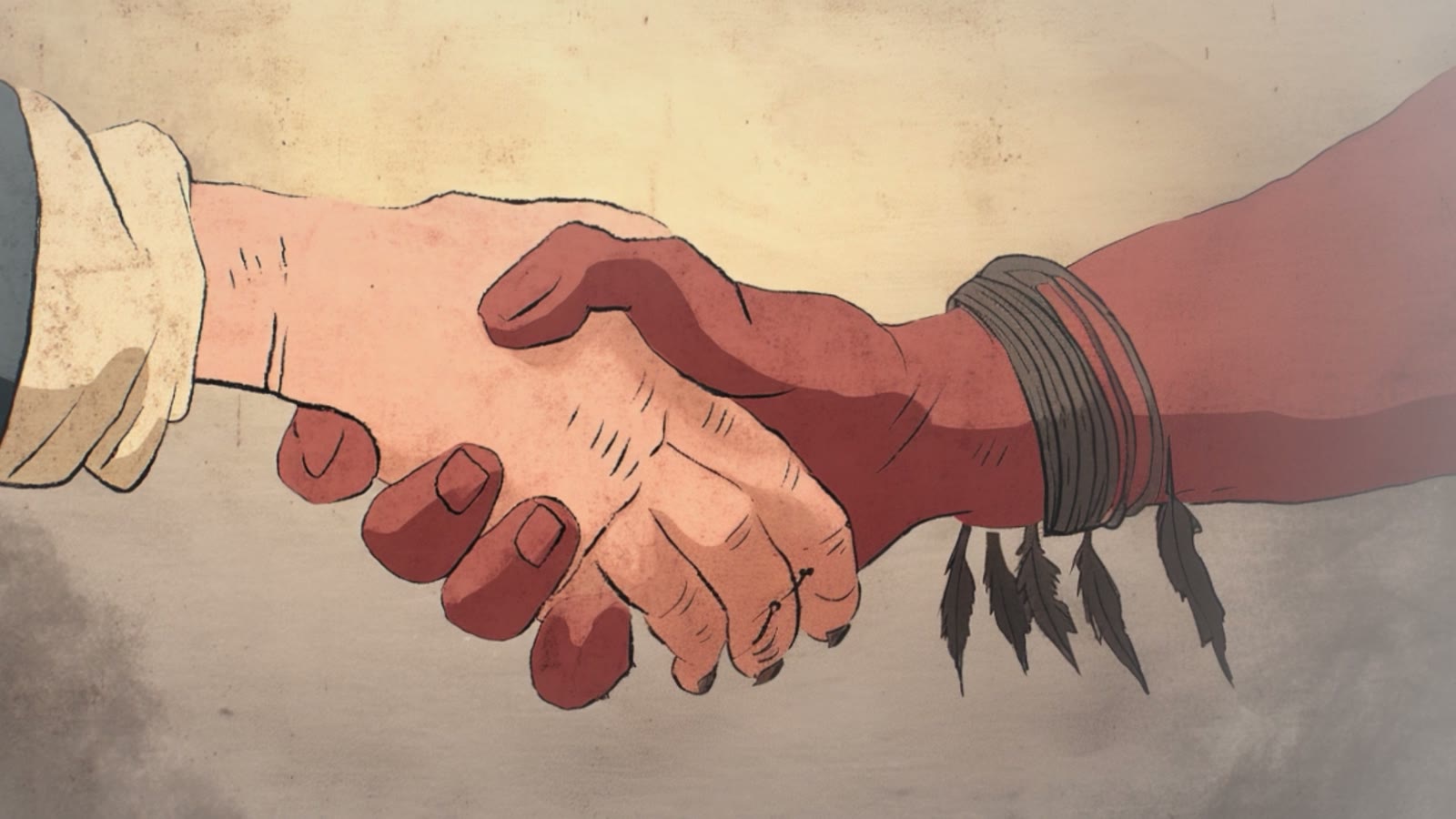
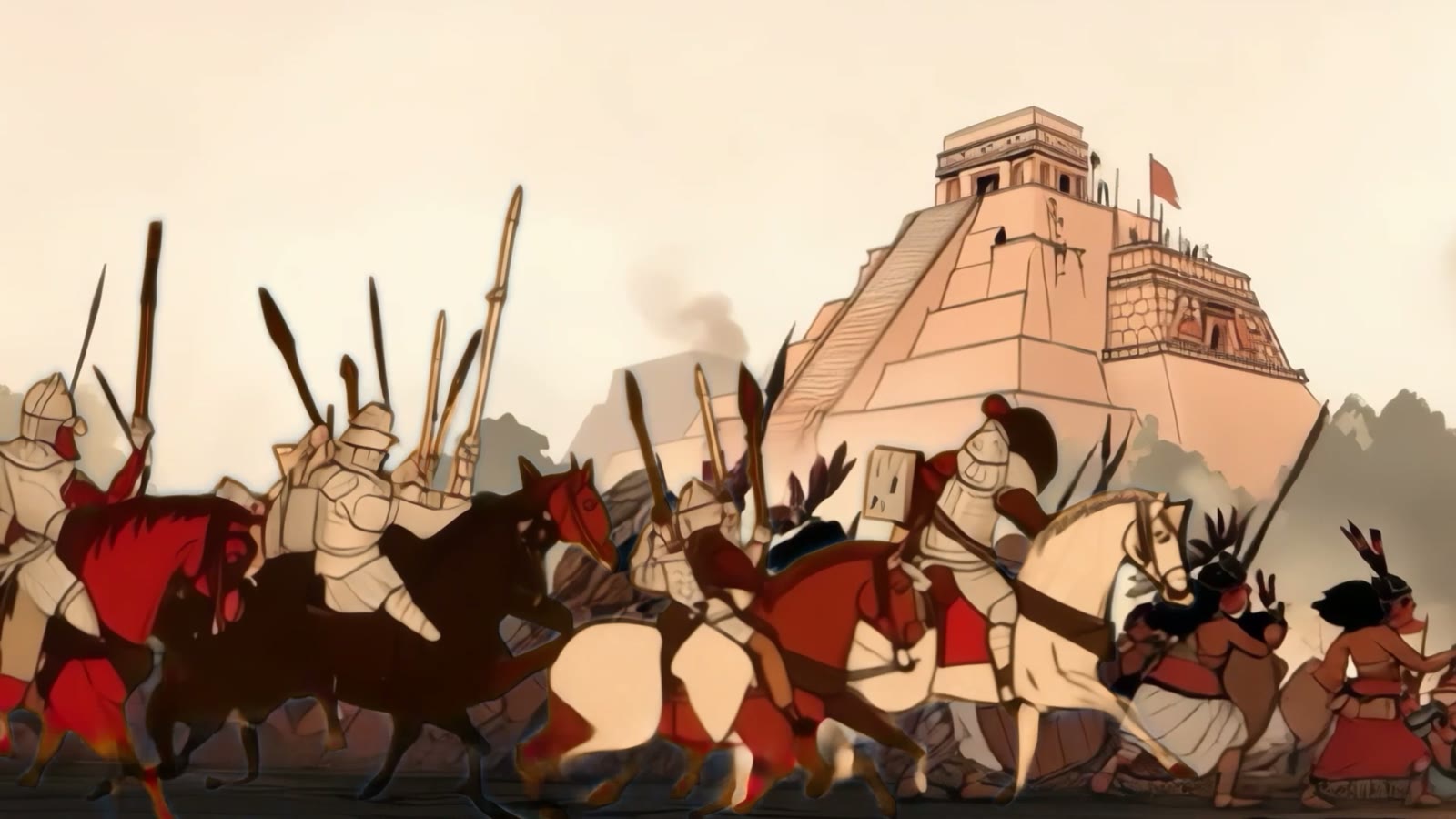
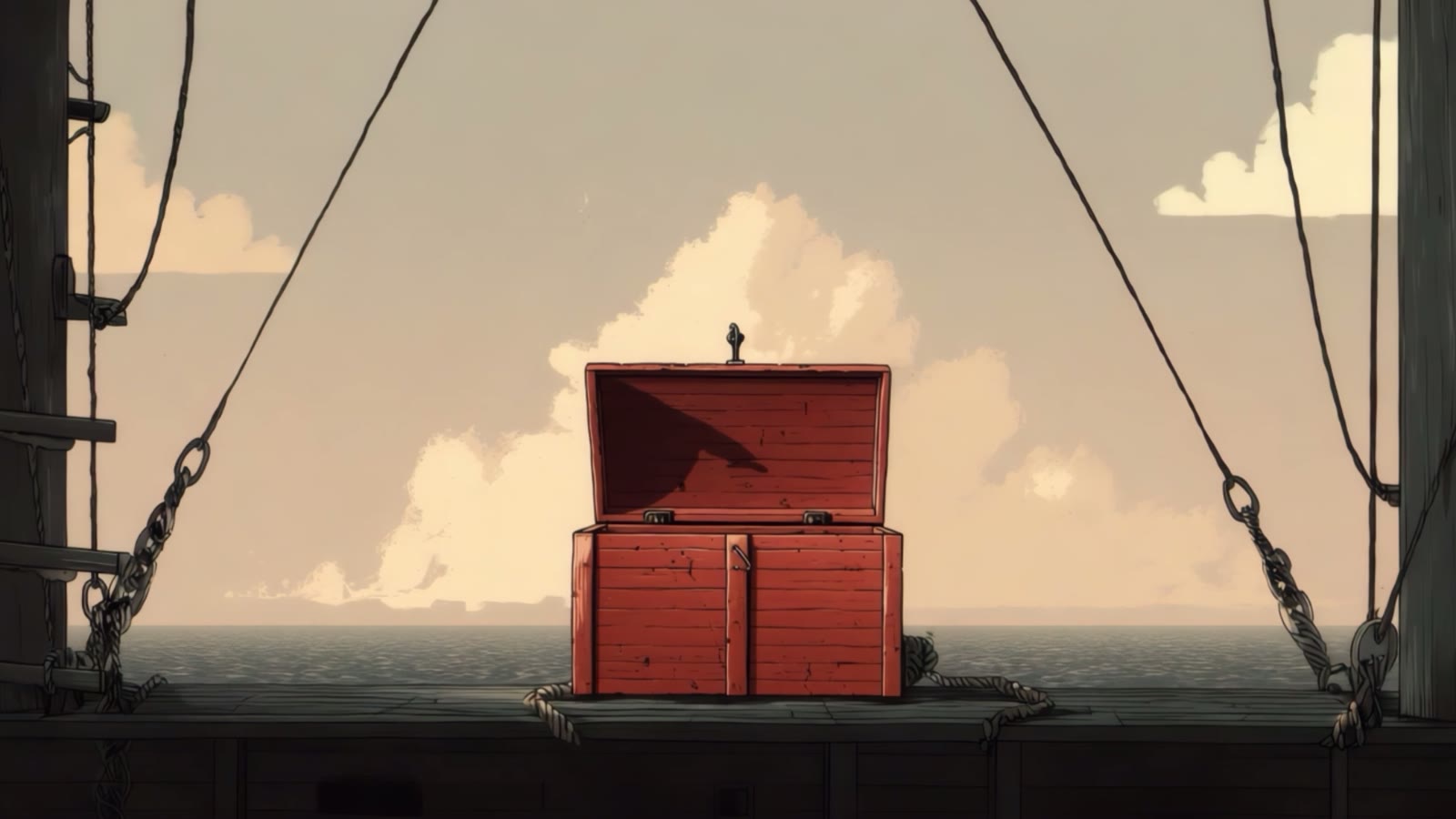
The film describes one encounter. In 1519 Hernán Cortés arrived in Mexico and began seeking indigenous allies for his attack on the Aztec capital. He and his men met the leaders of Tlaxcala, who showed the Europeans an enormous bone to prove their formidable ability as warriors: their ancestors, they explained, had conquered giants. An object out of the ground took on a political meaning. Cooley thinks Cortés was impressed; he may have been, or not — we do not know. What we know is what followed. The Spanish accepted the explanation, the Tlaxcalans helped take Tenochtitlan, and after much bloodshed it became Mexico City. The bone is now known to be the remains of a Columbian mammoth. Cortés arranged to send it as a gift to the Holy Roman Emperor Charles V; it is not clear it ever reached Europe.
The film’s task was to explain that encounter, and it stays with the object: carried, shown, accepted, hung in a hall, drawn, and finally crated for a king.
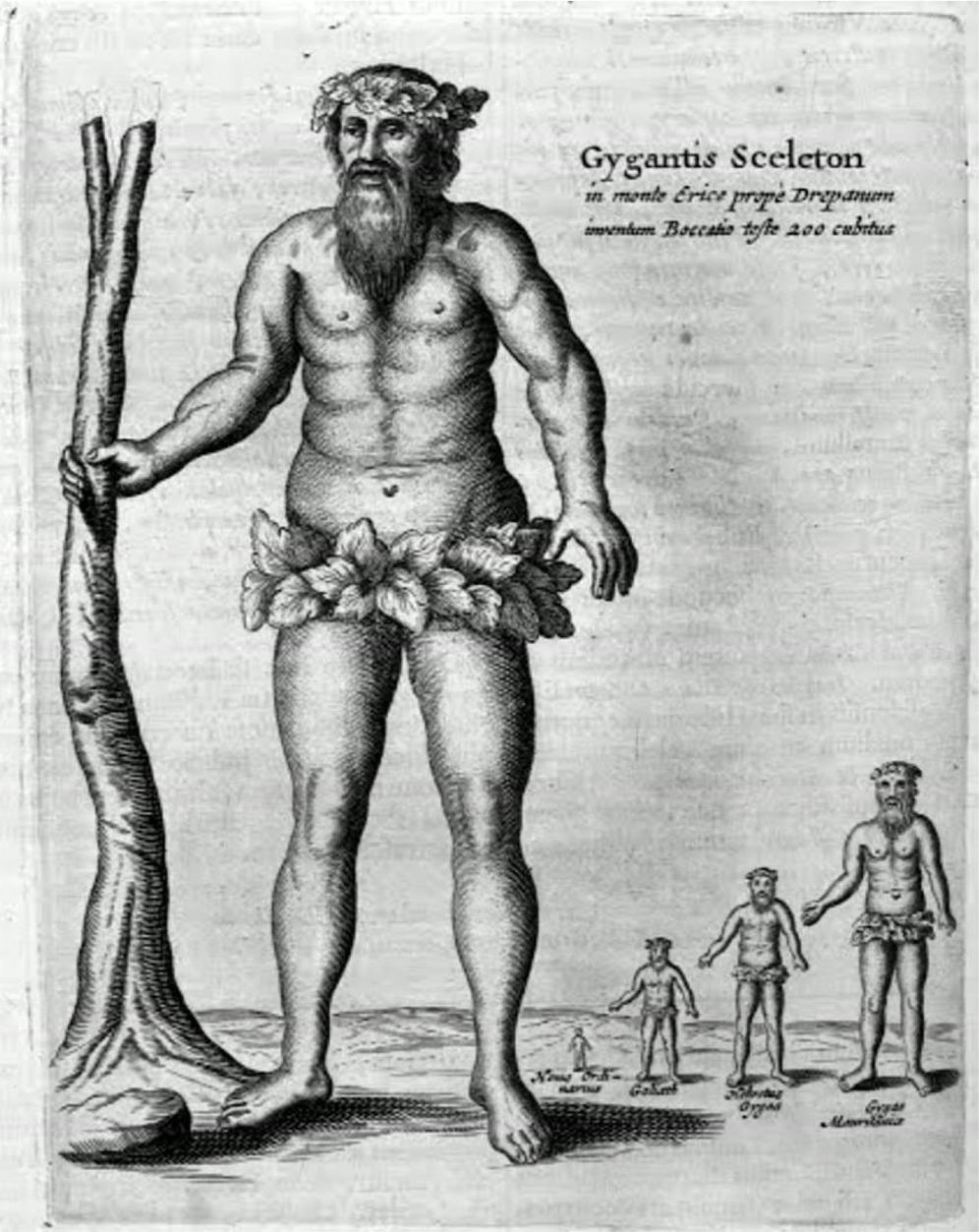
The giants are drawn in the style of the engravings in Cooley’s sources, like the “Gygantis Sceleton” below.
The Dan David films
Each year the Foundation chooses, with the laureate, the subject of the film they are honoured for, and we turn it into script, image and motion. The laureate sees it for the first time on the evening of the prize — on the big screen, in a room full of people who have come to honour them. Afterwards the films go out on social media, YouTube, Facebook, LinkedIn and more, and on the Foundation’s own site, beside the committee’s reasoning and the laureate’s interview, and some laureates carry them into their own classrooms, to show what it is they work on.