Dan David Foundation · 2026 · Prize ceremony & social media
On Giancarlo Marcone, and who is allowed through the gate.
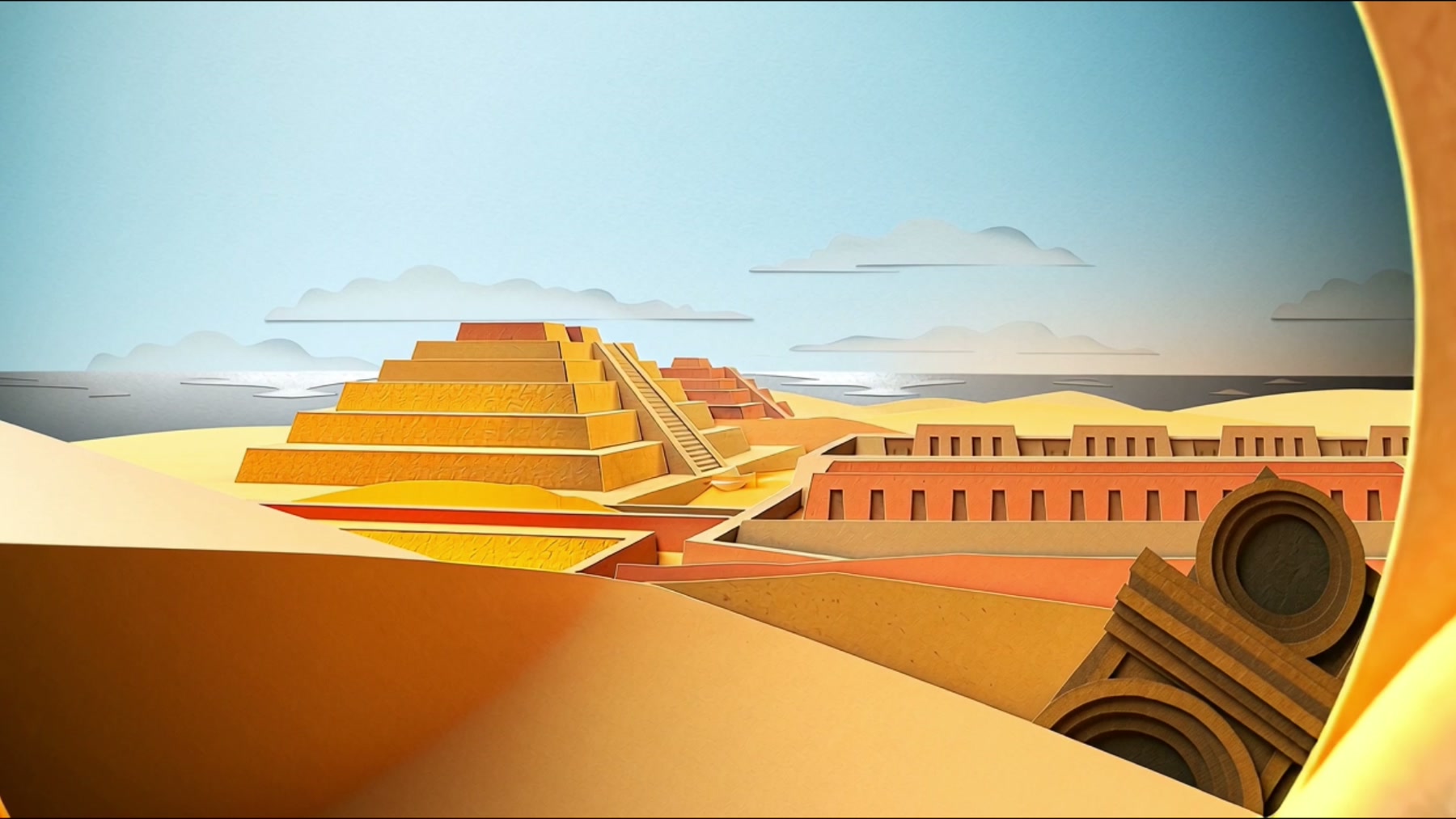
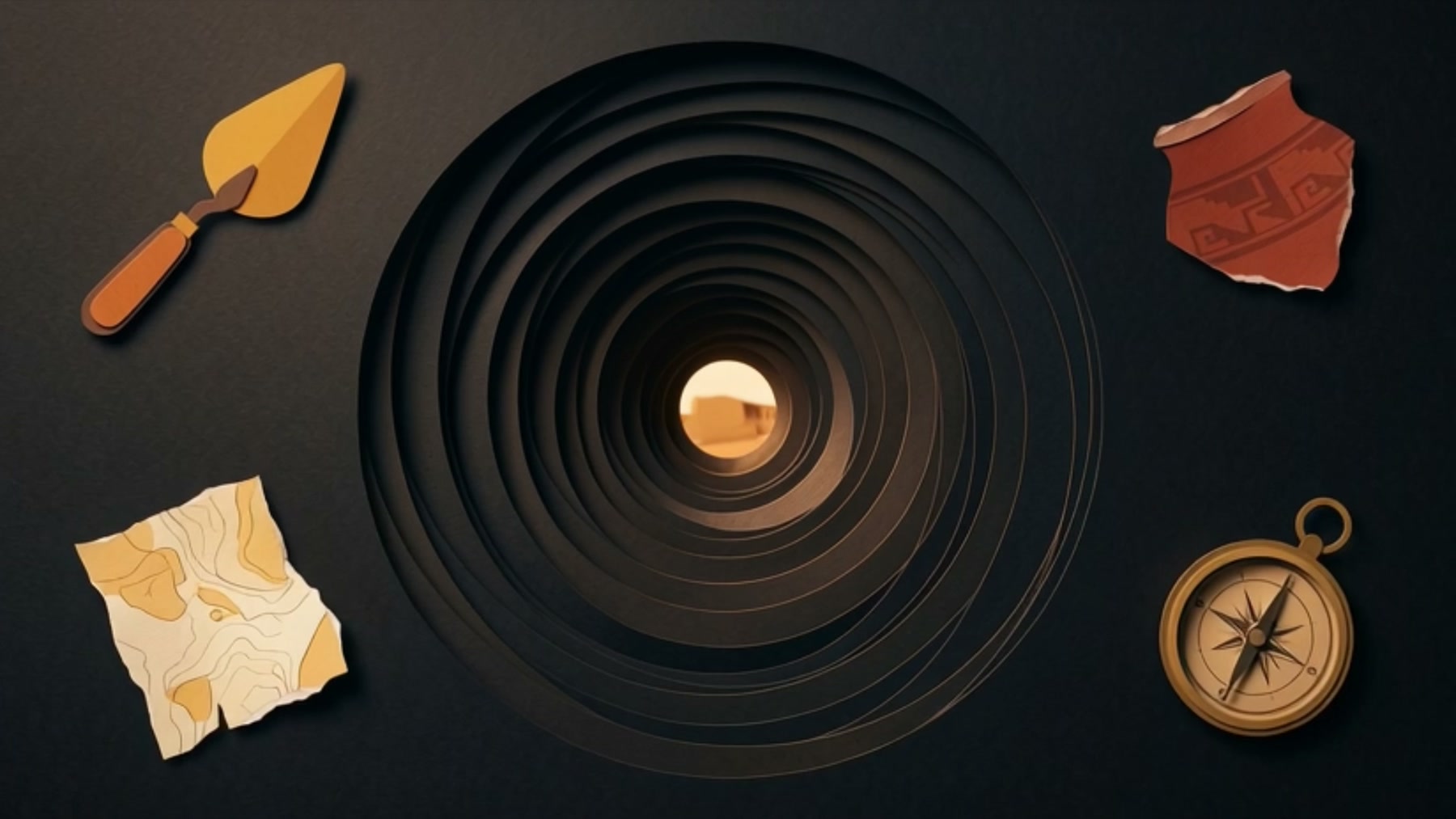
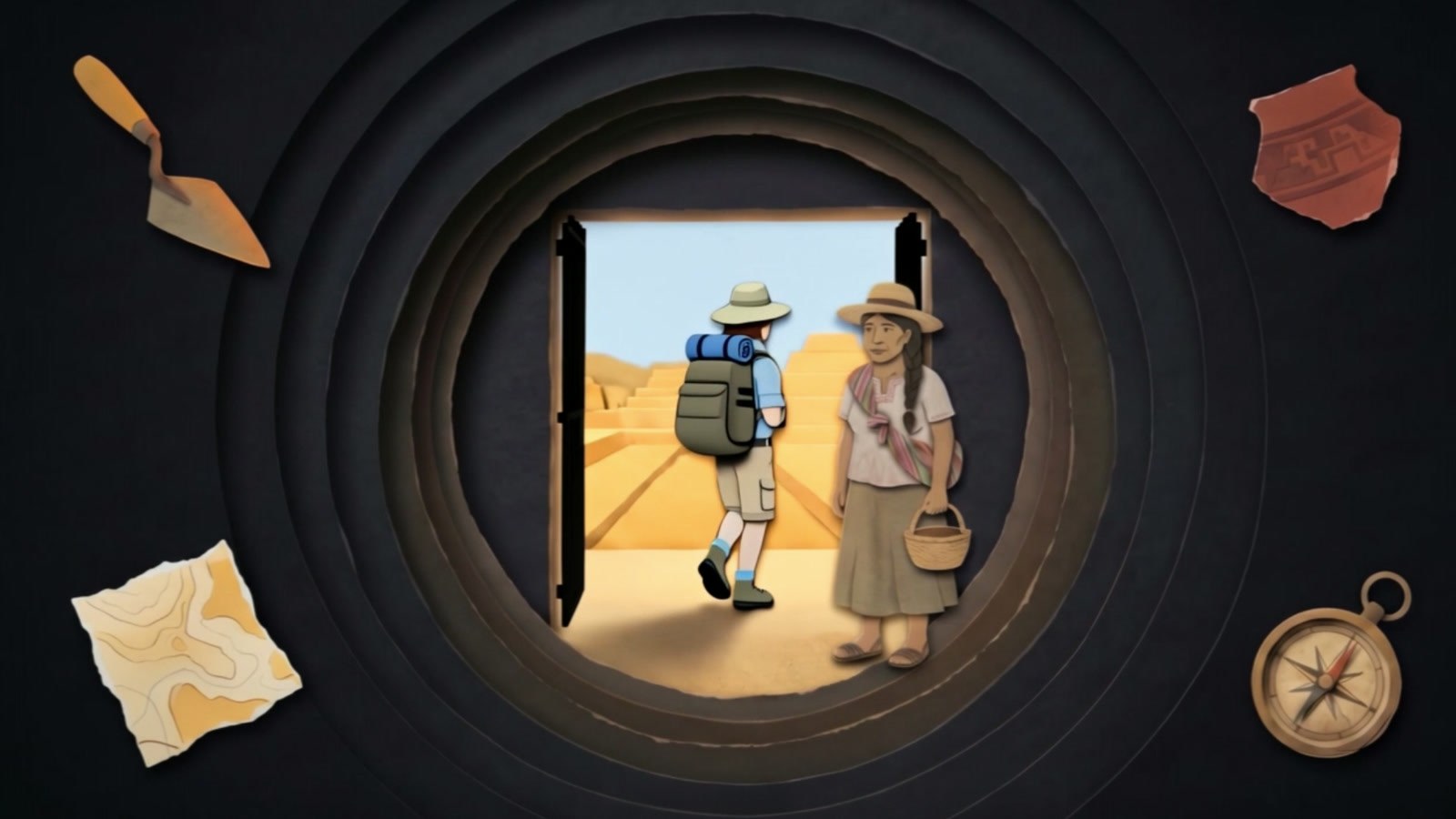
A three-minute film seen entirely through rings of cut paper — part camera iris, part excavation section. It opens on a locked site and ends with the community walking onto it.
- Client
- Dan David Foundation
- Subject
- Giancarlo Marcone Flores, UTEC, Lima
- Direction
- Daniella Koffler
- Animation
- Moofa Animation Team
- Year
- 2026
The subject
Archaeology usually arrives at a site from the outside. Specialists come in, the ground is fenced, findings leave in boxes, and the people who live beside the ruin are described in the report rather than consulted about it. Marcone’s work is about reversing that: designing heritage sites with the communities around them, and treating the pre-colonial and colonial landscapes as one continuous thing rather than two separate periods.
The Dan David Prize selection committee praised “Marcone’s transformative approach to archaeology that prioritizes the co-design of heritage sites with local stakeholders, and for scholarship that transcends typical chronological boundaries, revealing the deep continuities between the pre-colonial and colonial landscapes.”
The aim
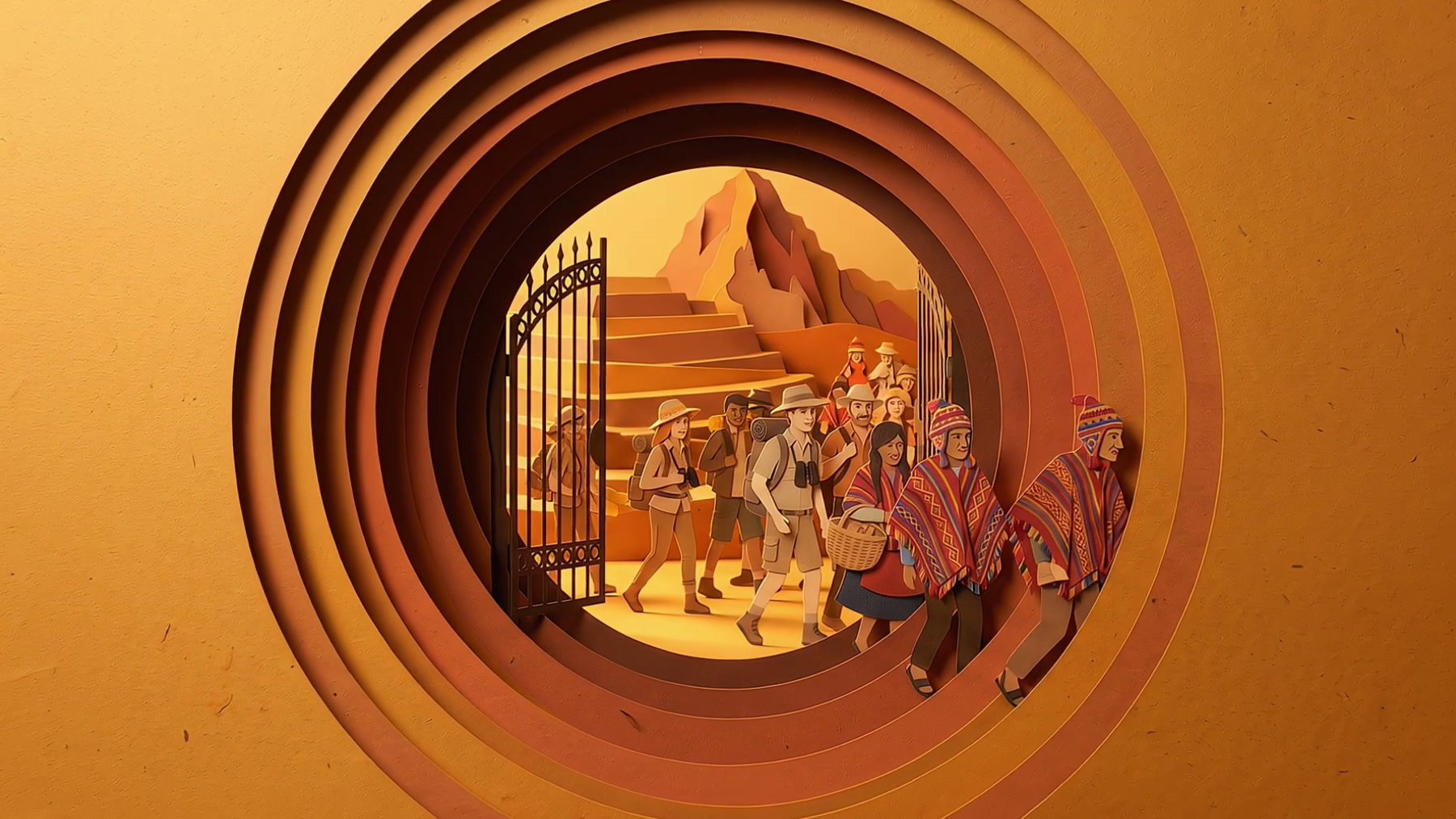
Co-design is an idea that resists illustration. We chose to look at it with curiosity, through a paper “keyhole”: who takes part, and how? The film takes the one image it has been using all along — a circular view controlled by a gate — and it opens the gate.
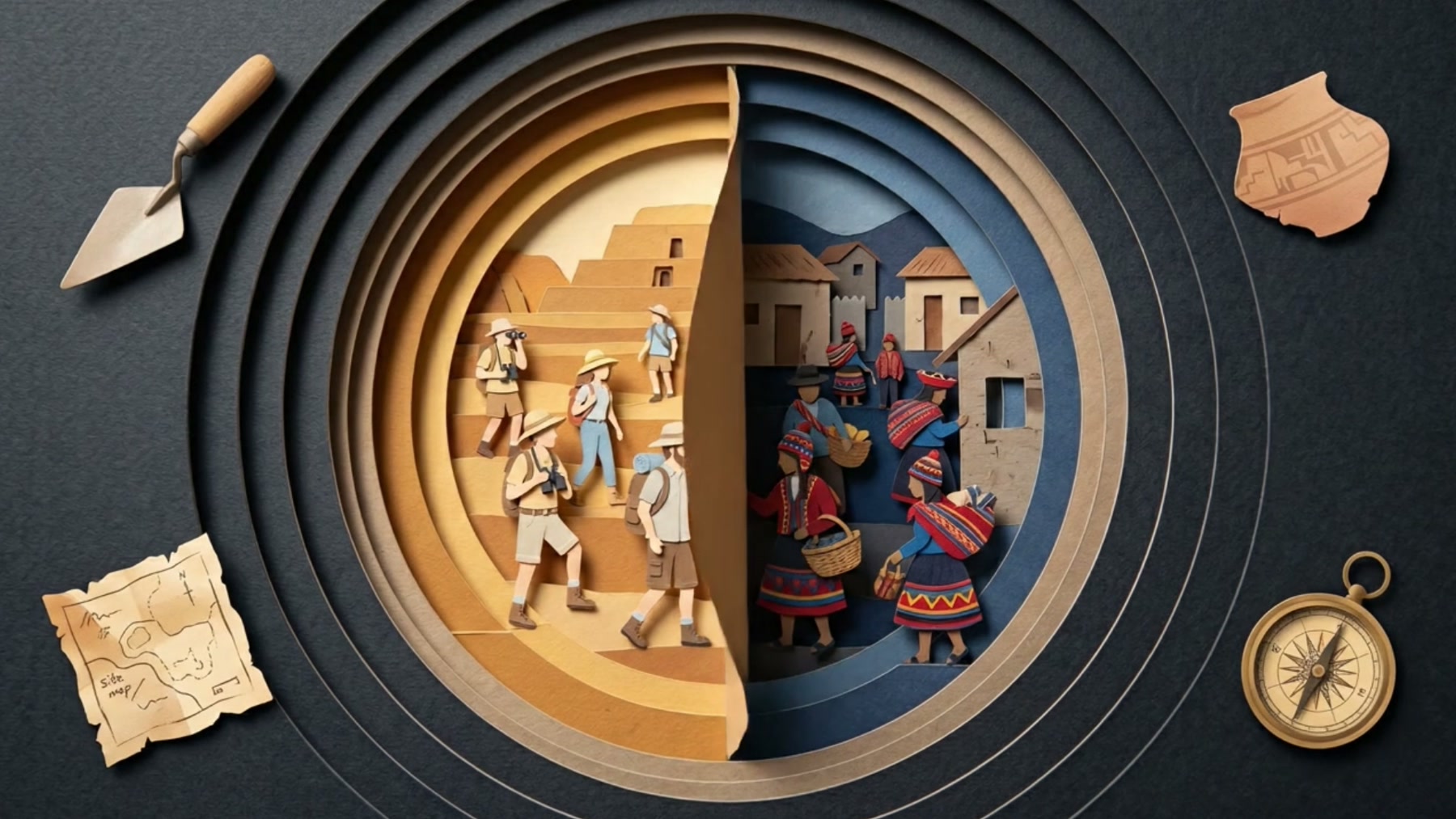
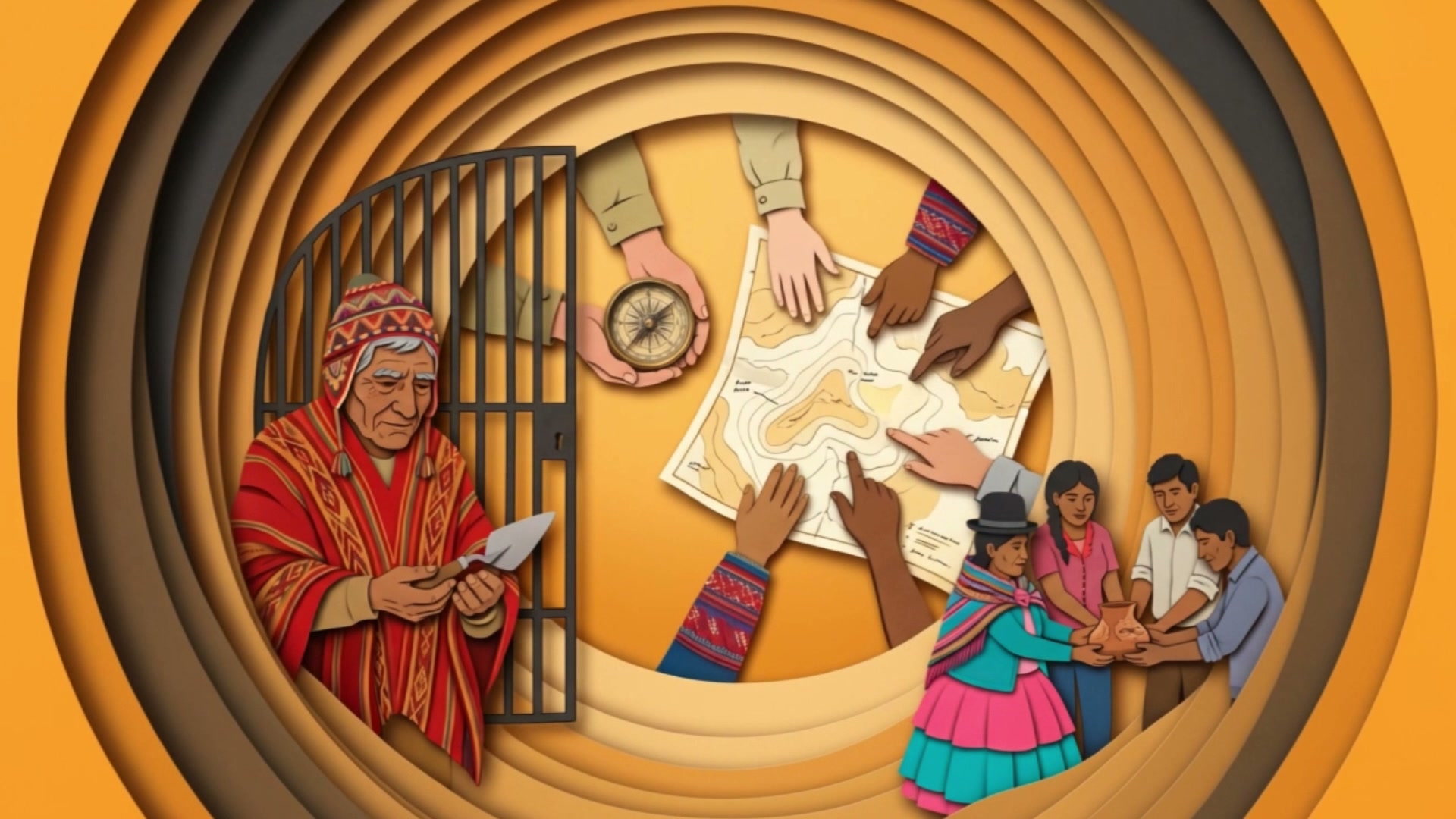
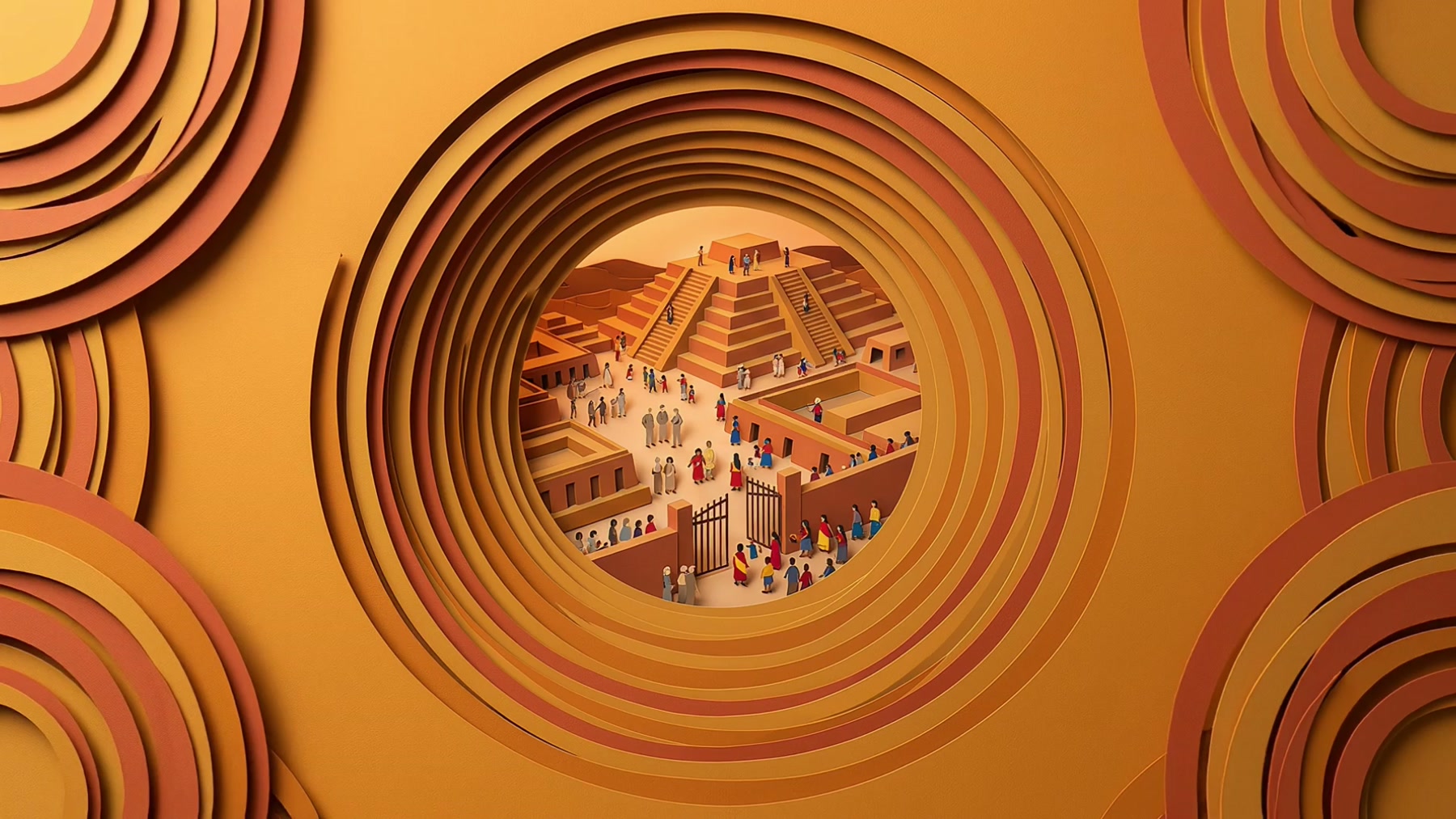
In the second half of the film, the hands on the map are no longer the same hands: a local hand holds it now too. The figure in the red poncho, who has stood behind the bars until now, steps inside. A whole crowd follows through the gate, musicians, women in bright skirts, families, and they all go up onto the site. The bars disappear. Just before the rings close, we see the ancient structure full of people.
What matters most to us: the community never appears in the film as something to be studied. They are the people holding the map.
Who is inside, and who is outside
The film says all this through the frame, not through the narration. The archaeologists’ tools, a trowel, a sherd, a map and a compass, lie on the table outside the circle and never enter the picture. And at the start of the film, when the rings open, what waits behind them is a locked gate.
About the laureate
Giancarlo Marcone Flores is an archaeologist of the Peruvian central coast and Director of the Department of Humanities, Arts and Social Sciences at UTEC, the Universidad de Ingeniería y Tecnología in Lima. His research runs from late pre-Hispanic political and domestic economies and the lomas fog-oasis settlements of the Lurín valley to the way Inca infrastructure still shapes the roads in use today — alongside heritage work on participatory management with communities that are usually left out of it.
The Dan David films
Each year the Foundation chooses, with the laureate, the subject of the film they are honoured for, and we turn it into script, image and motion. The laureate sees it for the first time on the evening of the prize — on the big screen, in a room full of people who have come to honour them. Afterwards the films go out on social media, YouTube, Facebook, LinkedIn and more, and on the Foundation’s own site, beside the committee’s reasoning and the laureate’s interview, and some laureates carry them into their own classrooms, to show what it is they work on.