Dan David Foundation · 2024 · Prize ceremony & social media

On Stuart McManus, and the manifest that carried people beside spices.

A two-and-a-half-minute tribute on a global historian whose work places the 1619 arrival of Africans at Point Comfort inside the Iberian trading system, and lets the reader see how far back the supply chains we take for a modern invention had actually been running.

Client
Dan David Foundation
Subject
Prof. Stuart McManus, Chinese University of Hong Kong
Direction
Daniella Koffler
Animation
Moofa Animation Team
Year
2024
Kind
Ceremony film
The subject

Stuart McManus is Assistant Professor of World History at the Chinese University of Hong Kong, and an affiliate of the Weatherhead Center at Harvard. His scholarship links regions historians usually study apart, North America, Latin America, West Africa, South China, and locates their connections in the early modern world.

His forthcoming book The World of 1619 (Harvard University Press) argues that the landing of the first Africans at Point Comfort, Virginia was not an English or Anglo-Atlantic event but an extension of an Iberian slave system that was already, in that year, a planetary supply chain. The Dan David Prize honored McManus as a global historian of the early modern period whose work spans the spread of Humanism and the links between Atlantic slavery and a much wider network of trade and human trafficking that spanned the early modern globe.

The aim

McManus's story is one most people who think they know 1619 do not know. The Africans who were sold in Virginia that year had been captured in Angola by an alliance of Portuguese merchants and placed on a ship owned by a converso, a person of Jewish descent, who also traded in goods from Europe and Asia. The supply chains we treat as an invention of the last few decades were already running four centuries earlier, and human beings were traded alongside silks, ceramics and spices.

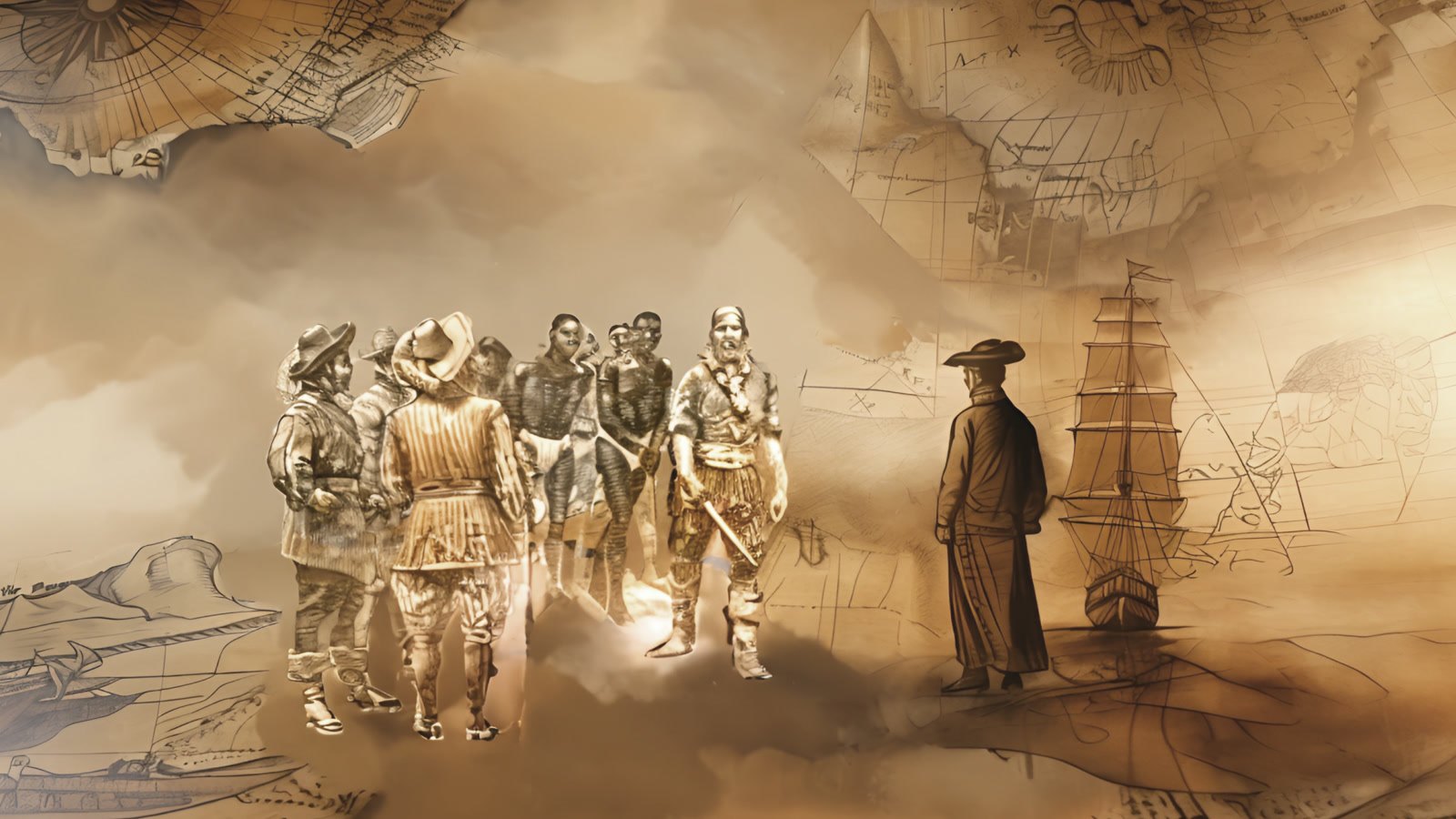
The film holds both sides of that sentence. It draws the trade as a rich world, in gold and sepia over old maps: merchants, ships, blue-and-white porcelain, jars of spice. And it keeps returning to the people inside it, close enough to see their faces. They were not ceramics, and they were not silk.

That was the heart of the design and of the direction: to give faces to people who were only human beings, and who were treated like spices and the other raw materials of the period.

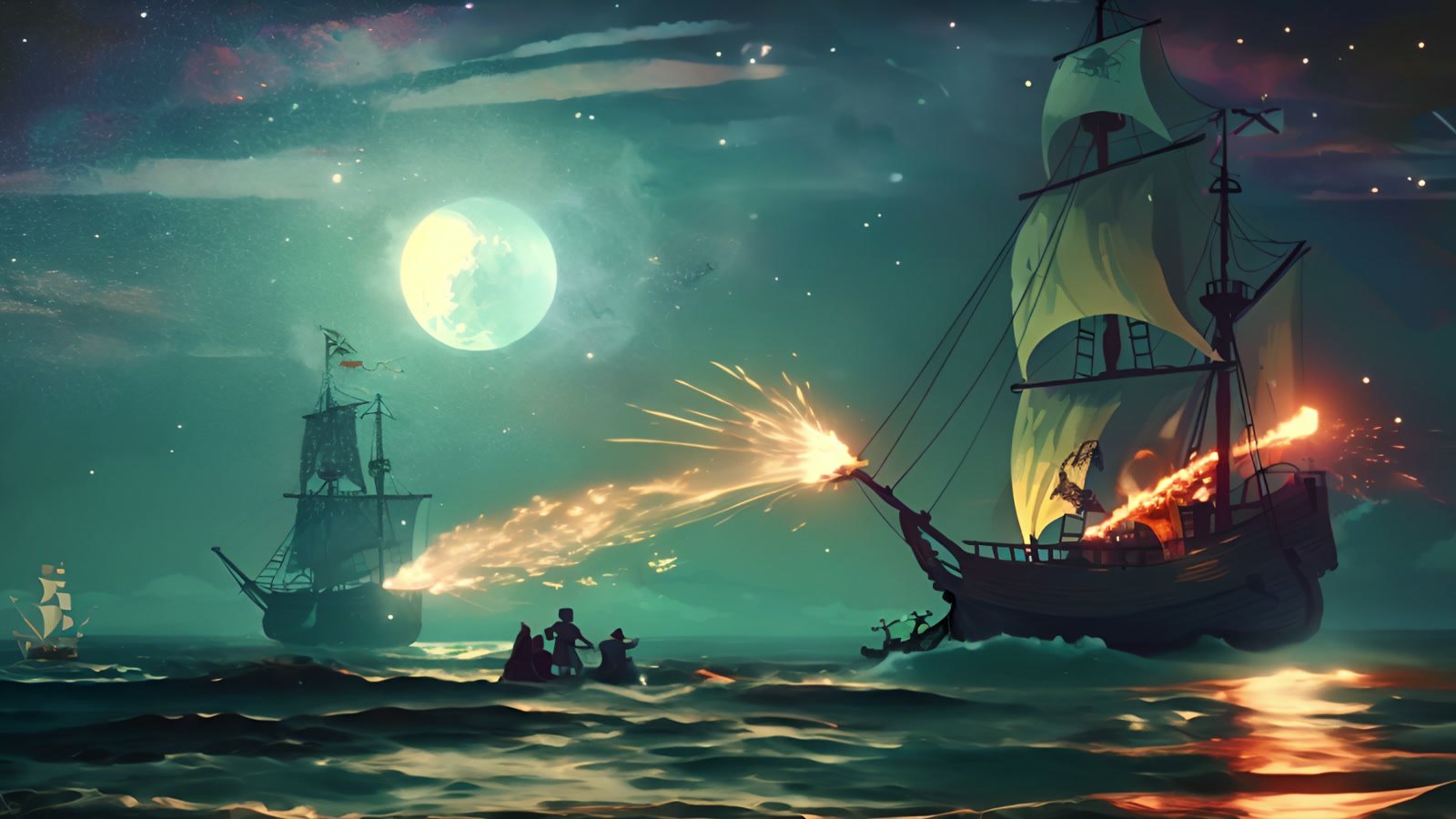
Film still: a ship under a full moon, firing a broadside at another ship at night
The opening

A night attack at sea.

“In August 1619, the San Juan Bautista was attacked by English privateers off the coast of New Spain.” The film opens on the attack, by moonlight, and then goes below deck, past the ship’s stores, into the hold.

Film still: close-up of three men's faces in the crowded hold of a ship, many others behind them
In the hold

Three faces, close.

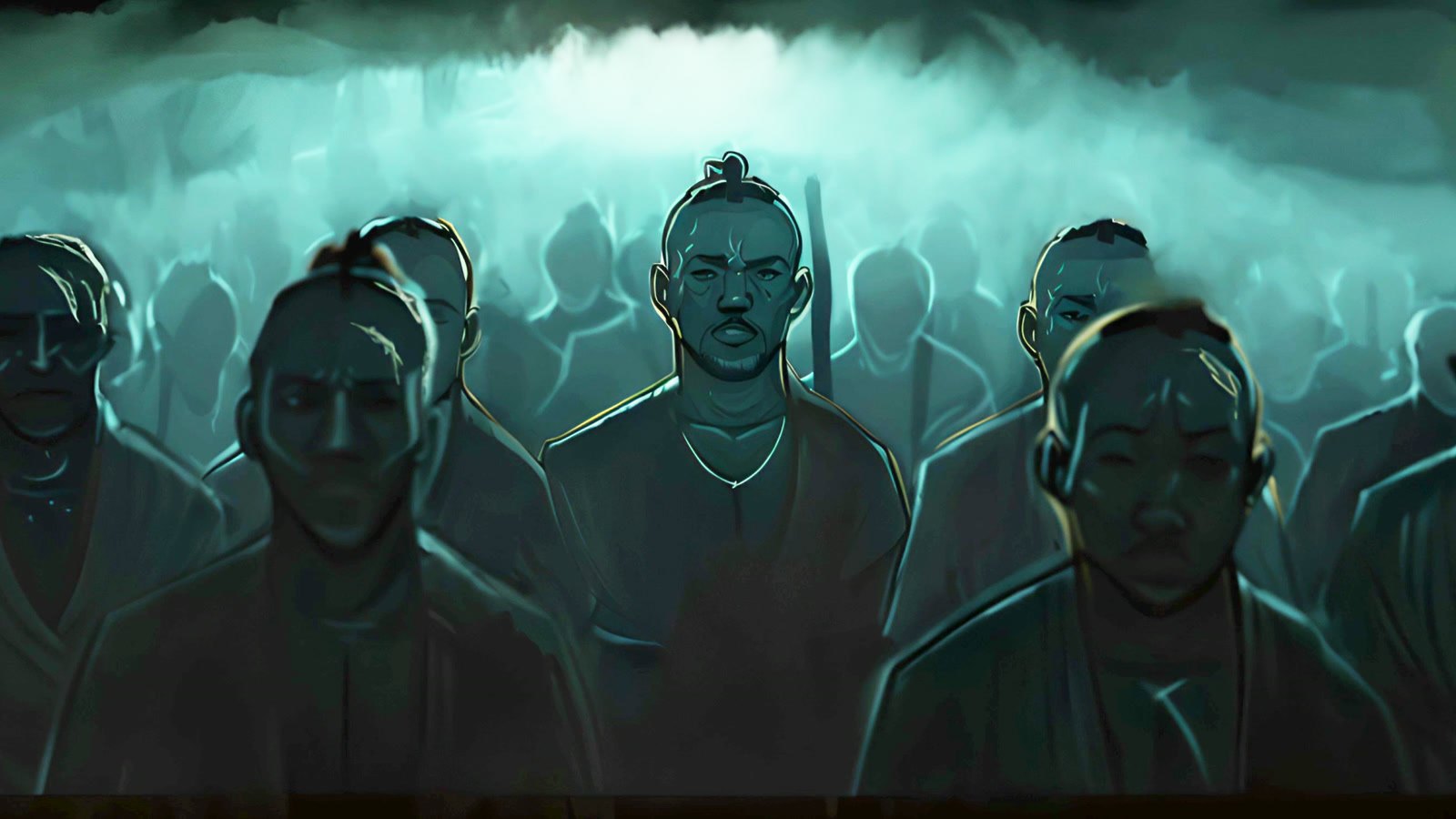
The privateers took “the ship’s stores, as well as sixty slaves.” The film does not leave them as a number. It moves in from the crowded hold to three men and holds on their faces. This was a deliberate choice, a kind of activist direction: the people the trade counted beside its goods are the ones the film looks at, face to face.

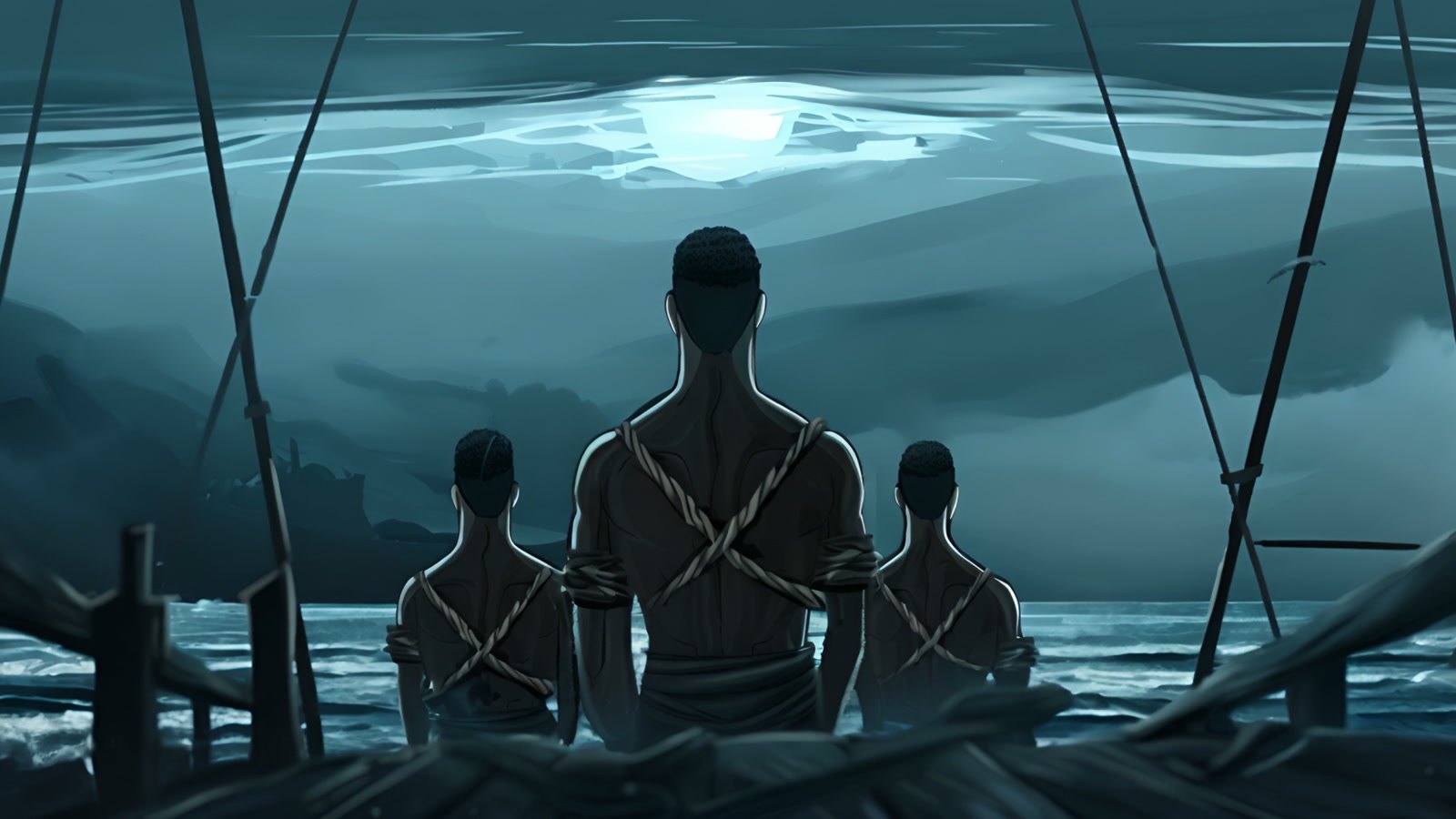
Film still: three bound men on the deck of a ship at night, seen from behind, looking toward the shore
On deck

Toward the shore.

Then three men on deck, bound, looking toward land, as the narration says that some of them were sold in the colony of Virginia, “the first enslaved Africans in British North America.”

Source material
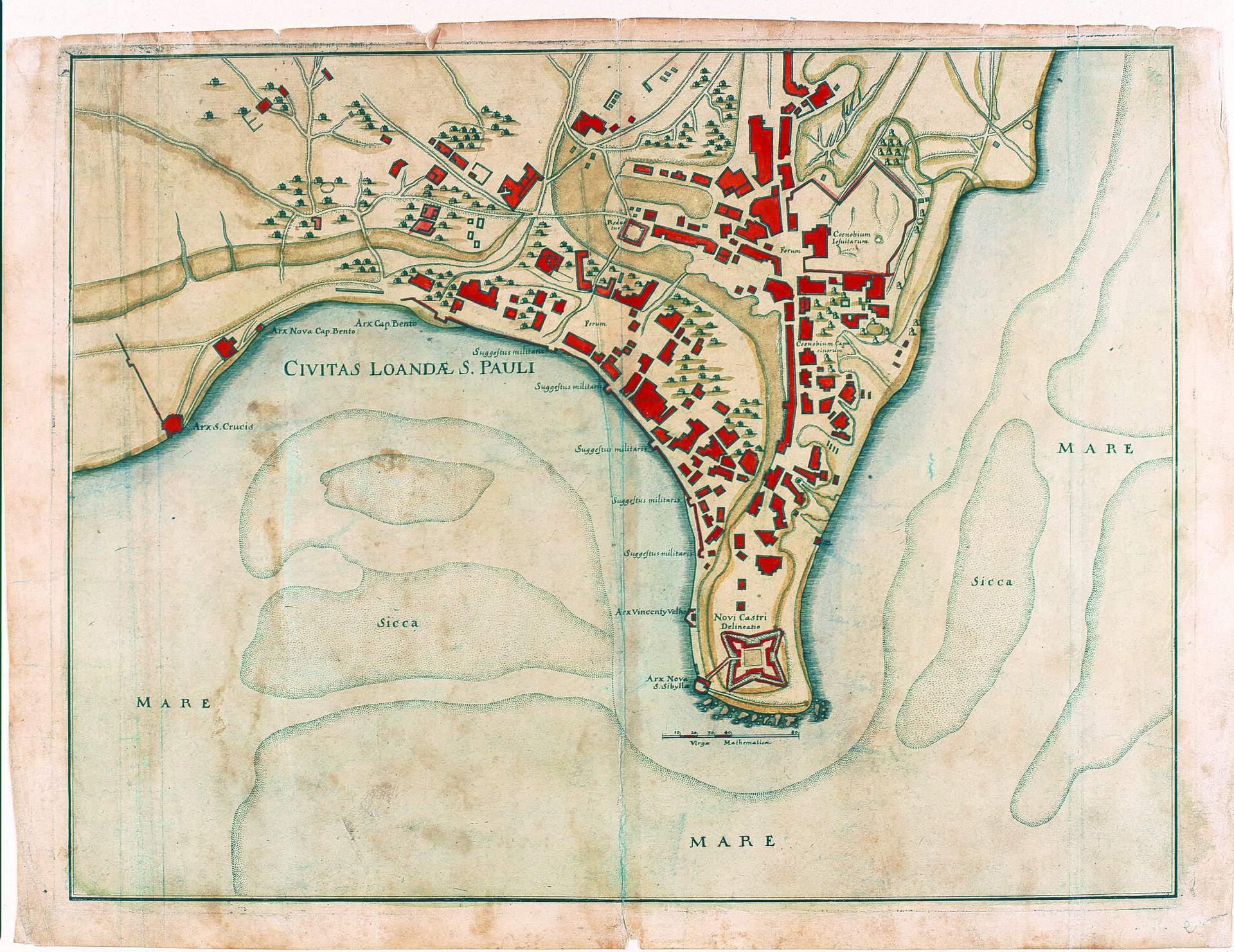
17th-century view of Luanda by Pierre d'Avity
Pierre d'Avity, Civitas Loandae S. Pauli, 1649. Biblioteca Europea di Informazione e Cultura (BEIC). A view of Luanda, the Portuguese port in Angola. Public domain.
What we did with it
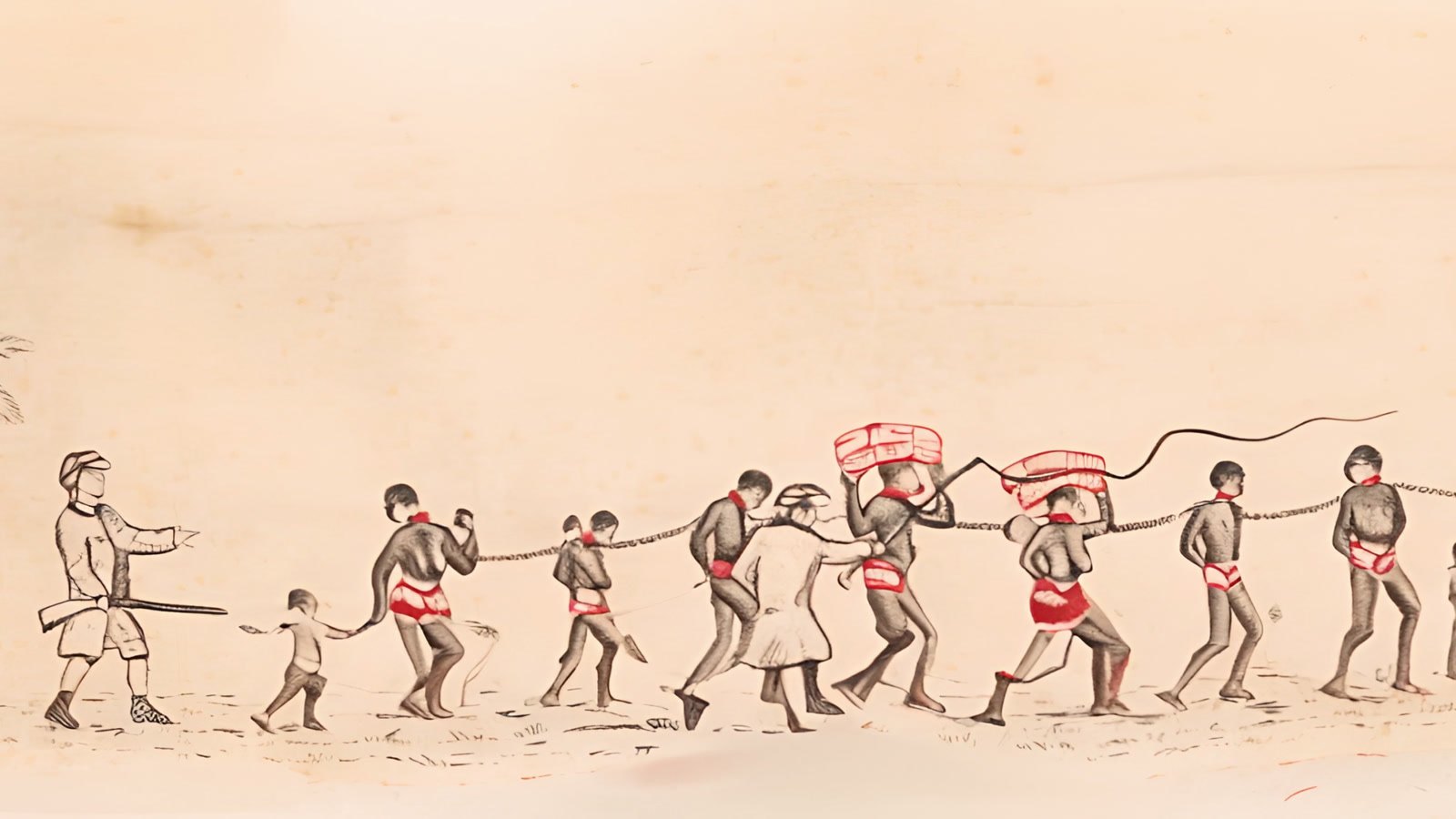
Film still: a line of captives, bound together and carrying loads, driven by an armed man, drawn in ink on pale paper
Captured in Angola. “These enslaved people had been captured in Angola by an alliance of Portuguese merchants.” The film draws the line of captives in ink on pale paper, with touches of red.
A world of goods

“Their story must be understood in the context of a sprawling early modern world, where enslaved people were traded alongside silks, ceramics and spices.” The film draws that world in full, rich and golden, so that the people traded in it stand out against it.

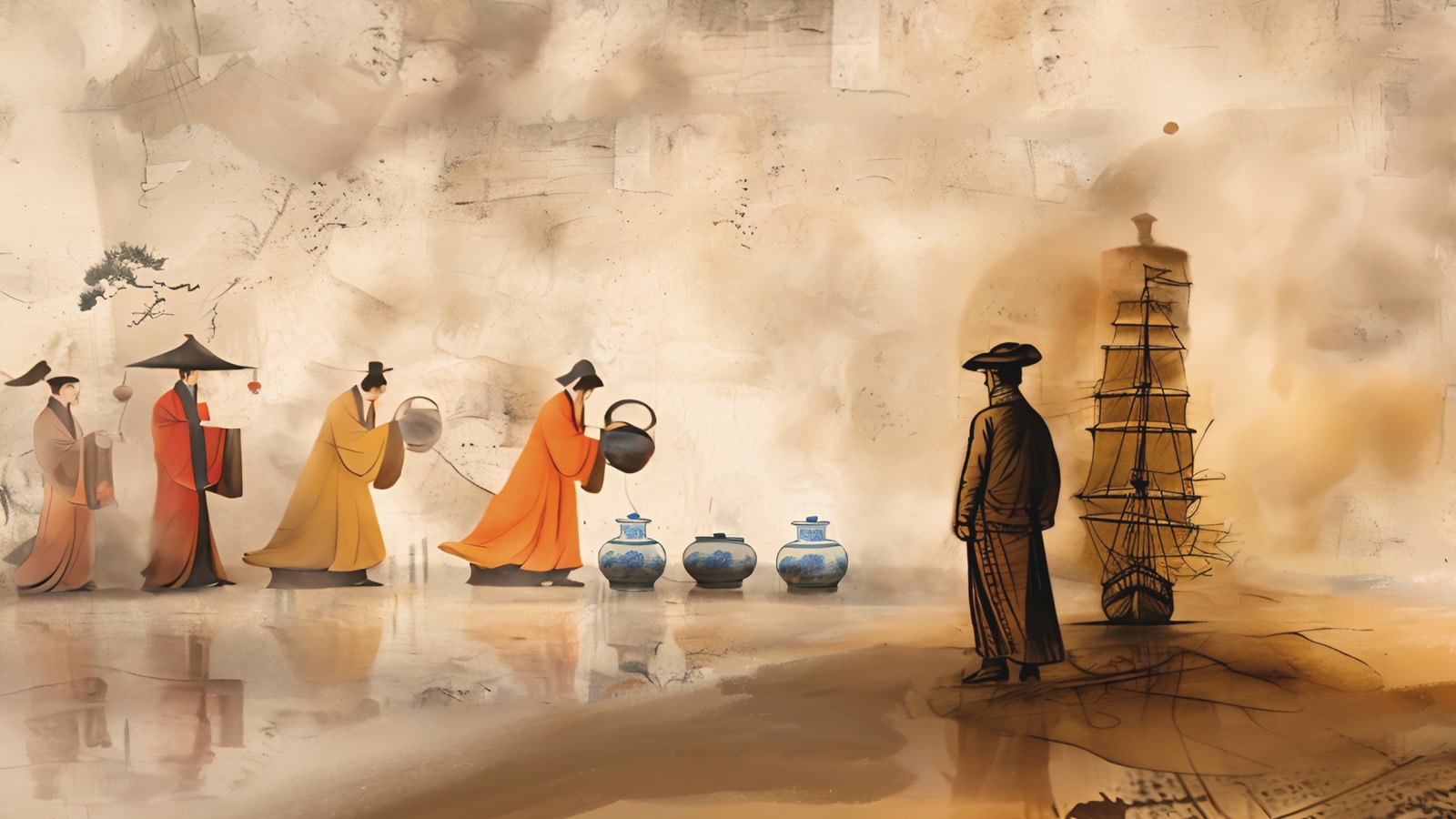
Film still: Portuguese merchants and captives on one side, a man in a dark robe and hat beside a tall ship on the other, over old maps
The merchants, the captives, and the converso beside his ship.
Film still: the converso beside his ship, looking out over a landscape of Asian cities and pagodas
The converso, who “also traded in goods from Europe and Asia.”
Film still: merchants in long robes bringing blue-and-white jars to the converso by his ship
Merchants bring him blue-and-white jars.
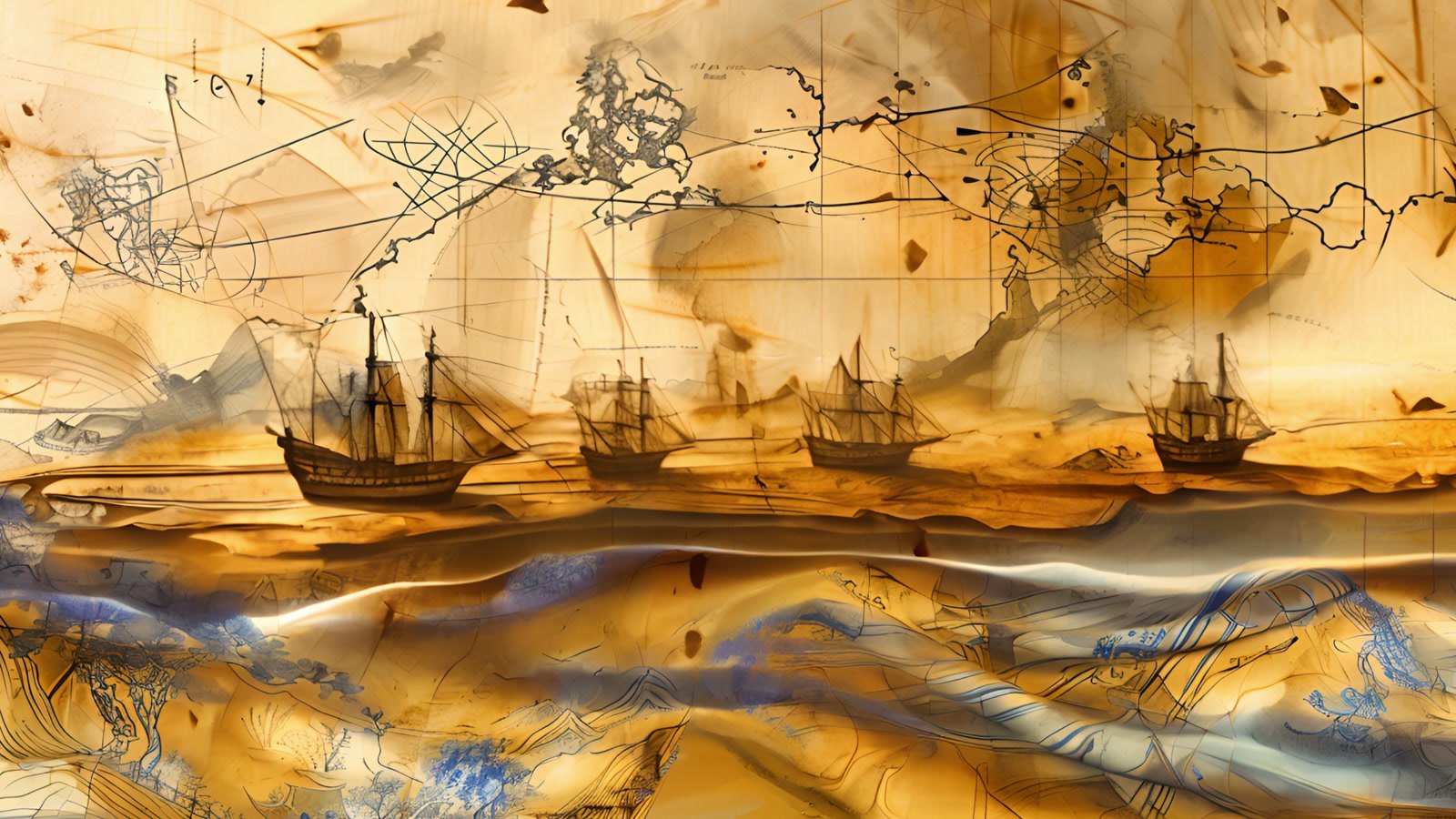
Film still: ships sailing on waves that ripple like folds of gold and blue cloth
Silks: ships on waves that ripple like cloth.
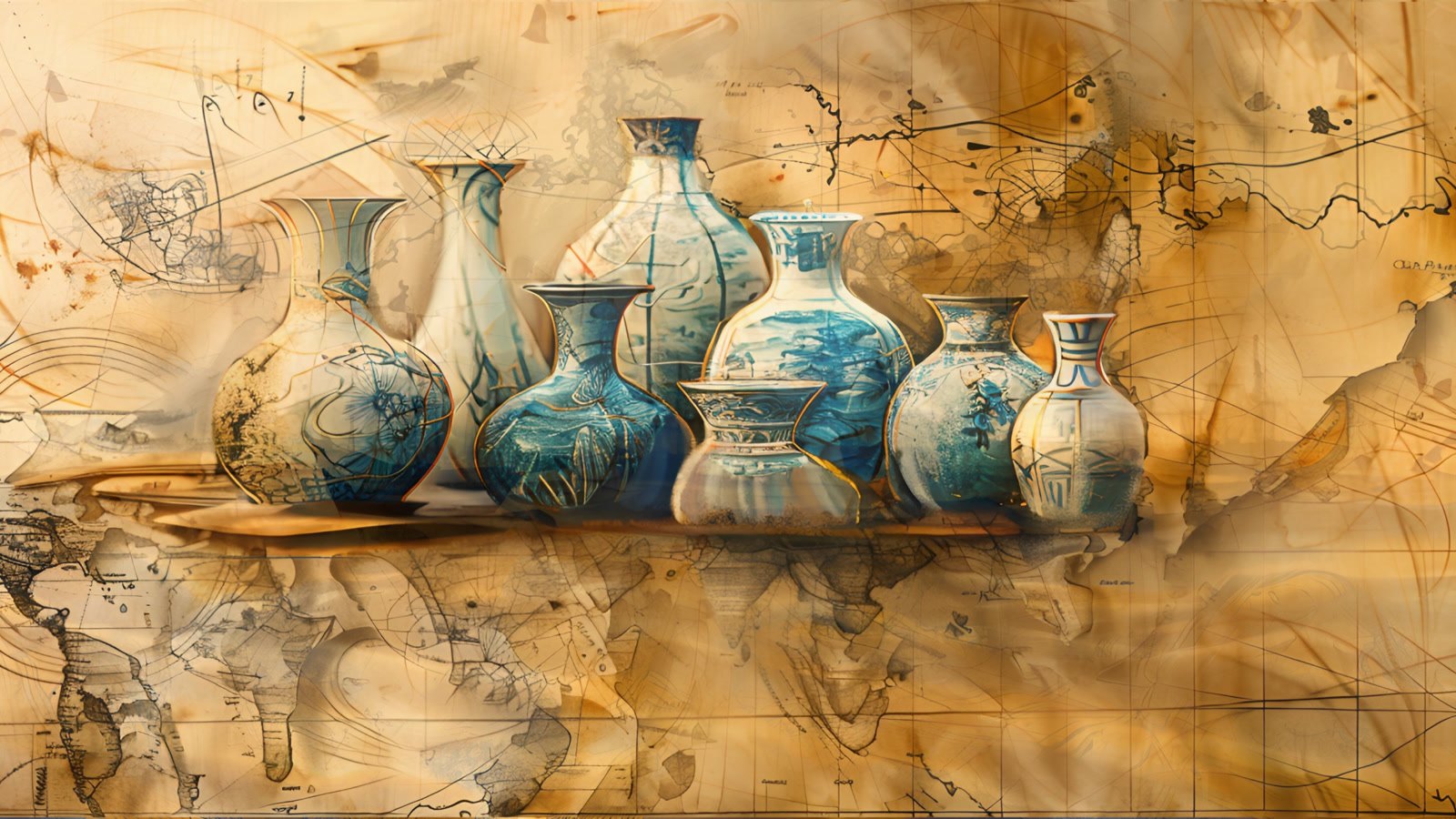
Film still: blue-and-white porcelain vases set out over an old map
Ceramics: blue-and-white porcelain over the map.
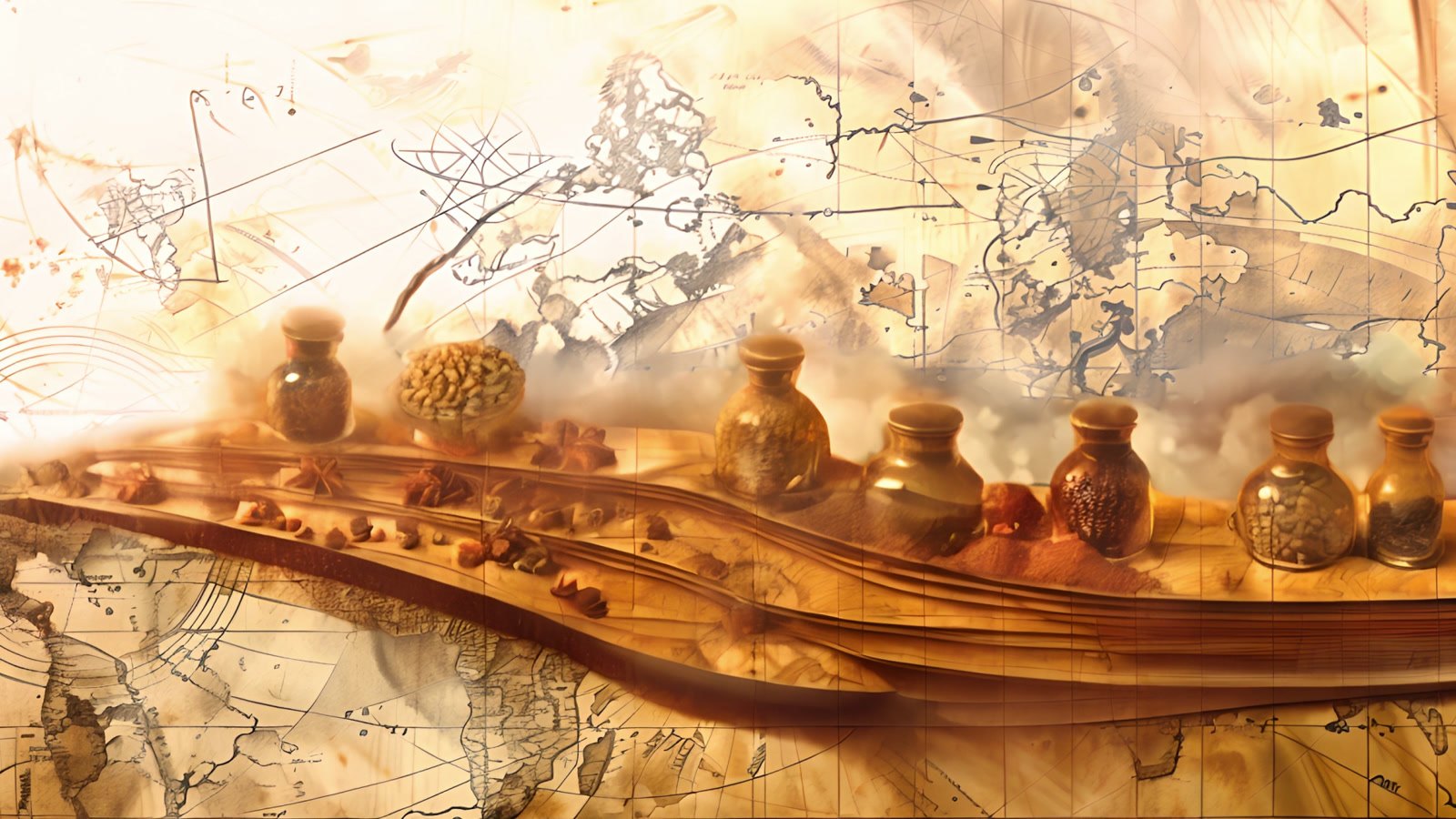
Film still: glass jars of spice set along a golden wave over an old map
Spices, jar after jar, along a wave of gold.
Source material
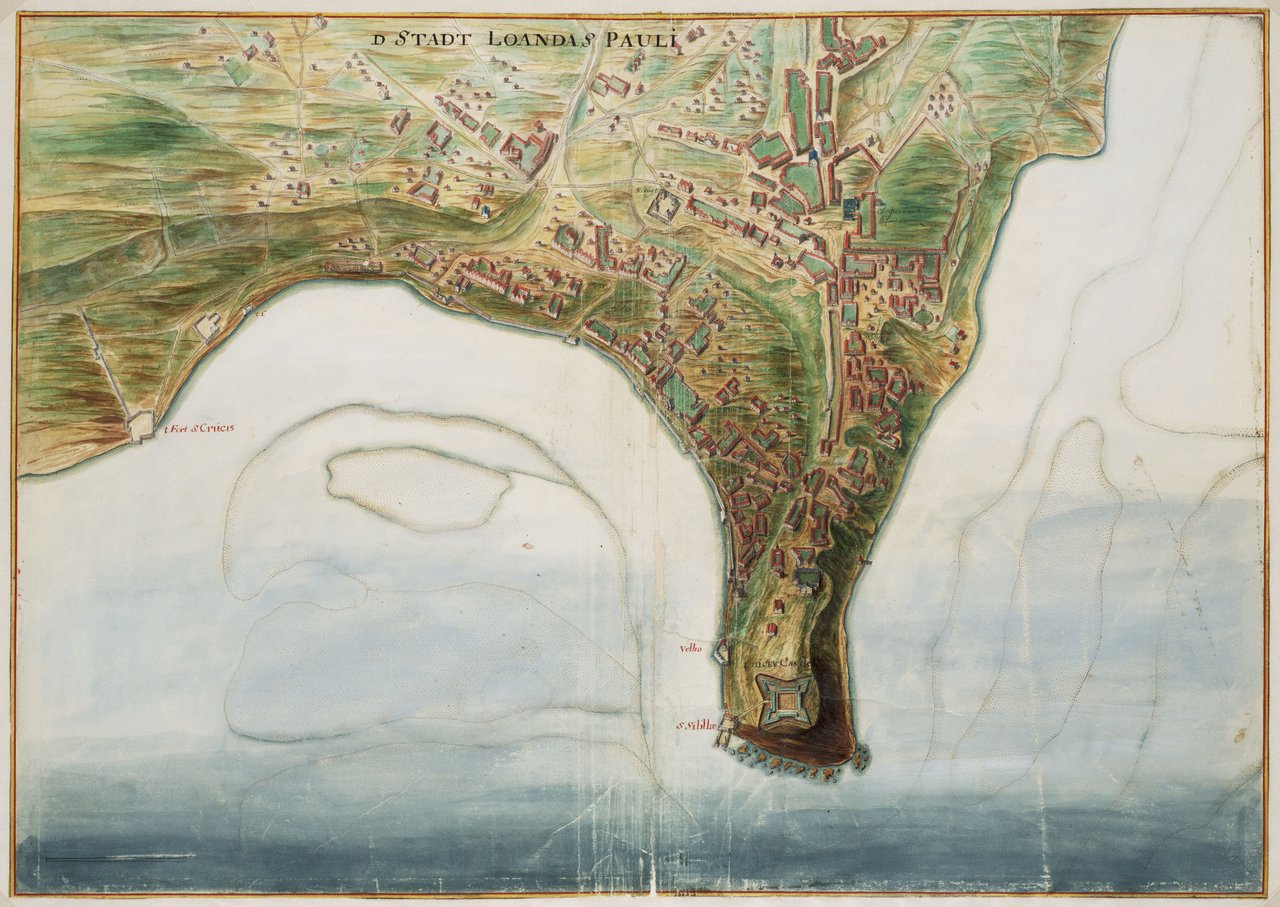
Johannes Vingboons view of Luanda 1665
Johannes Vingboons, D Stadt Loandas Pauli, c. 1665. Nationaal Archief, The Hague. A second view of Luanda, a generation later. Public domain.
What we did with it
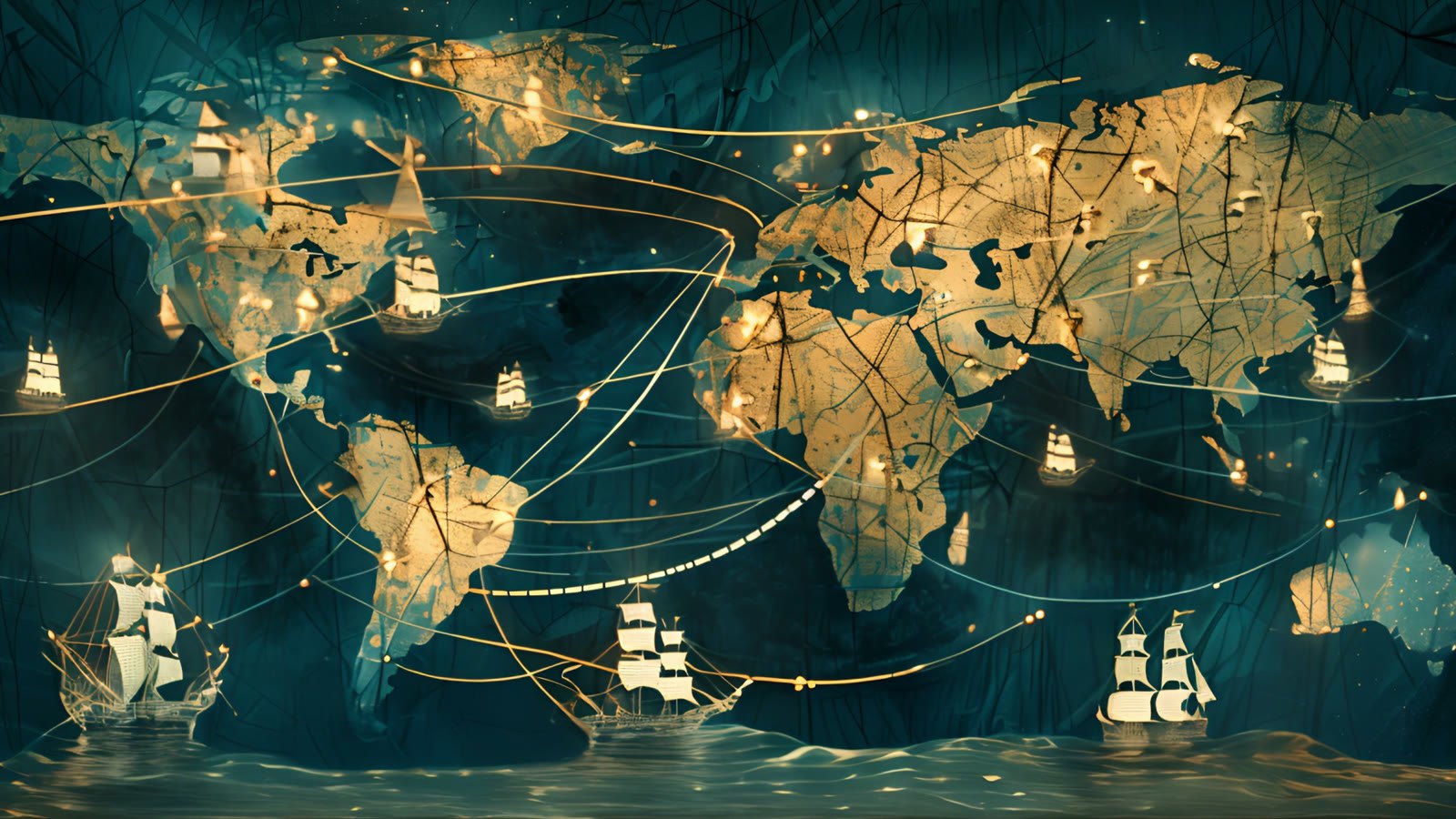
Film still: a glowing world map with ships on every route
The routes. The world map lights up with ships and routes, as the narration follows the captives “en route to New Spain when they were captured.”
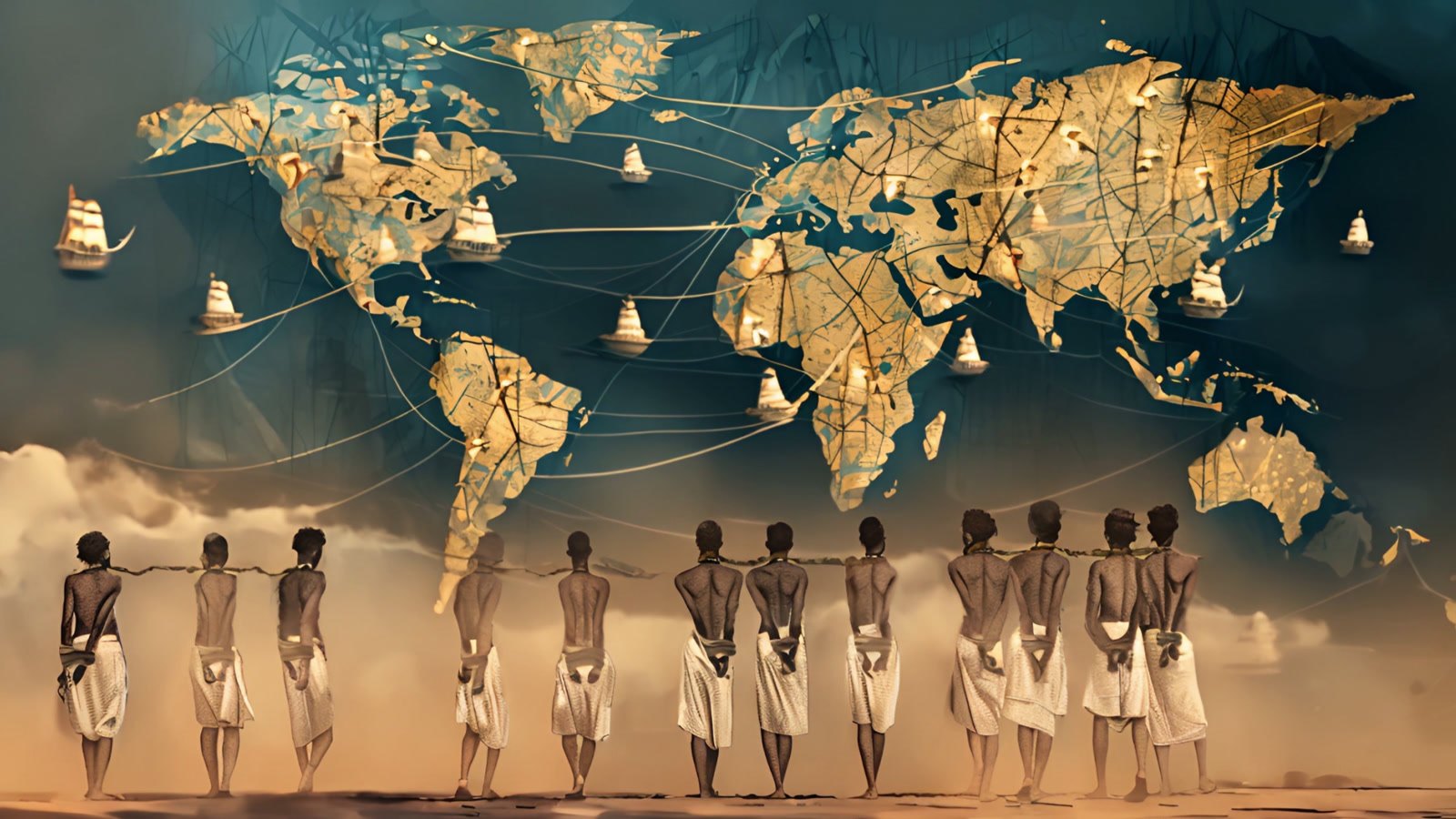
Film still: a row of captives in white cloth, hands bound behind them, standing before a glowing world map with ships
The close of the sequence

Before the map.

The captives stand in a row before the map of the world, as the narration ends: “American slavery was the product of global forces that spanned the Caribbean, Mediterranean, Africa and Asia.”

The Dan David films

Each year the Foundation chooses, with the laureate, the subject of the film they are honoured for, and we turn it into script, image and motion. The laureate sees it for the first time on the evening of the prize — on the big screen, in a room full of people who have come to honour them. Afterwards the films go out on social media, YouTube, Facebook, LinkedIn and more, and on the Foundation’s own site, beside the committee’s reasoning and the laureate’s interview, and some laureates carry them into their own classrooms, to show what it is they work on.
Get in touch

Have a prize that deserves this kind of care?

Tell us about it →