Dan David Foundation · 2025 · Prize ceremony & social media

On Fred Kuwornu, and the question of who is inside the frame.

A short tribute on a filmmaker who has spent his career recovering the Black presence in European history, and whose film we built, unusually, out of his own films and photographs, around the one question that runs through all his work: who is inside the frame, and who was left at its edge?

Client
Dan David Foundation
Subject
Fred Kudjo Kuwornu, filmmaker (Do The Right Films)
Source material
films and photographs by Fred Kudjo Kuwornu, including We Were Here (2024)
Direction
Daniella Koffler
Animation
Moofa Animation Team
Year
2025
Kind
Ceremony film
The subject

Fred Kudjo Kuwornu is an Afro-Italian filmmaker, producer, and educator, born in Bologna to a Ghanaian father and an Italian mother, and based in Brooklyn under his company Do The Right Films. He came to cinema on the Italian set of Spike Lee's Miracle at St. Anna, and has made a career of returning documented but forgotten histories of the African diaspora to public view.

His films run from Inside Buffalo, on the segregated African-American soldiers who fought in Italy in the Second World War, through Blaxploitalian, a century of Black actors in Italian cinema, to We Were Here: The Untold History of Black Africans in Renaissance Europe, which premiered at the 2024 Venice Biennale. The Dan David Prize, which each year honors a small number of practitioners who explore the past outside the university, recognized Kuwornu as an artist, filmmaker, educator, and cultural innovator whose work explores the intersections of identity, race, and historical representation.

The aim

Fred Kuwornu's is the one film in the year that we built out of the laureate's own work. We used actual frames and images from We Were Here, material from his other films, and even his own photographs as a child, and we built the world of the film from his world. It felt right, because the questions that trouble Kuwornu are the questions that troubled us in making his film: who is inside the frame, and who is outside it? Who stands at the centre, and who is pushed to the border?

So the film became a meditation on the frame itself. Its visual world is a world of boxes and of the cabinet of curiosities: shadow boxes that set the African presence in Europe beside what we know as the classical European Renaissance, and leave open whether the two clash or belong together. Gilded frames hang, fill, and empty. Kuwornu's recovered figures step into the centre; the frames that once excluded them become the subject of the film.

Building a film out of a creator's own work made this one very different from the rest of the Dan David series, and yet very much like them.

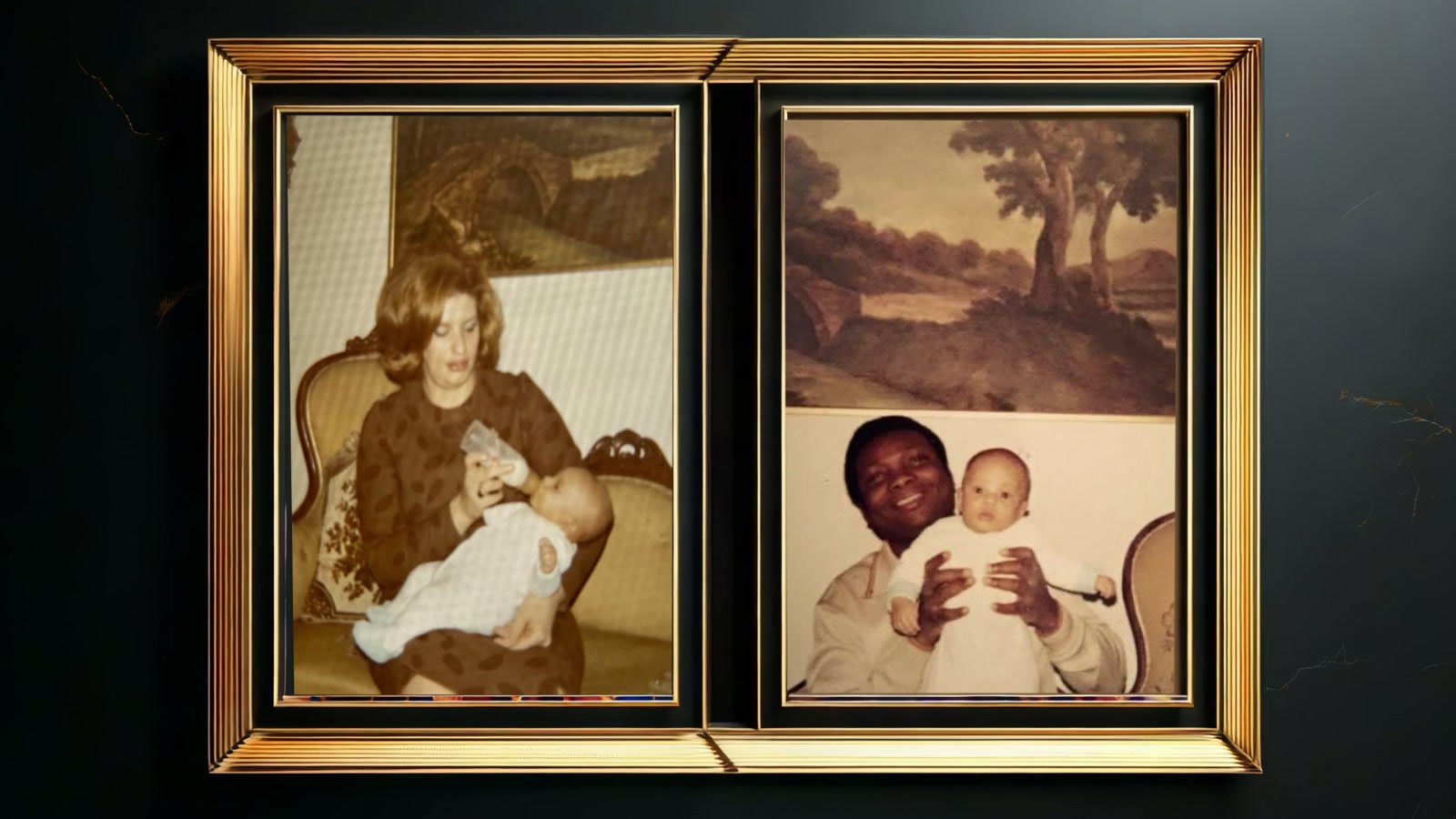
Film still: two childhood photographs in a double gilt frame, a woman holding a baby, and a man holding a baby
Where he comes from

The son of two cultures.

Two photographs from his own childhood, side by side in one gilt frame, as the narration begins: “The son of two cultures, Italian and Ghanaian, he has sought to explore and redefine how the past is narrated, who is included and who is forgotten.”

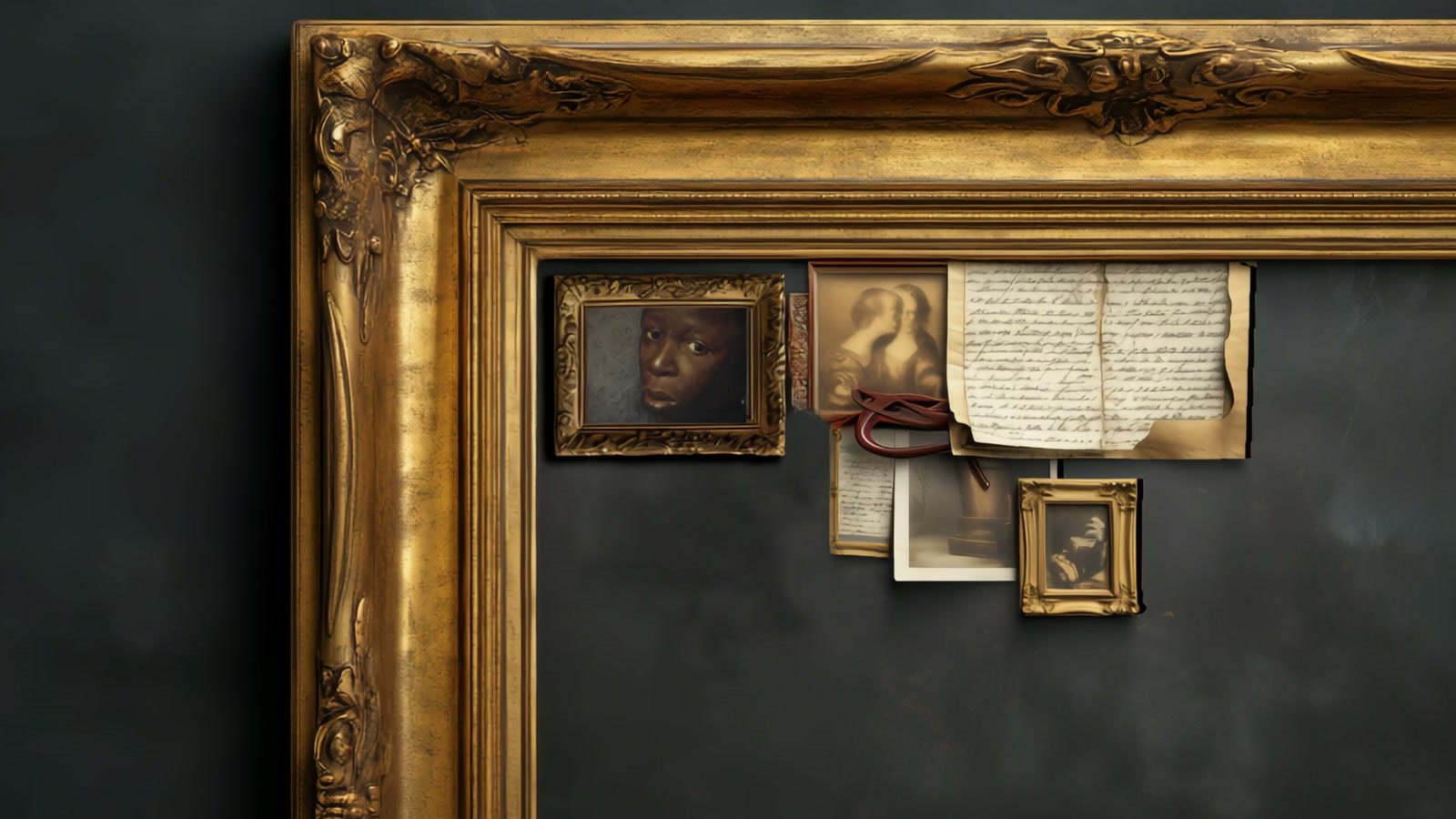
Film still: the corner of a large, empty gilt frame, with small framed portraits, photographs and a handwritten letter gathered at its edge
On the margins

Small, at the edge of the picture.

A great gilt frame, almost empty, and in its corner a cluster of small portraits, photographs and letters. “Through cinema, research, and activism, he has given voice to stories that have remained too long on the margins.”

The shadow boxes

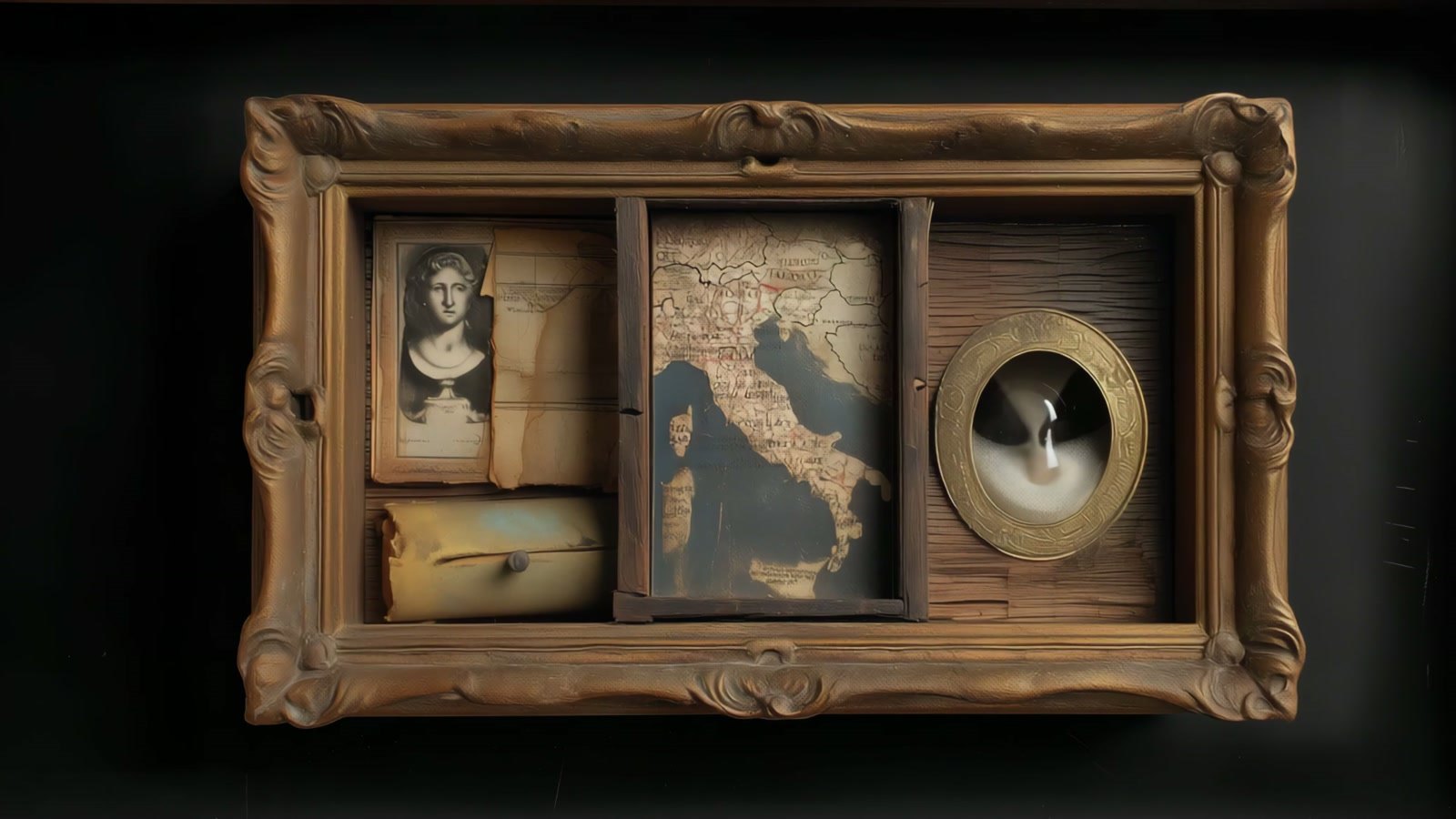
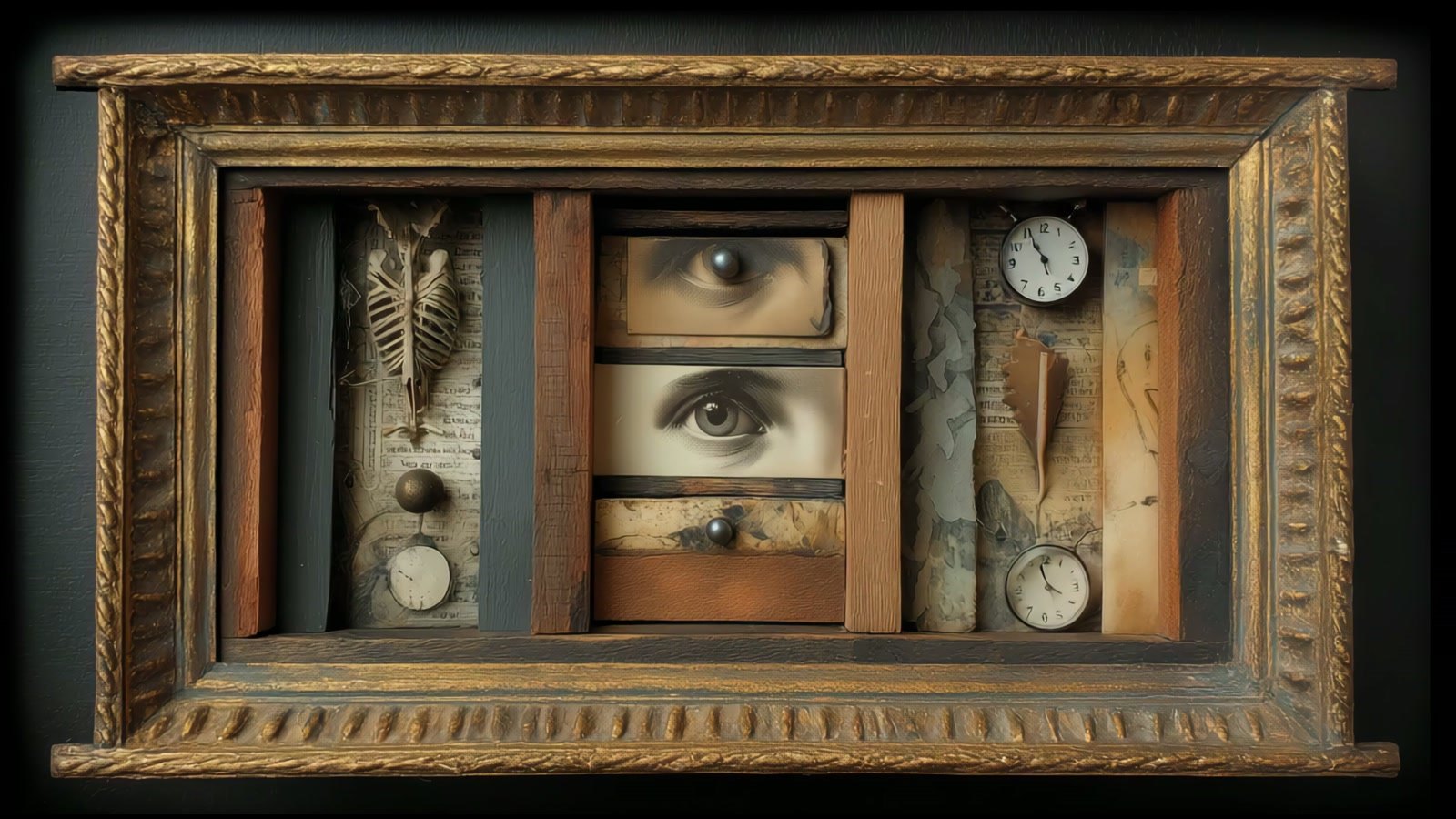
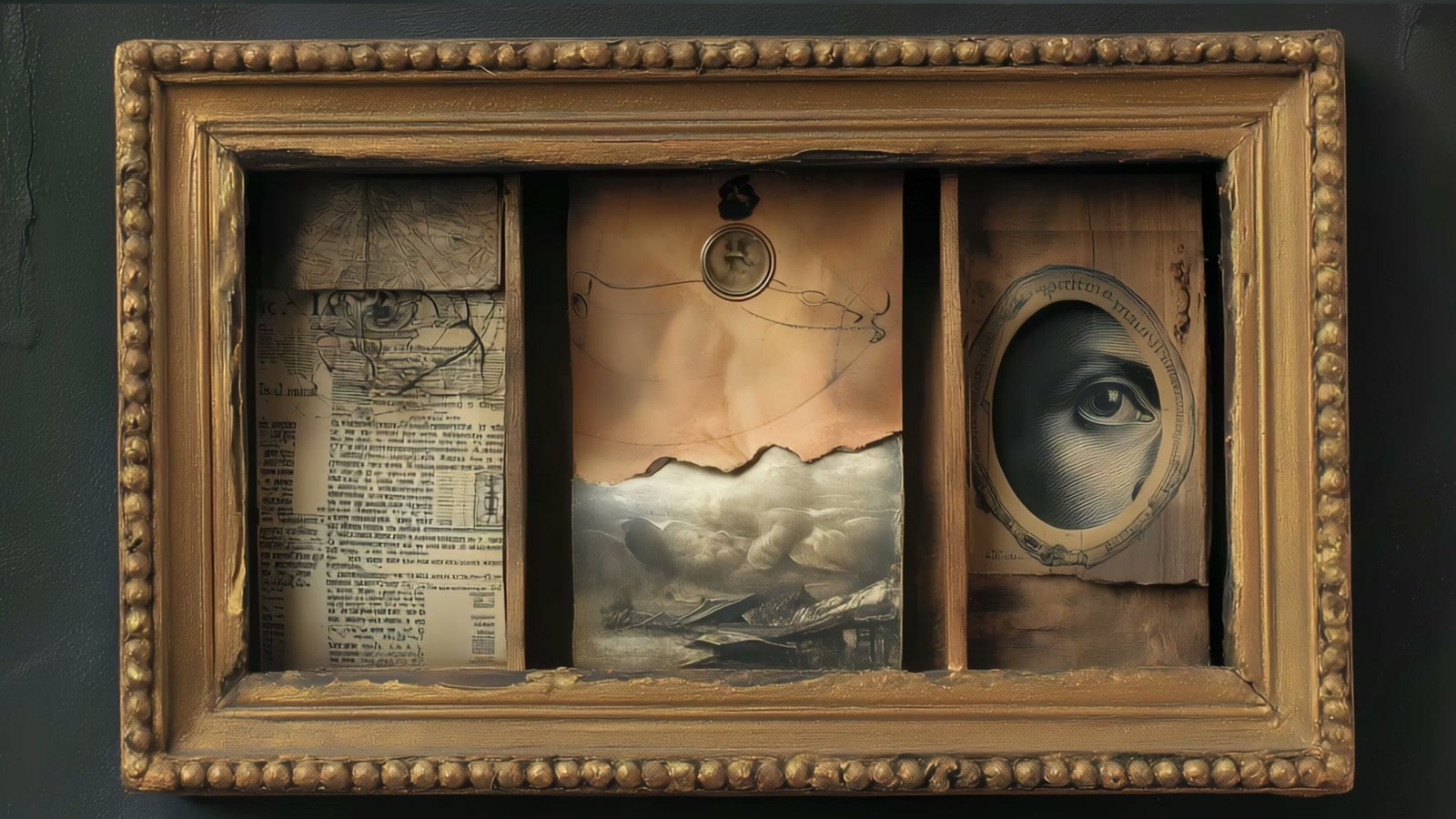
“Rather than seeing history as a fixed container, Fred sees it as a dynamic space where what is included or excluded depends on the narrator.” The film builds that container literally: boxes of engravings, maps, clocks and eyes, the furniture of the European cabinet of curiosities, and inside them, and looking out from them, the African presence the classical picture of the Renaissance left out.

Film still: a shadow box holding an engraving of a classical bust, a map of Italy and an oval frame
A classical bust, a map of Italy, an oval frame.
Film still: a shadow box of drawers with engraved eyes, an anatomical engraving and small clocks
Engraved eyes in drawers, an anatomical plate, clocks.
Film still: a shadow box with a printed page, a landscape under torn paper with a wax seal, and an engraved eye in an oval
A printed page, a landscape under torn paper, an engraved eye.
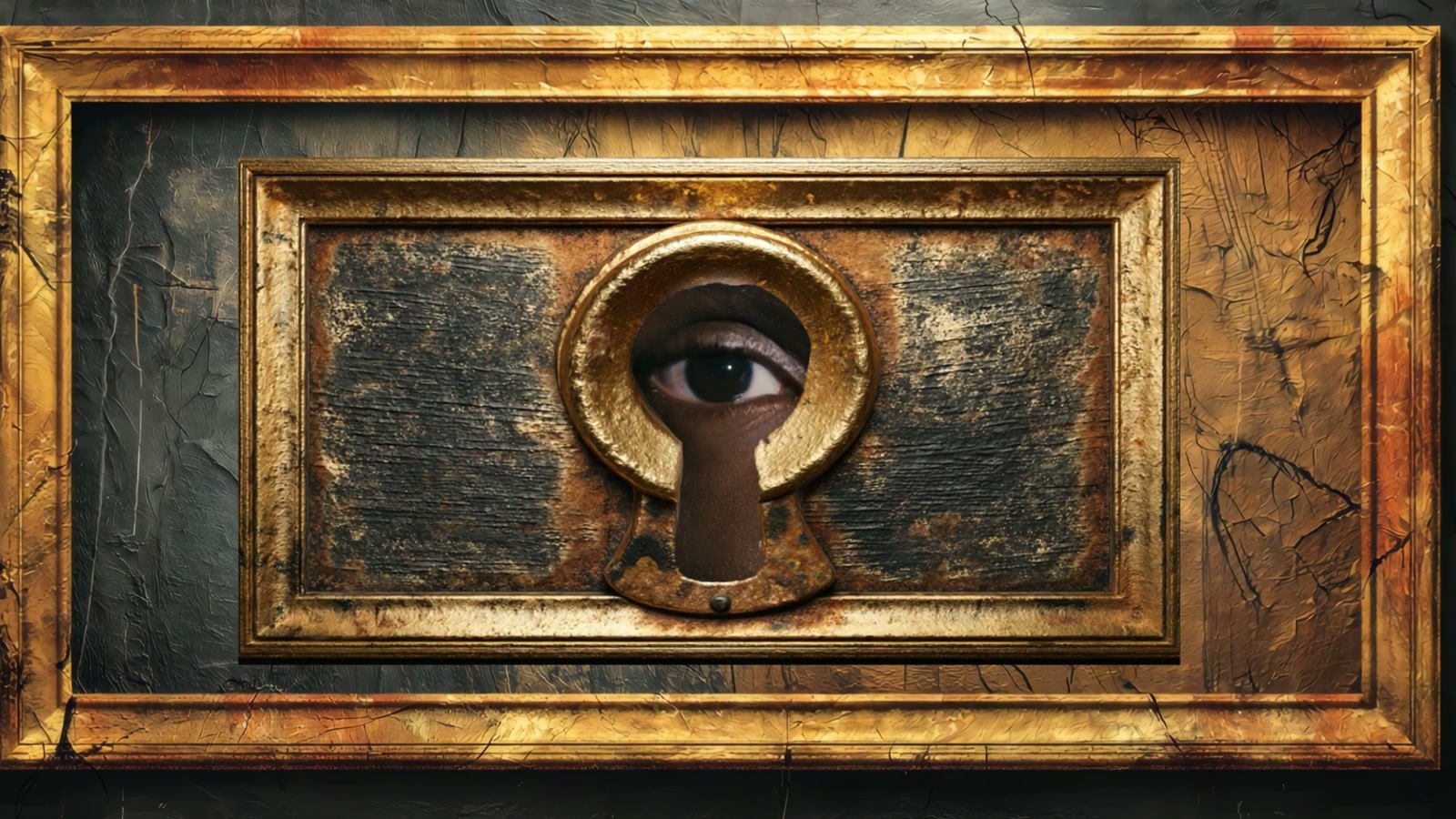
Film still: a brown eye looking out through a gilt keyhole set in a dark panel
A brown eye, looking out through the keyhole.
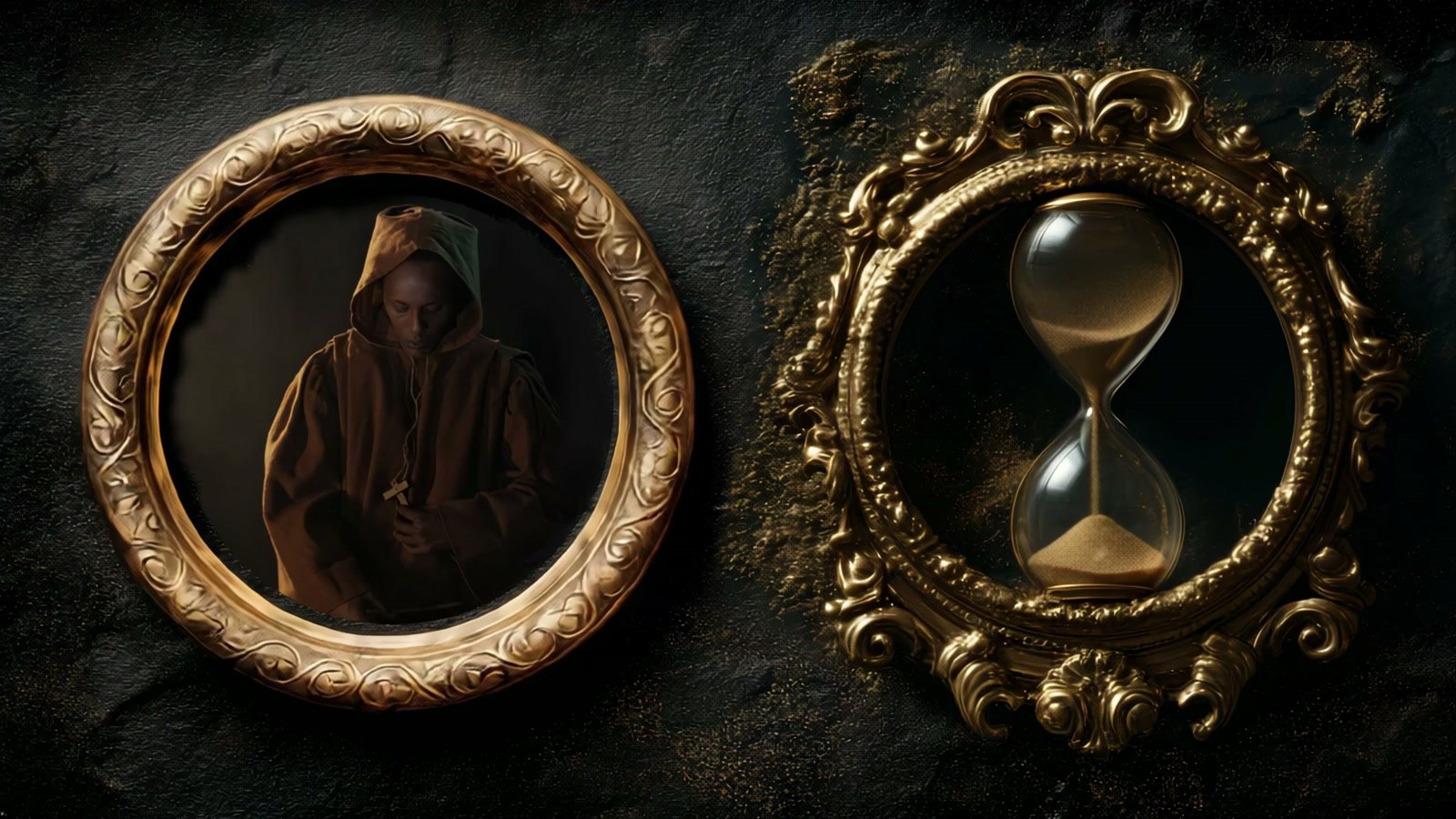
Film still: two gilt frames, one with a hooded Black figure, the other with an hourglass
A hooded figure, and an hourglass beside him.
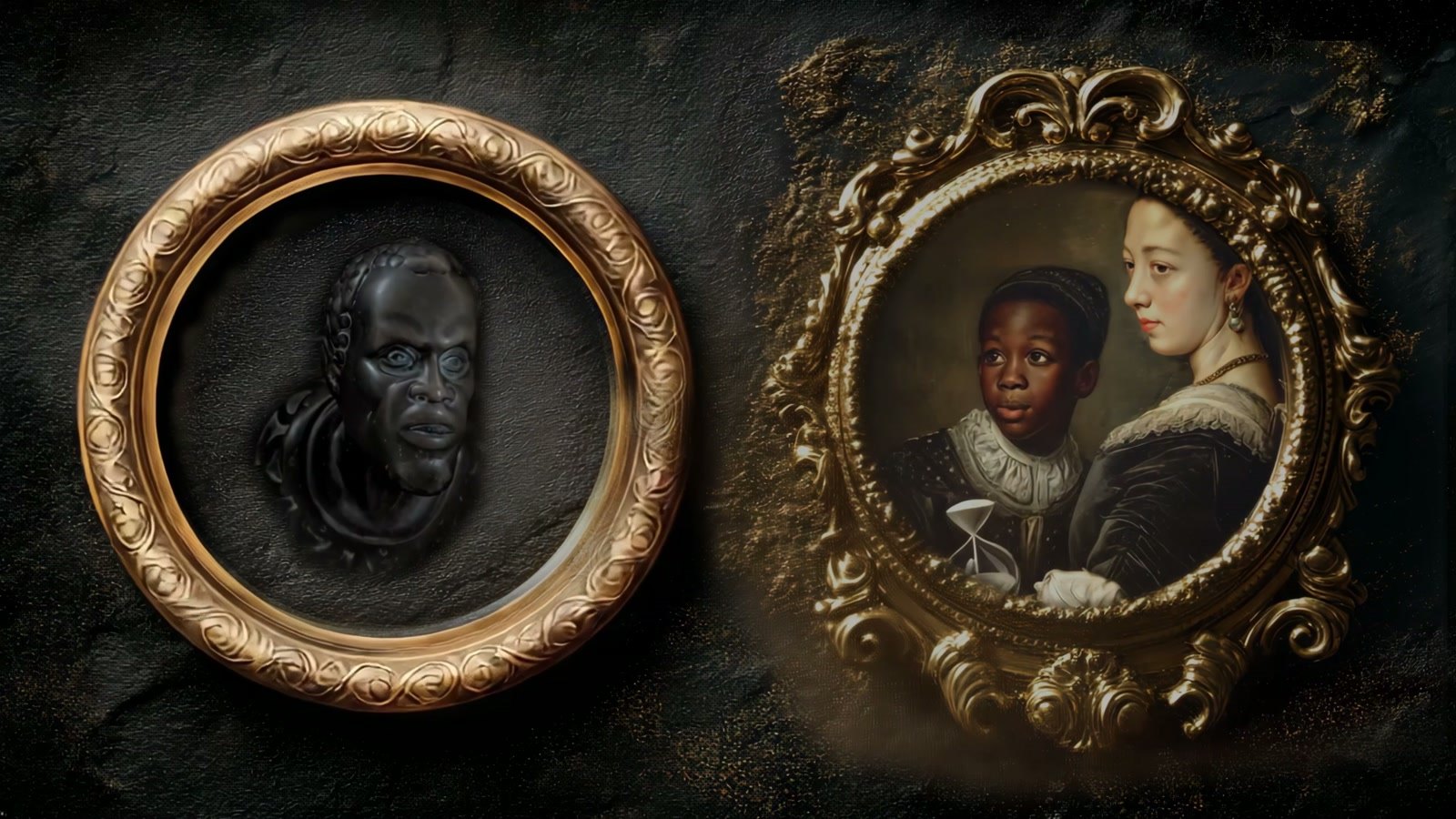
Film still: two gilt frames, one with a dark carved head, the other with a painted portrait of a Black boy beside a European woman
A carved head, and a painted Black boy beside a European woman.
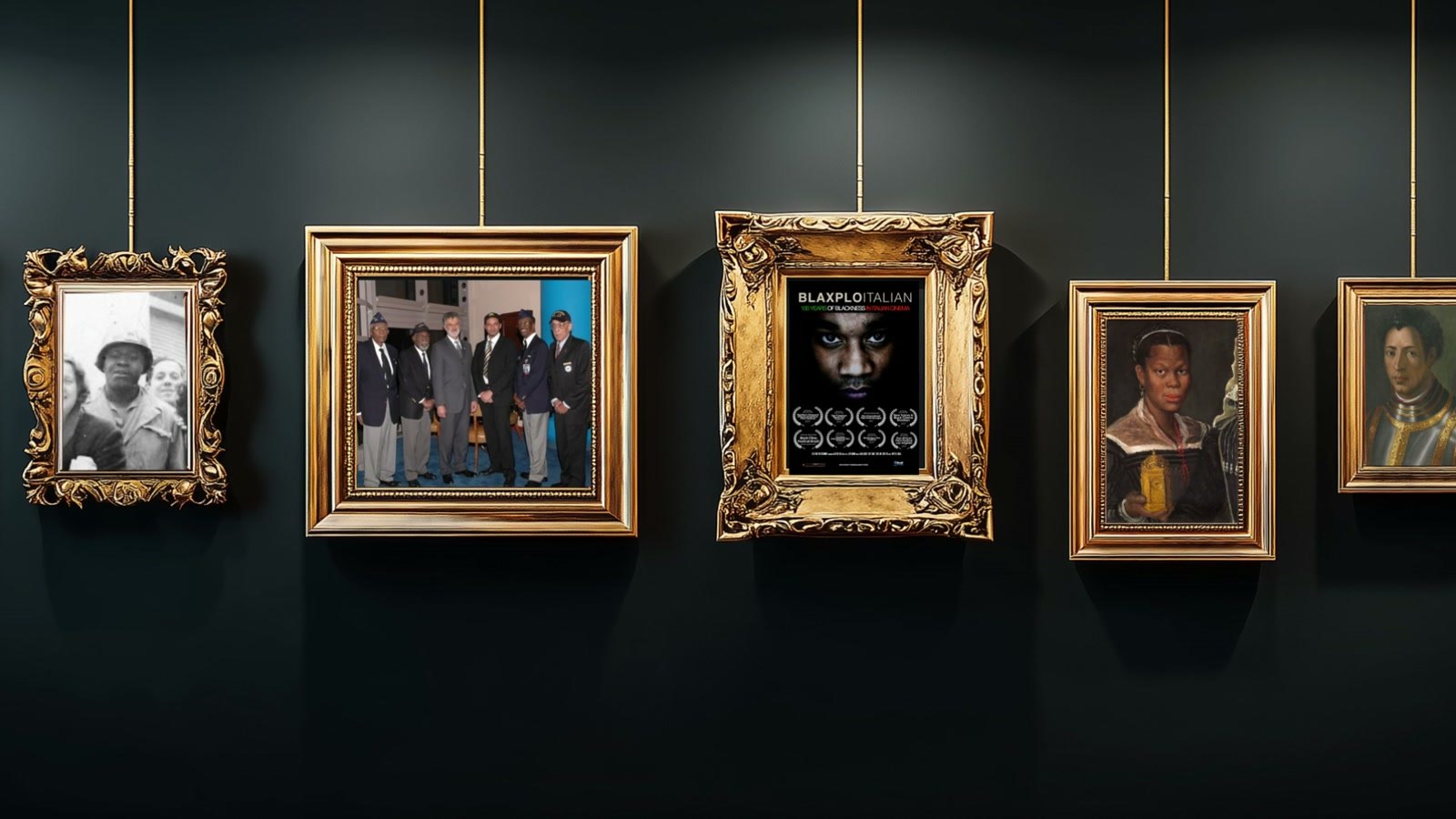
Film still: a dark wall of gilt frames hanging on cords, holding photographs and film posters, among them Blaxploitalian
His films

His own work, hung on the wall.

His films and photographs hang in gilt frames along a dark wall, as the narration moves through his work: “From African American GIs in WWII, to the story of Blackness in the Italian film industry, to the rich history of Black Africans in Renaissance Europe, Fred re-centers forgotten voices and overlooked events.”

Source material
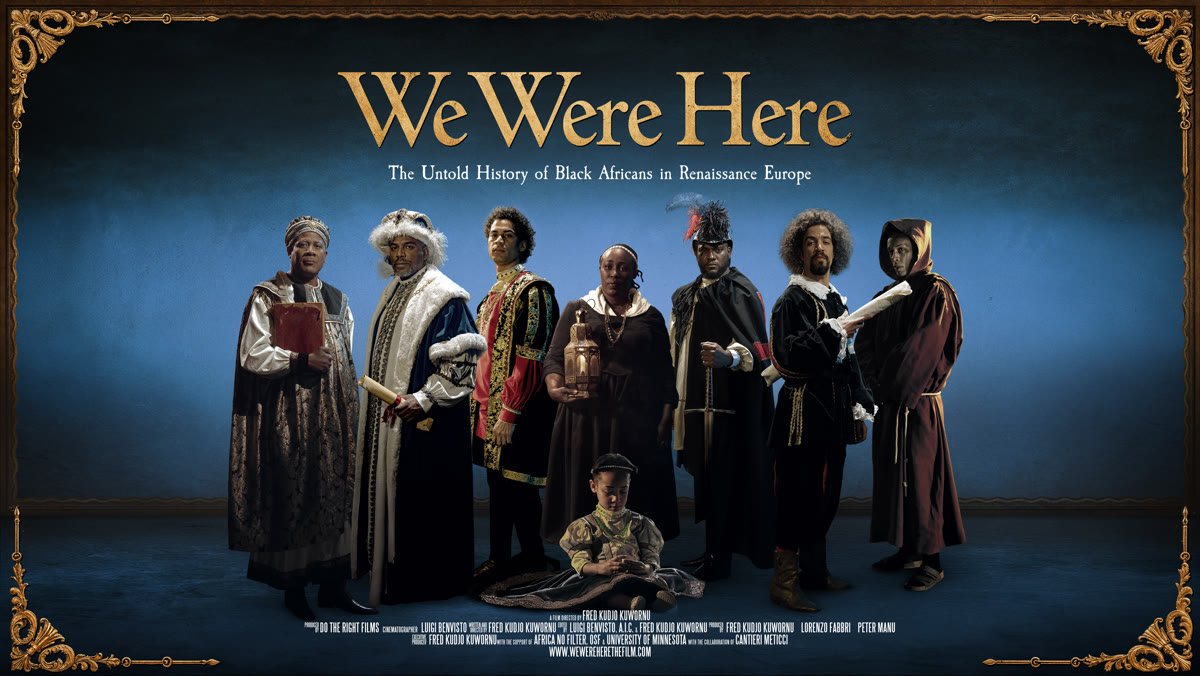
Poster for 'We Were Here', Black figures in Renaissance costume within a gold frame
From Fred Kuwornu, We Were Here: The Untold History of Black Africans in Renaissance Europe (2024). His own film's image: Black Africans restaged as the courtiers, scholars, clergy, and knights of Renaissance Europe they in fact were. This is the material we worked from, Kuwornu's recovery of a presence the frame of European art history had cropped out.
What we did with it
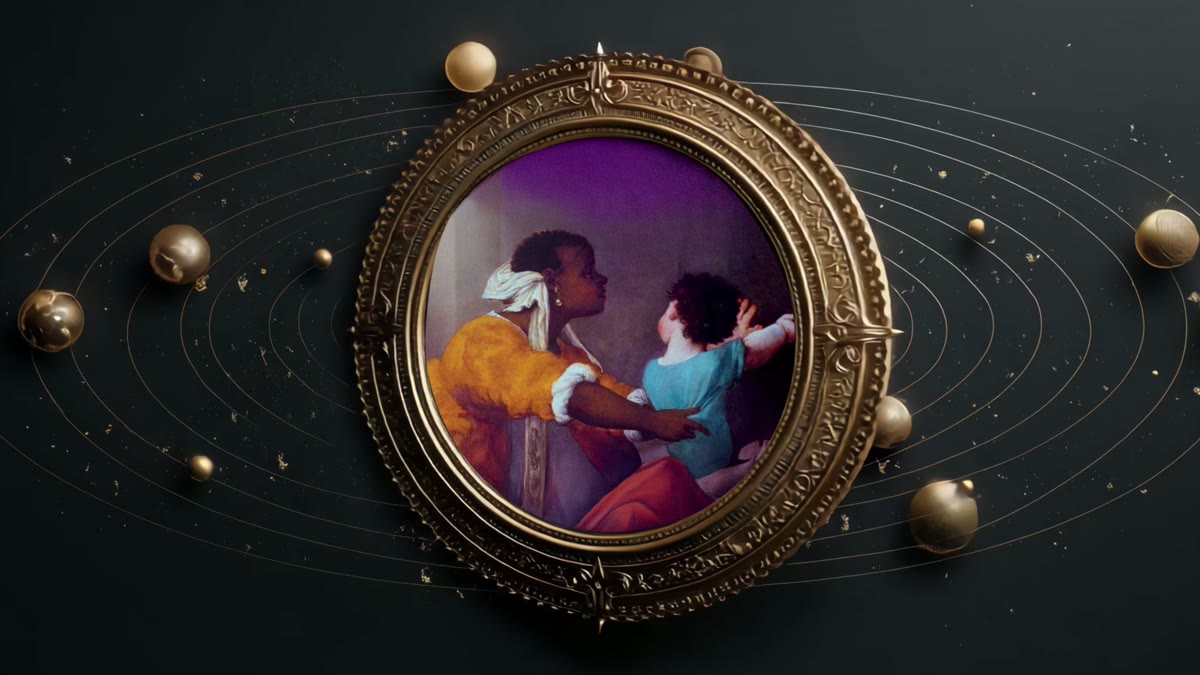
Film still: an oval gilt frame holding Renaissance Black figures, orbited by golden spheres
Reframed. The film takes Kuwornu's own images and sets them inside gilded frames adrift in a cabinet-of-curiosities cosmos, so that his subjects sit, at last, at the centre of the picture rather than its margin.
Source material
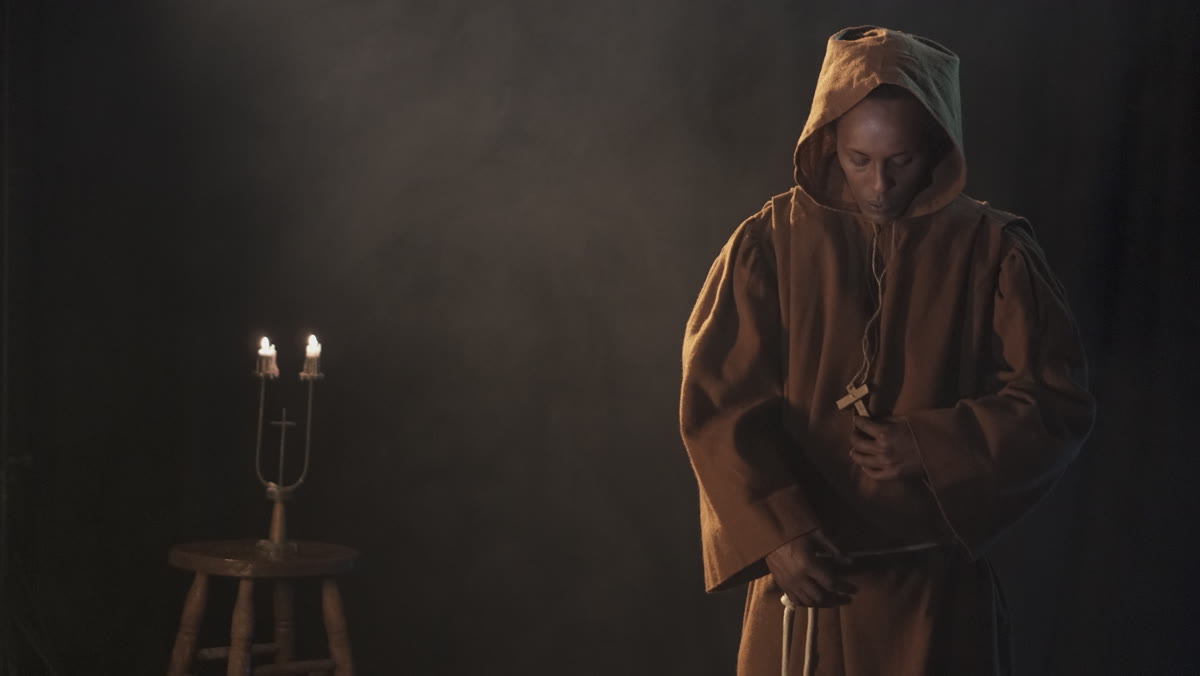
Still from 'We Were Here' of a Black friar by candlelight
From We Were Here: a Black religious figure by candlelight. One of Kuwornu's restagings of the documented Africans of Renaissance Europe, here a friar in the tradition of Saint Benedict of Palermo. A person who was there, and who the record kept, but whom the popular picture of the Renaissance forgot.
What we did with it
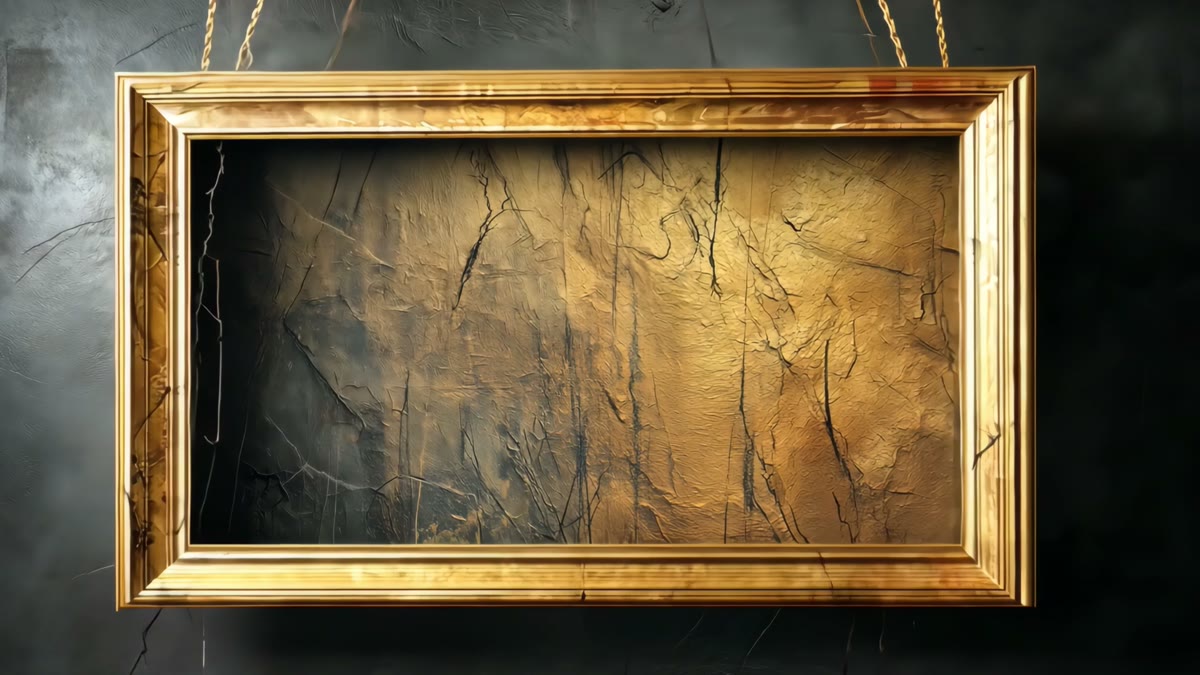
Film still: an ornate empty gold frame on a dark wall
The empty frame. The film's sharpest question, held in a single image: the ornate frame with no one inside it, the space history left blank where a person should have been.
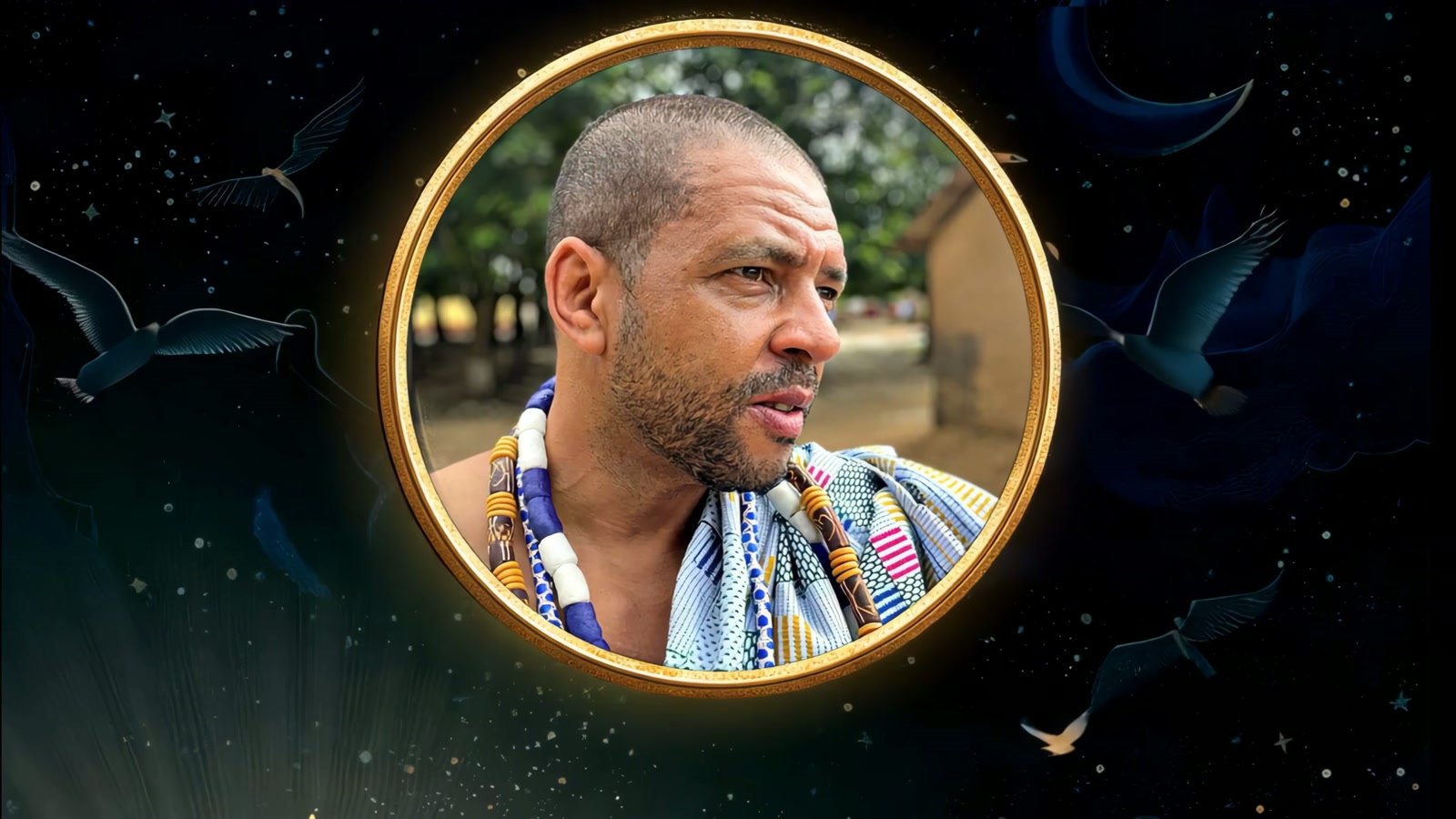
Film still: Fred Kuwornu in a round golden frame against a night sky with birds
The close

Fred, at the centre.

The film ends on Kuwornu himself, at the centre of a golden frame: “His approach recognizes that without a proper frame, these stories risk becoming invisible. Fred’s work seeks to provide this crucial re-framing of the past.”

The Dan David films

Each year the Foundation chooses, with the laureate, the subject of the film they are honoured for, and we turn it into script, image and motion. The laureate sees it for the first time on the evening of the prize — on the big screen, in a room full of people who have come to honour them. Afterwards the films go out on social media, YouTube, Facebook, LinkedIn and more, and on the Foundation’s own site, beside the committee’s reasoning and the laureate’s interview, and some laureates carry them into their own classrooms, to show what it is they work on.
Get in touch

Have a prize that deserves this kind of care?

Tell us about it →