What animating a peer-reviewed paper actually involves.
We read the source, all of it, not the brief. We ask what it was meant to say, and then we ask again. We decide what the film will leave out, and we design from the source, not from a moodboard. It is slower than the volume studios, and it is why the work travels.
There is a moment, early in every project, when we ask the client for the source material and discover what we are actually being asked to animate. A forty-page paper. Three boxes of testimony. A catalogue essay written for twelve specialists. This is the moment most explainer studios fail: they take the one-page brief and start drawing.
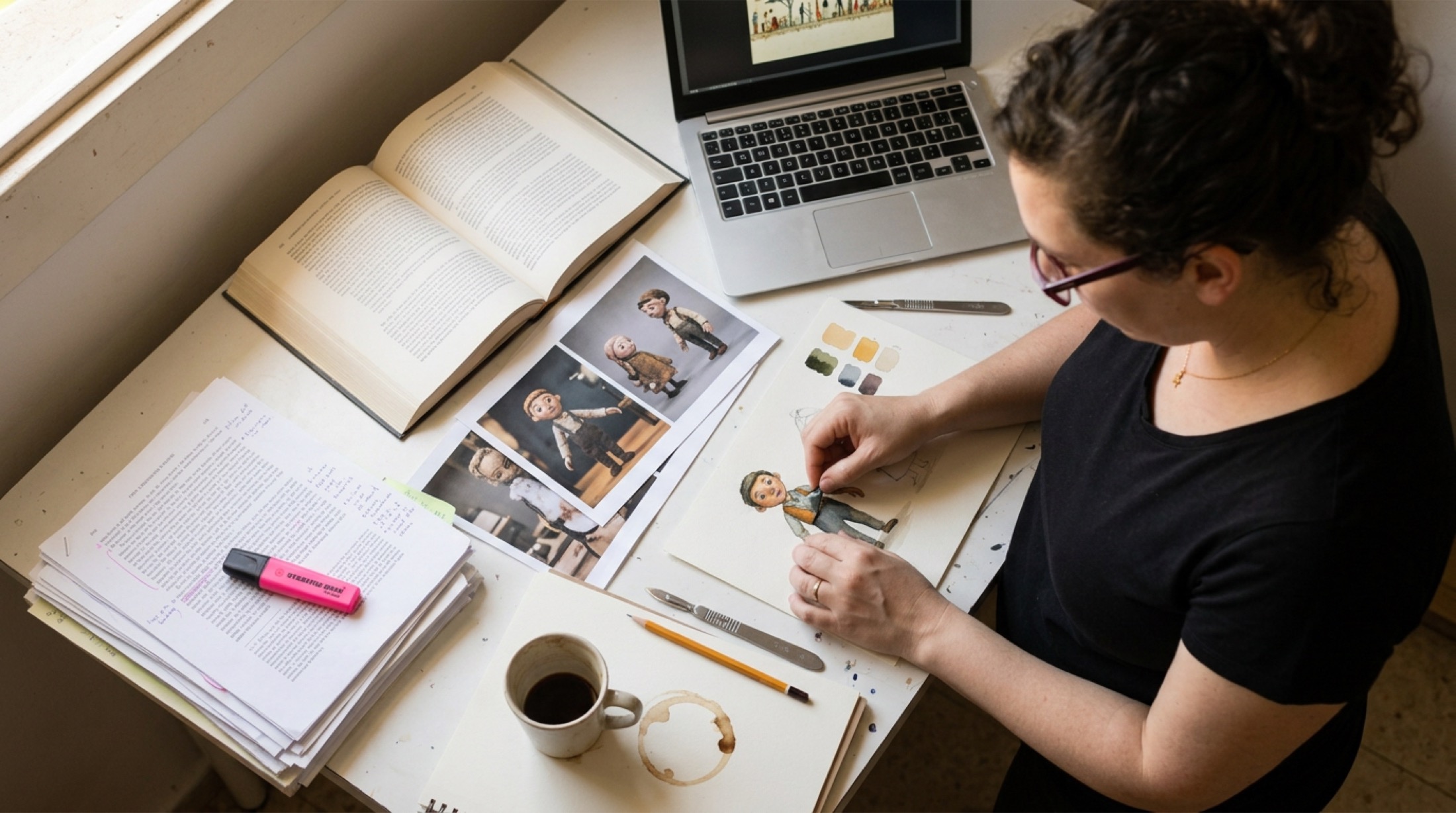
We read the source. All of it
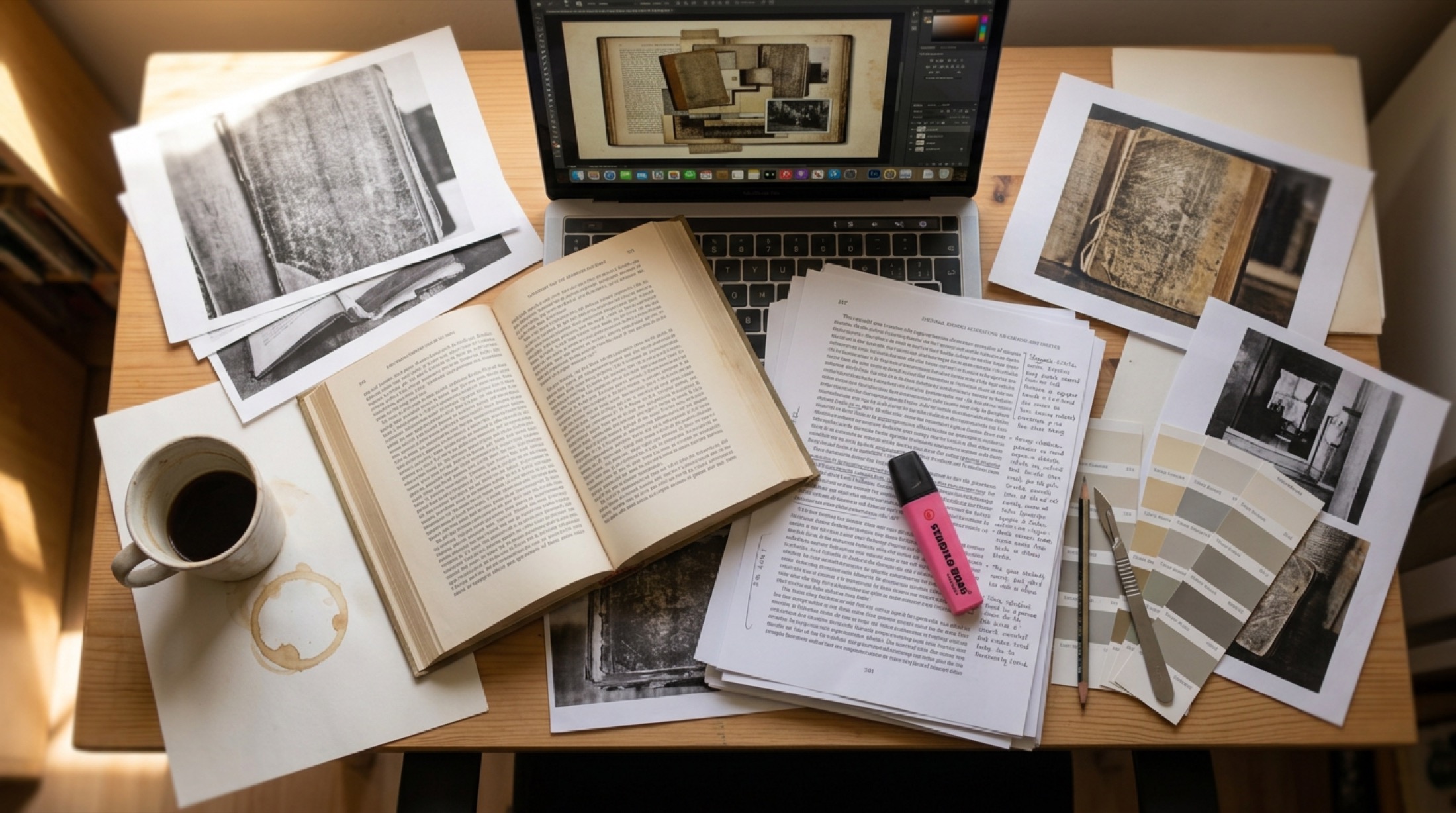
The brief was written to be easy to act on, not to be true to the source. By the time it reaches a studio, the scholar’s hedges have been smoothed out: “this may indicate” has become “this indicates.” We read the whole paper the way you would read something you intended to cite — for the claims, the qualifications, the places the author is careful. It takes about a week, and it is the most important week of the project.
We decide what the film will leave out
Max Bergholz · See the film →
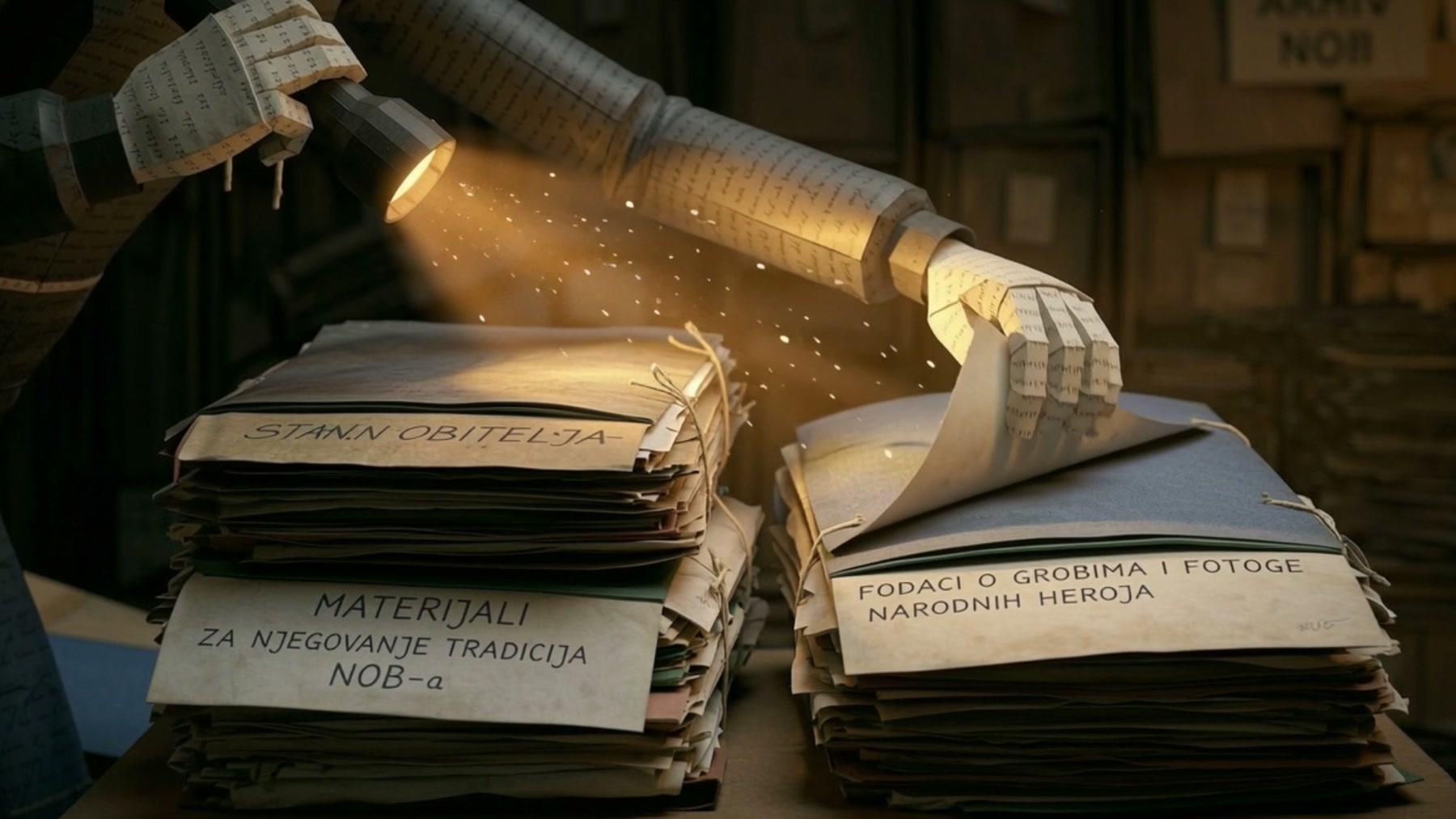
A four-minute film has room for about five hundred words of narration. A forty-page paper has twelve thousand. A film that tries to say everything ends up saying nothing. So early on we agree with the client on the one idea the film is there to carry, and we hold to it to the end, even when there is pressure to add more.
We ask what it was meant to say. Then we ask again
Unlike most studios, we question everything. We ask for the intent behind the material, and then we ask again, and we make nothing until we are sure what the paper was meant to say — what the researcher meant. There is a great deal of back and forth before anything is drawn.
We design from the source, not from a moodboard
Verena Meier · See the film →
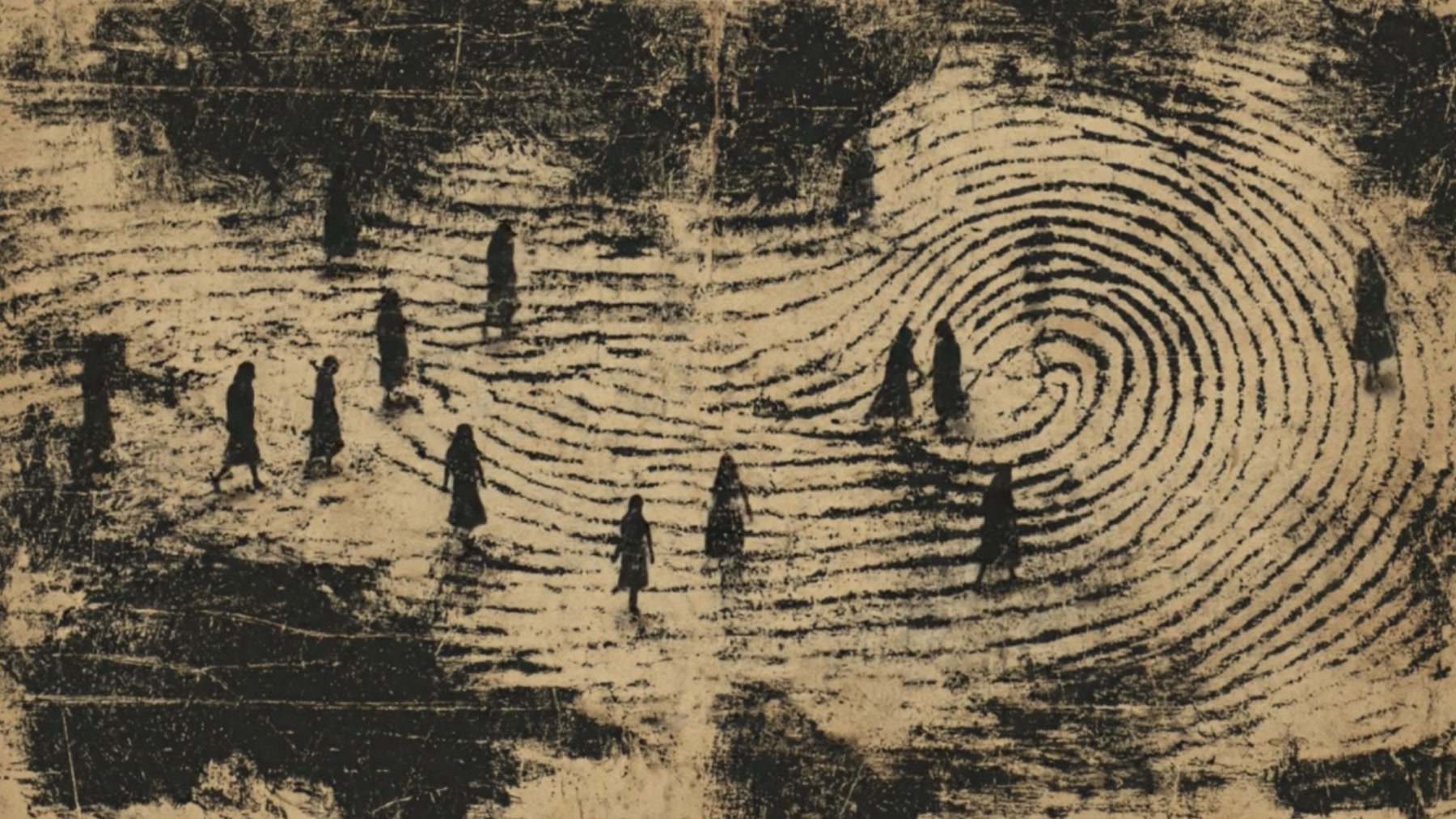
Only then do we start thinking visually, and we start with the source again, not with a moodboard of other people’s pictures. What does this material actually look like: the archive photographs, the document scans, the manuscripts, the microscope images? The people drawing the frames are the people who read the paper.
This is where my own background comes in. I hold a BA and an MA in art history, and I know what things looked like in different periods: how people dressed, how they built, how they painted. And when I don’t know, I know what to ask, and how to research and check. I know which cultural references a film can draw on, and when a reference would feel forced. You can feel it in the films. A viewer who never studied history may not be able to point to it, but they sense the accuracy.
That training also teaches you to work with complex material. Someone who has learned to read sources, to test them, and to tell what is known from what is assumed understands how scholars and scientists work, and respects it. From there it is a short way to taking a scientific approach and turning it into a film that draws in people who will never read the paper.
We question everything, and we make nothing until we know what the source meant.
Ask any studio you are talking to how they would handle the source. You will learn everything you need from the answer.
Moofa Production House makes animated films for foundations, museums and research institutions that take their subjects seriously.